



Column
Looking at the U.S.-Bangladesh Relationship post February 12


An Independent Newsweekly
Column
UNB
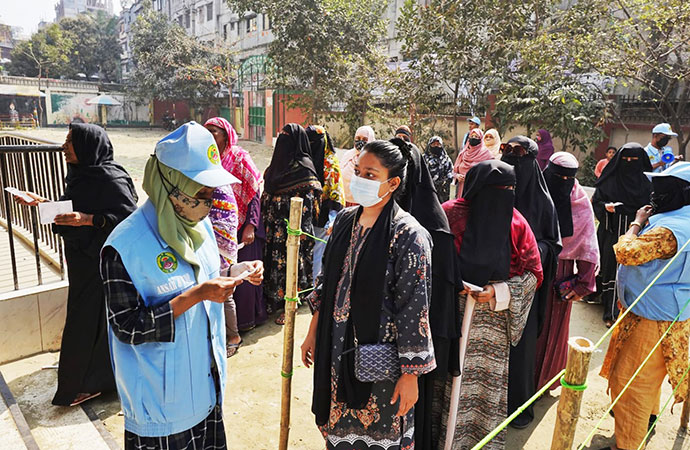
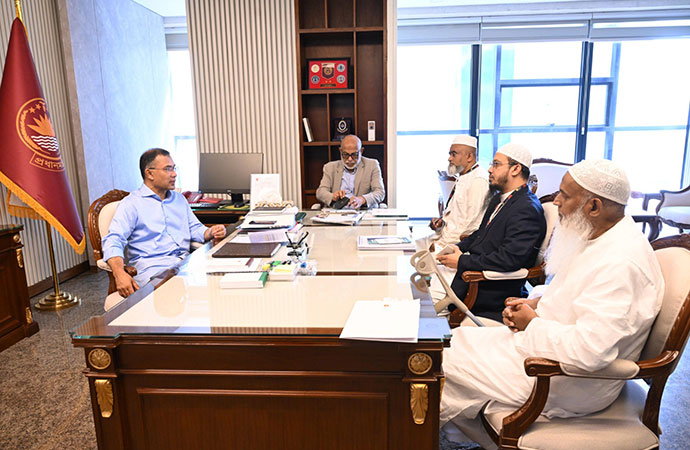
I just returned from an eye-opening visit to Bangladesh, my first since the February 12 election and the inauguration of PM Tarique Rahman's government. The visit took place in the context of the Iran War and the resulting dislocation in the Middle East as well as growing global economic consequences. Not surprisingly, these issues featured prominently in many of my interactions. Looking at bilateral issues, most of my private and public discussions in Dhaka focused on the U.S.-Bangladesh Agreement on Reciprocal Trade (ART), which was signed on the eve of the February 12 polls. Since my last visit, the U.S. has also placed a hold on immigrant visa issuances and imposed the requirement for a travel bond for many non-immigrant visa applicants. Taken as a whole, these global and local developments could lead one to believe that there is a crisis in the U.S.-Bangladesh relationship.
I am pleased to announce that reports of the demise of the United States' relationship with Bangladesh are greatly exaggerated. This is not to diminish the importance of any of the topics mentioned above. Rather, most of my Bangladeshi interlocutors were able to put these developments into perspective, understanding the longer-term strength of the relationship which has developed over the past 50 years. There was a palpable desire from many of the private sector leaders who I met to continue to develop the bilateral economic and trade relationship. While there were concerns about the trade agreement, there was also acknowledgement of the importance of the U.S. market, the role that U.S. investment can play in helping to develop key sectors of Bangladesh's economy, and the leading U.S. role in the development of artificial intelligence. As Bangladesh looks to address its energy needs, in particular, there is an important role for American energy companies, and both countries are eager to conclude a new energy MOU that will facilitate this cooperation.
While the decision to abolish the U.S. Agency for International Development did leave an impact in Bangladesh, many are not aware that a vibrant U.S. foreign assistance presence continues, particularly in the areas of health and humanitarian assistance. More broadly, a number of U.S. private organizations and philanthropies are active in Bangladesh, again focusing on issues of concern to citizens of Bangladesh, the United States and the wider region. All of these activities are underpinned by strong people to people ties, which also extend to higher education networks and involve a myriad of activities promoted by members of the Bangladeshi diaspora in the U.S.
At a government-government level, there are regular high-level interactions between Washington and Dhaka with discussions on a breadth of regional and global issues. In this regard, Bangladesh's interim government bequeathed a very strong relationship to its elected successor. The strength of this dimension of the relationship was seen during Assistant Secretary of State for South and Central Asia Paul Kapur's recent visit. In April, a high-level Bangladesh Government delegation will travel to Washington for the spring IMF/World Bank meetings. Not only will they have an opportunity to engage with these multilateral institutions, but the Bangladeshi delegation will have a chance to continue discussions with U.S. government counterparts and representatives of the private sector. U.S. and Bangladeshi diplomats continue to work together as well in multilateral forums, where they interact as partners and not rivals.
On the security side, the U.S. and Bangladeshi militaries continue to expand an already robust partnership, with regular exchanges, exercises and operational cooperation (including in peacekeeping operations). There are exciting new opportunities to expand the security partnership to include greater integration of defense systems as Bangladesh looks to procure U.S. origin military hardware. This close partnership will be important for safeguarding both countries' security interests in the region and beyond.
As Bangladesh's new government takes office, there are voices arguing for the country to tilt towards one relationship or another, as countries in the region and beyond vie for influence. PM Tarique Rahman and his foreign policy team have articulated a policy of "Bangladesh First" that will guide their approach to the world. This is a sensible approach. As they look at the importance of the relationship with the U.S., I am confident that they will be able to look beyond the day's headlines and tune out those who are pushing a narrow agenda and look to downgrade the relationship with the U.S.
A major task for the U.S. is to continue to engage not only with the Bangladesh government, but the Bangladeshi people. At the end of the day, in a democracy, no foreign policy can be sustained without the support of the people. The U.S. is fortunate to have a reservoir of good will with the Bangladeshi people, but this should not be taken for granted. Supporting people to people ties through a vibrant public diplomacy program and leveraging the contributions of the Bangladeshi American diaspora and other friends of Bangladesh can help provide this solid foundation for the overall relationship.
Bangladesh has seen momentous changes over the past 18 months following the fall of the Awami League regime. Having gone through an interim period and now with an elected government with a popular mandate, Bangladesh has a chance to chart a new course forward. I am hopeful, and confident, that the United States and its people will be partners for Bangladesh as it moves along this path towards greater prosperity and freedom for its people.
Jon Danilowicz is a retired US State Department official who served three different stints at the US Embassy in Dhaka. He is currently the President of Right To freedom.
A Independent Newsweekly
© Copyright 2026 | Designed by ARK Reepon & Developed by Cosmos Group Software Team




Leave a Comment
Recent Posts
The government passes the test ...
One of the cornerstones of the political earthquake Bangladesh witness ...
The government hiked the price ...
The government hiked the price of a 12kg cylinder of liquefied petrole ...
Police in France stand accused of using excessive fo ..
The India-Pakistan Cold War
A week on from DNCC’s eviction drive, Mirpur-10 rema ..
Equal Service, Unequal Pensions: Time for a Fairer S ..