



Featured 1
Birth Pangs of a Nation


An Independent Newsweekly




Featured 1
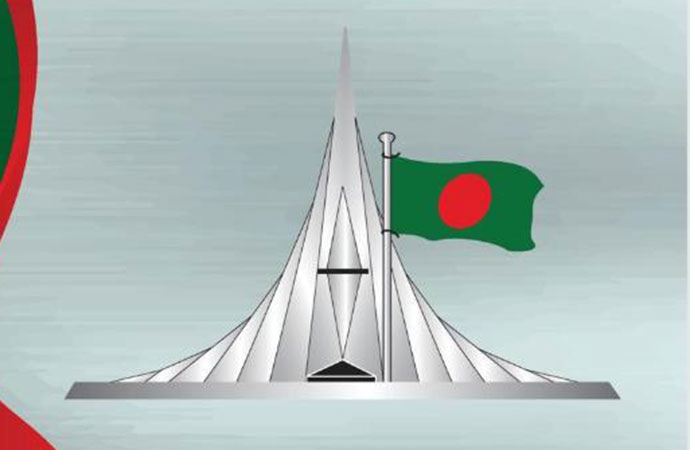
As the nation turns 55, we are confronted once again with the difficult circumstances of its birth, including the genocide perpetrated by the Pakistani army, for which justice still remains a far cry, and even international recognition at least, remains patchy. The ousted Awami League regime's half-measure of going after the local perpetrators, known as razakars, while letting the principal actors under whose directions the local auxiliary forces like Al Shams and Al Badr were organised, i.e. the Pakistani army off the hook, was shown up in the July Uprising of 2024. The atrocities were too heinous, the wounds too deep, for such half-measures.
Since these are by definition international crimes, international recognition for the genocide perpetrated on these lands back in 1971 is essential. That is why the government must take interest in the introduction this past week of a new resolution in the US House of Representatives, to formally recognise the mass atrocities committed against the people of Bangladesh in 1971 as genocide and urging President Donald Trump to declare them as "crimes against humanity, war crimes, and genocide".
Estimates of the death toll range from tens to hundreds of thousands, the resolution states, also citing accounts of more than 200,000 women subjected to sexual violence during the conflict. The resolution draws heavily on contemporaneous US government documentation, including the riveting "Blood Telegram" sent by the US Consul General in Dhaka at the time, Archer Blood - who would suffer greatly in terms of his career at the State Department as a result, yet ultimately be recognised for his heroic integrity and commitment to principle.
The resolution was introduced by Greg Landsman, a Democrat Congressman from Ohio, who was first elected in 2023. The resolution "recognises that while the Pakistani Army and its Islamist allies indiscriminately mass-murdered ethnic Bengalis regardless of their religion and gender, killed their political leaders, intellectuals, professionals, and students, and forced tens of thousands of women to serve as their sex slaves". With lobbying and advocacy work done by a group called HinduACTion, who are said to have worked tirelessly with the Bangladeshi diaspora and the American Hindu community to bring this to fruition.
While the resolution recognises that the Pakistani Army and its Islamist allies indiscriminately mass-murdered ethnic Bengalis regardless of their religion and gender, killed their political leaders, intellectuals, professionals, and students, and forced tens of thousands of women to serve as their sex slaves, it also asserts that "they (the Pakistani army and its allies) specifically targeted the religious minority Hindus for extermination through mass slaughtering, gangrape, conversion, and forcible expulsion." This is all very good, and although the executive director of HinduACTion, in a statement referenced "religious minorities who continue to suffer in Bangladesh," that has not made it to the text of the resolution.
As such, we don't find anything problematic with the resolution, and see no reason for the government of Bangladesh not to put its weight behind the document, through its growing diaspora in America, to move the resolution through Congress. In recent years we have seen the US Congress formally recognise the Armenian Genocide of more than a century ago (1915-17). There is no good reason for the Bangladeshi one to go unrecognised.
A Independent Newsweekly
© Copyright 2026 | Designed by ARK Reepon & Developed by Cosmos Group Software Team





Leave a Comment
Recent Posts
The government passes the test ...
One of the cornerstones of the political earthquake Bangladesh witness ...
The government hiked the price ...
The government hiked the price of a 12kg cylinder of liquefied petrole ...
Police in France stand accused of using excessive fo ..
The India-Pakistan Cold War
A week on from DNCC’s eviction drive, Mirpur-10 rema ..
Equal Service, Unequal Pensions: Time for a Fairer S ..