



Column
Where is home? Eid and other travels

An Independent Newsweekly



Column
AI Image
Dhaka during Eid is fairly thin compared to the pre-Eid era as a week of holidays mean "Home sweet home" too many who take the long painful route back to that place. A few residents of course are dancing off to vacations in distant lands -not really Eid travel or is it? - But most are going home. The term has an echo, a nuance that goes far deeper than just a vacation trip anywhere whether to the ancestral village or anywhere where they grew up or where their parents lived.
Its somewhere where they grew up or lived for long or where relatives still stay or just a point of destination defined by something other than their workplace residence as Dhaka is to so many. It's an emotional not a professional address. It's where they live because it's home, not because it's close to their place of work. Home is where it's not linked to their work.
A brief history of homes
It's odd but true that their ancestors lived the way they didn't. That home was mostly close to life and livelihood, the patch of agro-land where the soil was tilled. It had to be close enough to be within easy walking distance at dawn or dusk for going to and returning from work. It means farmers did what they do but maybe didn't enjoy living close to work.
As the paid labour market grew the wage labourers, the poorest would leave for work mostly agro work in labour shortage areas away from home and disappear for months till the harvesting season was over. Later other professions joined the procession.
But travelling far away to make a living has been there for long and not for wages but profit too. Just listen to any folk song. They speak of the man long gone from home and the woman/wife waiting for his return. They range from the humble dealer of goods who roams from village to village selling wares missing his life back home and home itself misses the trader too.
However, these peddlers too would also become traders too and we see the children of these traders or maybe the traders themselves "losing their hearts "to some damsel in a distant land and then leaving her behind, I am sure, occasionally pregnant. The songs of longing and waiting follow through most South Asian culture but a lot more in the songs of Western India.
Why did traders come from Western India?
It's simple, the people from Rajsthan, Gujrat, etc had to take to trade as they were not residents of agro-zones but desert ones so trade was their only way out. This began to grow pretty early on and even in the 12th century visitors mentioned that trading in Bengal was in the hands of those who were not locals. Later their power grew with every regime and that is how and why they became the ally of the East India Company who like them were traders too and had become to verdant Bengal from far. Meanwhile, local people preferred to plant rice than become travelling entrepreneurs.
However, no matter if one prefers self-employment or hired ones with work related to mud, situations often force people to look for work far away.
The sailor in the blue sea
People from Noakhali for several historical reasons left home to work abroad. It's full of references in their history and literature. Many worked as sailors. The novel "Sareng bou" or "The sailor's wife" is an excellent example. The song "Ore o nil dariya" reflects that reality very well.
Maulana Bhshani's struggle in Assam for the poor migrant labourer there is a legend of history. These people mostly came from Mymensingh, Bogura, Noakhali etc. So migrant work is universal for Bengal. In the riots of 1946 in Kolkata, many sailors and dock workers were killed and they were largely from East Bengal including Noakhali which had bloody repercussions. Bengal also saw large-scale hostility and even violence against Marwari traders in the 20s and 30s.
Faces of departure and home
Now the situation has changed as rural migration is the Bangladesh economy's life. Agaian its labour work abroad is the national lifeline. They spend their years earning for the place called "home" in Bangladesh.
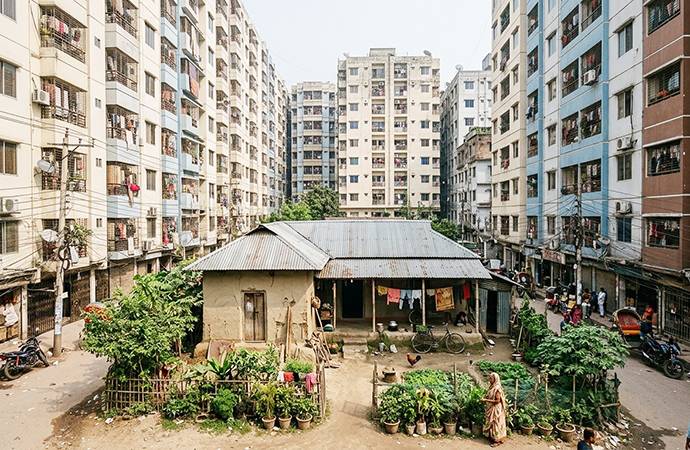
During the Eid season neighbourhoods become forlorn as people leave their urban work homes leaving their residences behind. The empty apartments become almost anonymous as their faces are shrouded by the dark of the evening and night. It almost says that the feet may be here but the heart lives elsewhere amidst joys of another kind.
Many years back I had asked many people as part of a survey where their "land/desh" was and the answer was always the same, -their village. But it's slowly changing. As many grow up in the urban zones, the villages of their fathers seem distant to some. It perhaps remains but the new generation has multiple homes if you will.
Who knows what the home of the next generation will be and look like? Which destination will be home?
A Independent Newsweekly
© Copyright 2026 | Designed by ARK Reepon & Developed by Cosmos Group Software Team






Leave a Comment
Recent Posts
The government passes the test ...
One of the cornerstones of the political earthquake Bangladesh witness ...
The government hiked the price ...
The government hiked the price of a 12kg cylinder of liquefied petrole ...
Police in France stand accused of using excessive fo ..
The India-Pakistan Cold War
A week on from DNCC’s eviction drive, Mirpur-10 rema ..
Equal Service, Unequal Pensions: Time for a Fairer S ..