



Column
When Distance Collapses: Bangladesh Homeward Tide and Geography of Belonging

An Independent Newsweekly



Column
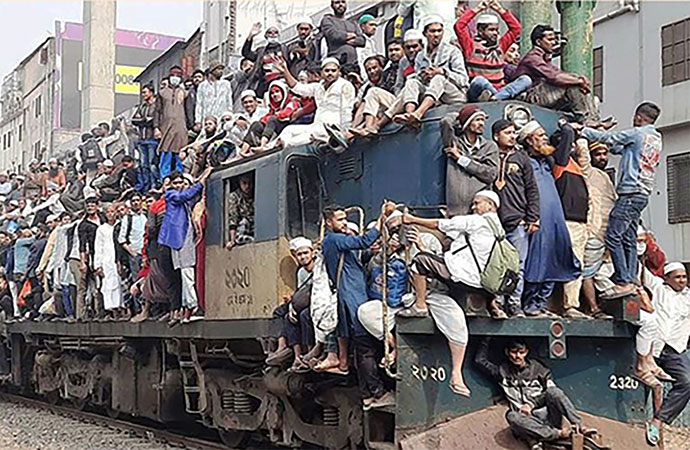
Image: Collected
Every season of festival, millions of people with their lives and struggles come back home, which every season, emotion, economic condition and policy gaps to the region, define one of the strongest social movements in South Asia.
In Bangladesh, there is no constant distance between the destinations, but the feeling it gives to people of their beloved ones. This distance appears to vanish especially on such large-scale festivals as Eid and you find one of the most amazing flows of people in South Asia. It is not just a moment of pandemonium as people cling onto the side and roofs of trains. It is approximated that every 10 to 15 million individuals leave Dhaka alone during Eid and when you consider the entire country, the figure is even greater.
One of the Traditions of the Past
The citizens of Bengal have always returned to the villages; it is one of their large pieces of identity. Since time immemorial, they would come home during special occasions and to assist in farming. People who employed in urban areas would still visit their villages during great festivals even when the country was under the control of other people. People truly belong to the village and are only working in the cities. This continues to occur in the contemporary Bangladesh. Many have migrated to other cities such as Dhaka to seek employment since the 1990s but they retain their family members, parents and loved ones in the rural areas. This implies that they exist in two worlds - they earn their livelihood in the city yet, their home is in the village.
A Regional Reality: Scale, Comparison and Insight
It is not only happening in Bangladesh - the number of travelers in several other nations is blowing up as well. During such festivals like Diwali, Chhath and Durga Puja in India, there are such large masses of people on the move. Indeed, Indian Railways has been on a day when it has moved more than 30 million passengers and on certain festive days tens of million people move to the other states as Bihar and Uttar Pradesh. However, when you consider that to be a lot, the migration during the Spring Festival in China is in an entirely new league - we are looking at billions of passengers annually.
There are three major aspects that make Bangladesh unique; it is so over congested, there is little alternative way to travel in case of a break down and it has a very narrow scope of time to travel. This is unlike in India that can add thousands of additional trains and has various routes in terms of transport. Bangladesh, however, has to be satisfied with a somewhat smaller infrastructure, which complicates the situation and makes it more acute and sensitive.
The Positive Force of the Homeward Tide
This mega relocation is not only hard, but also quite good to people and the economy. It maintains the closeness of the families even when they need to live long distances due to working. It also introduces a lot of money in the small towns and villages. It also allows the people to keep in mind and observe their traditions and cultural heritage even as the world around them is evolving at a very rapid rate. Most importantly, it is a characteristic of the society: strength in the purpose of the heart. The hardship is not only accepted by people because they are compelled to accept it, but also because of family, identity and belonging.
The Missing Links: Moving from Progress to Performance
Bangladesh has introduced special trains, refurbished the highways, increased the availability of digital ticketing, and improved the cooperation between groups. Still, despite all these attempts, the fact that the traffic remains to be rather unpleasant and the process of traveling can be very risky. The lack of cohesive, real-time system of transport coordination can be seen as the first missing link. The transport systems of rail, road and river systems are not integrated and a single platform to integrate the commands is lacking to be able to dynamically control demand.
The second gap is the demand management. Travel is also concentrated on one or two peak days despite predictable seasonal peaks. The policy enforcement or incentive structure is limited to evenly spread travel.
The remaining part of the puzzle is how we handle the last parts of our journeys such as when we are loading and alighting at terminals, buses and ferry landing sites. It is normally these places that get extremely crowded and the things begin to unravel resulting in madness and noise.
The fourth missing link is safety planning that is behaviour sensitive. Existing strategies have been centered on restriction whereas the behaviour of the passengers is necessitated. Unless there are safer alternatives, unsafe practices are perpetuated.
The Journey to Safer and Smarter
The country must make some significant adjustments to correct the issue of transportation in Bangladesh. To begin with, they require a system that links all the various modes that people use to travel such as trains, buses and lunches among others to exchange information real-time. This would ensure that things run a lot smoother. Secondly, they must control the timing of people movement, hence not all people are on the move at the same time. This would be through staggering holidays and arranging together with other organisations to plan. Thirdly, the areas where individuals board and alight the trains, buses, and boats should be re-designed. They do not need to control the crowds, but they should be made to assist people to pass through the crowds with ease. Finally, one should not only aim at making people safe, but also at punishing them instead of forbidding the violation of rules. This is by ensuring that people have safer means of traveling, particularly when a high number of people are on the road at the same time.
Ultimately, the solution is not only on transport. We must start thinking big and transform the way our economy operates. People had long been relocating to some of the largest cities to work, and this leads to much trouble. Provided that we can build more jobs and opportunities in lesser urban and towns, people will not be traveling as much. This implies that smaller cities are being stockpiled, special zones are being developed where businesses can expand, and other regions are being assisted to have their own economies. It is a gradual process, but it is the most effective way to ease the burden on the transport infrastructure in the city and life in general become easy.
Out-of-Place Movement: Reflection of the National Reality
Society is very organised in what appears to be pure chaos. There is an enormous migration that occurs every year and it is an indication that individuals are divided into two different places and between the one they are supposed to be and the place they feel that they belong. Most commonly, the speed at which people can get around is a measure of how well they will be able to do so. Yet in Bangladesh, it is not only how people can quickly go one place to another but the nature of traveling to people. When the Bangladeshis go away, they are not only attempting to get there, but they are also attempting to be reconnected with the people and things that are important to them such as their families, memories and what they are as individuals.
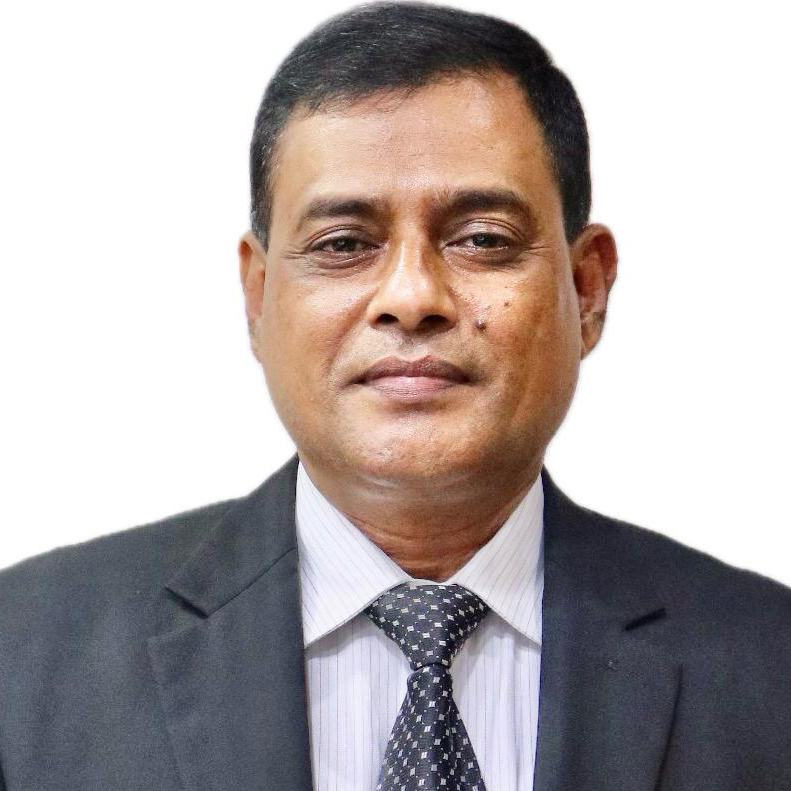
Major General (Retd) Md Nazrul Islam is a former executive chairman of BEPZA, a retired Major General of the Bangladesh Army, and a PhD researcher on technology, workforce transformation, and industrial competitiveness.
A Independent Newsweekly
© Copyright 2026 | Designed by ARK Reepon & Developed by Cosmos Group Software Team






Leave a Comment
Recent Posts
An unaccountable process leave ...
The latest price hike of all four major petroleum products by Tk 20 pe ...
The French Connection in South ...
France Ambassador to Bangladesh Jean-Marc Séré-Charlet h ...
Ties with China enter new phase
Happy 61st birthday, Singapore!
In defiant speech, Pezeshkian calls out Trump and sa ..
The banality of evil