



Reportage
Pedaling Through the Mangroves: A Journey of Nature and Inspiration from 27-30 January 2026


An Independent Newsweekly





Reportage
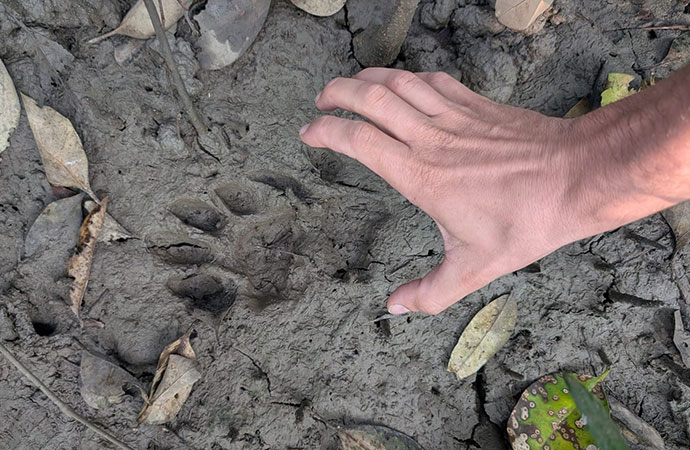
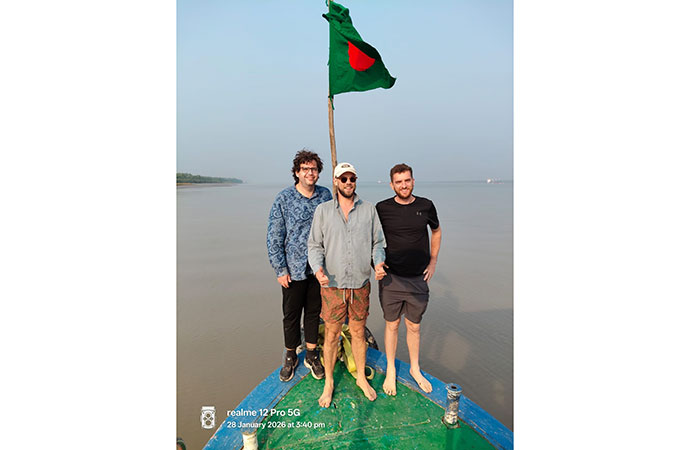
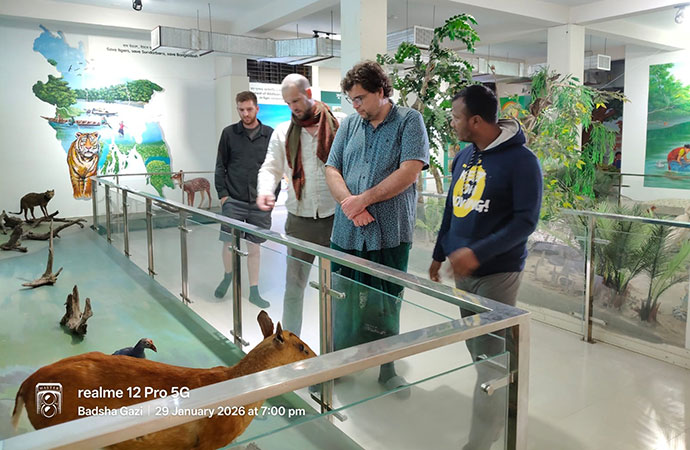
Photo Courtesy: WildTeam
The journey from the bustling streets of Barishal to the serene, emerald waters of the Sundarbans is not a short one-especially when traveled on two wheels. But for a trio of European experts committed to sustainable development, the 160-kilometer cycling trek was the perfect prelude to experiencing the world's largest mangrove forest.
This was more than a sightseeing tour; it was a meeting of minds focused on nature-positive construction. The group brought together a unique blend of expertise:
Wolf Bierens: A Dutch biologist and avid bird watcher.
Niels van den Berge: An ecologist and former Member of Parliament from the Netherlands.
Raphaël Ascoli: A French architect specializing in bamboo housing.
Despite their different backgrounds, they share a common goal: building with Mother Nature in mind. Wolf and Niels lead Easy Housing, an innovative social business providing circular, carbon-neutral homes in Uganda and Kenya, while Raphaël leads Housing NOW, a social business dedicated to sustainable bamboo architecture in Myanmar.
Wildlife and Wonder
As they swapped their bicycles at the WildTeam Conservation Centre where they stayed for boats, the Sundarbans revealed its wild heart. The group was treated to a masterclass in biodiversity, spotting saltwater crocodiles basking on mudflats, playful monkeys swinging through the canopy, and the graceful arc of dolphins breaking the water's surface. For Wolf, the birdlife was a particular highlight, with a wide diversity of birds providing a constant soundtrack to the expedition.
"As a biologist, seeing this ecosystem's resilience firsthand is humbling. It's a living laboratory for why we must integrate nature into our built environment, not replace it," said Wolf Bierens.
Community and Conservation
The trip wasn't just defined by nature, but by the warmth of the people. While cycling through local villages, they enjoyed the hospitality of local communities. The trio also received a surprise invitation to a community wedding, an experience that underscored the deep connection between the Sundarbans and those who live on its fringes.
A significant portion of their visit was dedicated to learning from WildTeam. The group was profoundly impressed by the organization's boots-on-the-ground conservation efforts.
"The work WildTeam is doing to bridge the gap between human habitat and wildlife conservation is amazing and much needed," noted Niels van den Berge. "Their EK Sundarban Museum and Interpretation Centre is a brilliant tool for awareness, turning the natural beauty of the Sundarbans into a tangible story that inspires protection."
Designing for the Future
For Raphaël, the visit offered architectural inspiration. The group stayed at the local guesthouse, praising the excellent facilities that allowed them to rest and reflect on how traditional landscapes can inform modern, eco-friendly design.
"Building in harmony with nature, whether it's bamboo in Myanmar or mangroves here, requires a shift in perspective," Raphaël Ascoli reflected. "The Sundarbans reminds us that our structures must be as adaptive and interconnected as the roots of these trees."
The 160-kilometer ride may have ended, but the collaboration between these "nature-positive" pioneers is just beginning. As they return to their respective projects in East Africa and Southeast Asia, they carry with them the spirit of the Sundarbans-a reminder that the most durable designs are those that honor the wild.
A Independent Newsweekly
© Copyright 2026 | Designed by ARK Reepon & Developed by Cosmos Group Software Team





Leave a Comment
Recent Posts
Why not zero tolerance for mea ...
While the nation continues to be swept up by World Cup fever, we must ...
The Long Present: A Dialogue A ...
The exhibition The Long Present, currently on view at Bengal Shilpalay ...
South Asia’s cultural future lies in collaboration: ..
Tribandhon: Three Artistic Voices in Conversation
A B-52 bomber crashed shortly after takeoff at a US ..
Amid intense political controversy, Bangladesh Bank ..