



Featured 1
Why the Interim Government must back itself


An Independent Newsweekly


Featured 1

Two weeks out from what is expected to be a red letter day in the fight for democracy in Bangladesh, and with all the candidates' campaigns in full swing, some fresh controversy has arisen in relation to the referendum that will be held simultaneously, to determine the future course of the country. The most visible overriding aim of the package of reform proposals is to dilute the concentration of powers that gave rise to the authoritarian regime led by the Awami League, that was deposed through a monumental uprising led by students on August 5, 2024.
The election plus referendum, in many ways, aims to complete what the people started on that date. The interim government that was appointed three days later was handed a three-pronged mandate: justice, reforms and a free-and-fair election. The justice aspect, which was by-and-large handled by the amended International Crimes Tribunal, was never expected to be completed. Nevertheless, convictions were secured against some of the leading figures of the regime, including from the police, and Sheikh Hasina herself. The election process has been marred in some aspects largely related to the extremely volatile law-and-order situation that has persisted since the Uprising, but is progressing towards an acceptable denouement - we will see what happens on election day, and in the counting process. That leaves the reforms.
In the run-up to the forthcoming referendum, the interim government has already begun campaigning at every level, from local to national, urging the public to cast a 'Yes' vote, i.e. in favour of its reform proposals. And this has given rise to the controversy. According to its critics, where the government's role should have been limited to raising public awareness about the referendum process itself, it has instead entered the electoral arena by taking a clear position in favour of one side ('Yes'). From the outset, the manner in which the interim government has handled the reform agenda suggests that it harbours deep misgivings about the positions and pledges of political parties on reform.
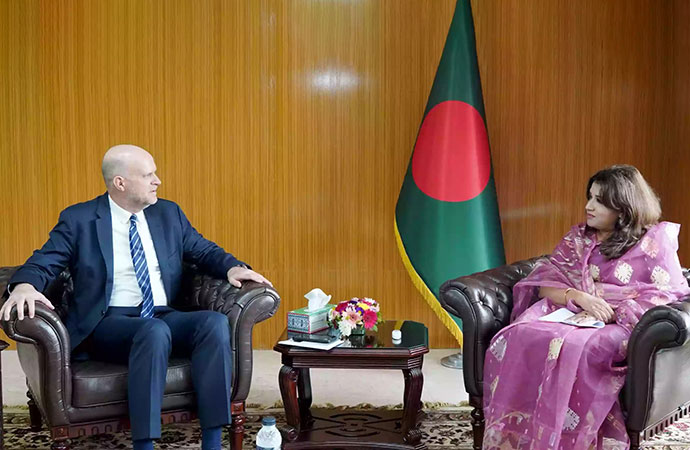
In devising the referendum, the interim government sought a way to include the people's say in the process. "The key to building a new Bangladesh is now in your hands. If you cast the "Yes" vote, the door to building the new Bangladesh will open," Chief Adviser Muhammad Yunus said, in a televised address to the nation on January 18. He urged the citizens not only to vote themselves, but also to encourage everyone they know to vote "Yes" and to bring them to the polling stations, calling on the people to change the country together. To that extent, we support this, especially in the absence of any legal bar on them from doing so, and given their genesis as an administration born out of an uprising, with an agenda that is not the same as past interim or caretaker governments.
While all this may be enough to realise a victory for the Yes camp, reforms can only be sustainable if the people themselves gradually learn to internalise them and become aware of their impact on everyday life. In that sense, a win for 'Yes' on February 12 may only be the start of the country reforming itself.
A Independent Newsweekly
© Copyright 2026 | Designed by ARK Reepon & Developed by Cosmos Group Software Team






Leave a Comment
Recent Posts
An important show of unity, in ...
So the government was finally forced to bite the bullet this week, and ...
How a School Campaign in Khuln ...
It is easy to think of Sundarbans conservation as a distant effort inv ...
Nuclear energy is having a global revival 40 years a ..
What counts as a win when victory is out of reach?
MW Bangladesh presents ‘Maya: Bengal in Motion’
Scrambling for Africa