



Featured 1
The Final Act

An Independent Newsweekly

Featured 1
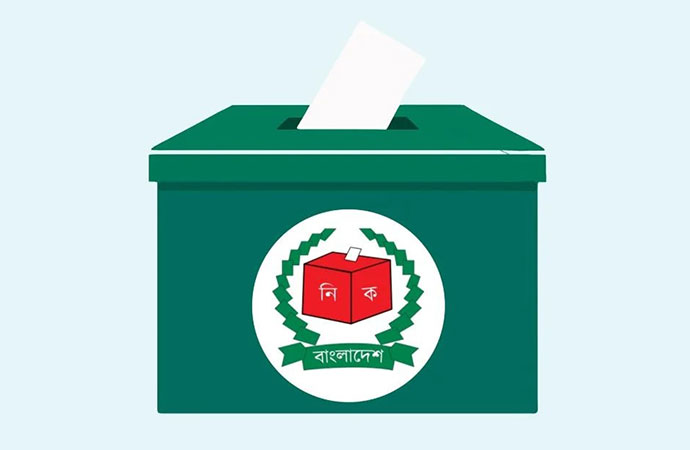
Image Collected
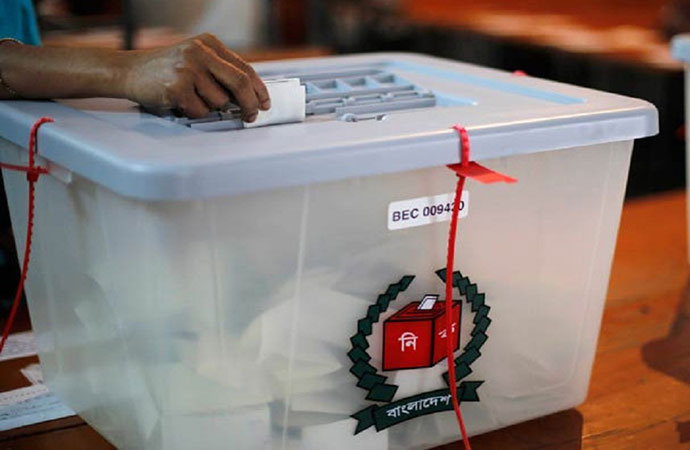
The 13th Jatiya Sangshad elections, the final act in a three-stage transition triggered by the July 2024 Uprising, is now upon us. The road to polling day, February 12, has been rocky to say the least, following the most spectacular collapse of a government in living memory, that saw everyone from the prime minister to the caretaker of the national mosque flee their posts, in the face of a generational uprising. The country was left without a working police force for at least a week, and over the past 18 months, the extent to which it has managed to win back an aura of respectability is questionable.
Nevertheless, the interim government led by Nobel laureate Dr Muhammad Yunus has managed to hold things together just enough to get us to this stage. The economy, as expected in the aftermath of such an upheaval, has suffered a marked slowdown, but Yunus's economic managers have also managed to stabilise the exchange rate and initiated important reforms aimed at cleaning up the banking sector. Overall, things could have been much worse than they are at the moment, as the team put together by the microfinance pioneer, which has been plagued by its own inexperience and lack of a political constituency, gets ready to bow out. As they get ready to hand over to the reins to an elected government, question marks abound over the fate of the reform initiatives set in motion by them, as well as the process of justice for the victims of the deadly crackdown by the security forces, that preceded the fall of the government on August 5, 2024. How these two processes play out in the days ahead, will ultimately determine the legacy of the interim government.
There is also the referendum of course, on the set of reforms undertaken by the interim government, that is set to take place on the same day. Although various questions have been raised over its legality and complexity, we cannot help but also note that no workable alternative has been put forward. The legal question has been addressed by Prof. Ali Riaz in recent days, while the complexity issue, we feel, is one we must take in our stride. After all, entire constitutions are voted on by referendum all around the world. In many ways, a victory for 'Yes' would mean the interim government has passed the test on reforms, in the eyes of the public at least. Yet we also cannot ignore the fact that significant issues have been allowed to fall by the wayside - most notably the recommendations from the commission on women's issues.
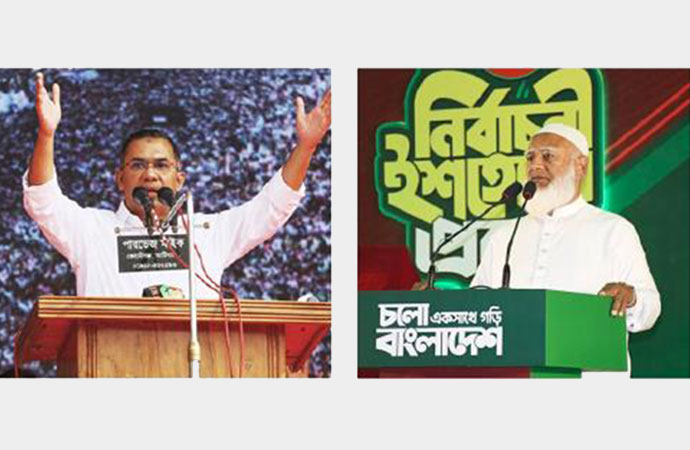
The election itself has narrowed to a straight up battle between two of the old guard - the BNP and Jamaat-e-Islami. Just twenty years ago, the two were in charge of a coalition government, and both suffered profusely under the repressive Awami League regime. No-one can be quite sure when their formal alliance broke up, but they have served up a surprisingly heated and competitive race, if the campaign period is anything to go by. It may still end in a landslide, but the most important thing will be the credibility of the election. At the end of the day, whether or not Dr Yunus and his team of advisers can leave with their heads held high, will depend on whether the vote is ultimately perceived as free-and-fair.
A Independent Newsweekly
© Copyright 2026 | Designed by ARK Reepon & Developed by Cosmos Group Software Team




Leave a Comment
Recent Posts
ART SG 2026: Reflections from ...
Singapore, for a brief moment, becomes an entire city-sized gallery. E ...
The Final Act
The 13th Jatiya Sangshad elections, the final act in a three-stage tra ...
How Undecideds May Decide the Election
Curtain Falls on Bangladesh’s Interim Government as ..
US President Donald Trump said that he plans to lowe ..
The Gaza ceasefire began months ago. Here’s why the ..