



Reportage
PM Tarique Rahman’s Possible India Visit: Can Dhaka and Delhi move beyond the Past?

An Independent Newsweekly

Reportage
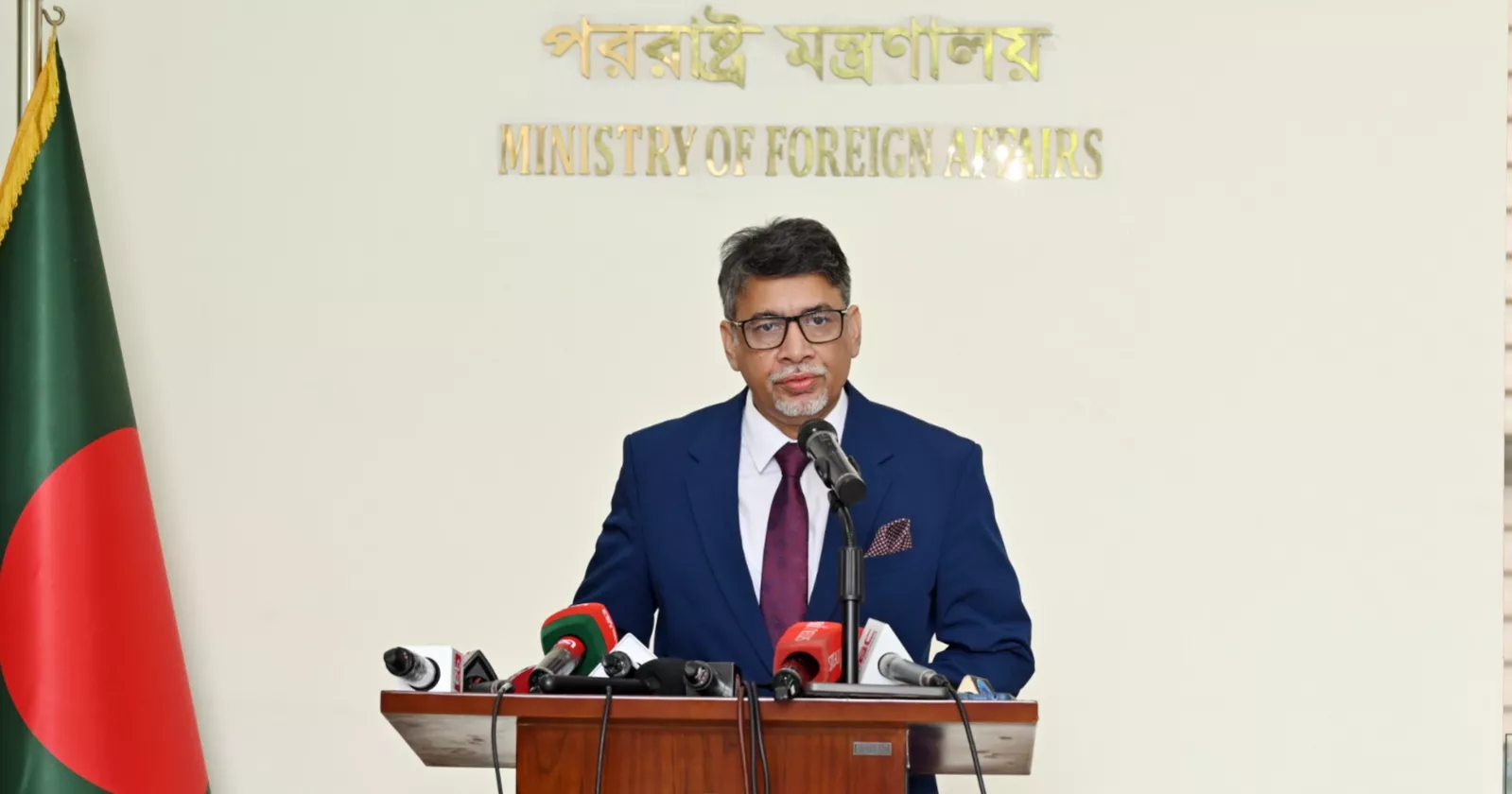
I remember what former Foreign Affairs Adviser Md Touhid Hossain told us at a briefing on January 1, 2025 at the Ministry of Foreign Affairs. He made it clear that Dhaka's relations with New Delhi should move forward beyond any single issue. When we asked whether Bangladesh-India ties could progress if Dhaka's request for the return of former Prime Minister Sheikh Hasina remained unaddressed, Hossain said this was only one of several issues between the two countries. "I think both will continue simultaneously. We have many issues of mutual interest. We will advance with all these issues side by side," he told us.
Prime Minister Tarique Rahman's possible visit to India, however, remains uncertain, with neither Dhaka nor New Delhi confirming that the trip has been finalised. India has invited PM Tarique to visit the country, including a separate invitation to attend the BRICS Summit outreach session in New Delhi in his capacity as BIMSTEC chair. But Bangladesh has yet to announce a decision, while New Delhi says it has no new information. Bangladesh's State Minister for Foreign Affairs Shama Obaed Islam said there was no update on the Prime Minister's visit and that any decision would be communicated by the Prime Minister's Office. India's Foreign Ministry spokesperson likewise said he had no update.
India's assurance that PM Tarique Rahman would receive an "honourable welcome" during a visit sends a clear signal of New Delhi's intentions. The ball, therefore, appears to be in Dhaka's court. But Dhaka has already attached a couple of conditions. It remains to be seen whether continuing a hardline approach in the face of such diplomatic outreach would be counterproductive. There are experts who think Bangladesh needs to move away from needless confrontation and recognise that its relationship with India cannot be reduced to a single contentious issue. As Hossain rightly observed, the two countries have numerous issues of mutual interest that must be addressed simultaneously. Bilateral ties now need to "move on" from the past and focus on the interests and opportunities that lie ahead.
Prime Minister's Foreign Affairs Adviser Humayun Kabir has, however, said PM Tarique Rahman's visit to India could take place once an appropriate environment is created based on mutual trust, confidence, respect for sovereignty, diplomatic dialogue and a dignified invitation.
"There is no justification for rushing into a top-level visit by going beyond the national interest," he told the media.
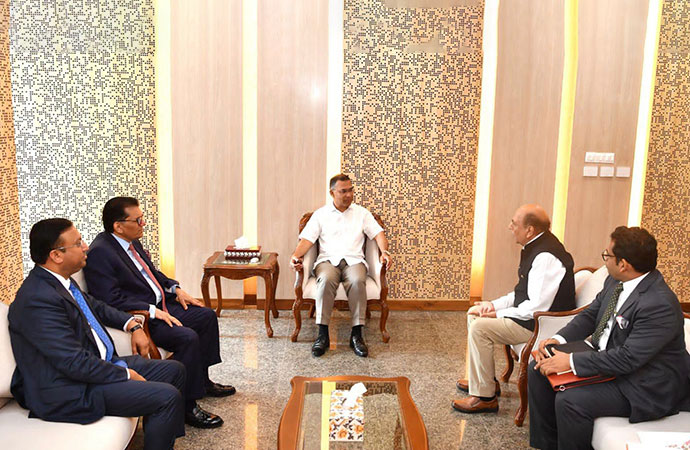
The uncertainty over PM Tarique's visit comes as Dhaka and New Delhi seek to rebuild engagement and address a range of outstanding bilateral issues. Indian High Commissioner to Bangladesh Dinesh Trivedi has expressed optimism about a possible meeting between Tarique and Indian Prime Minister Narendra Modi, saying such an encounter could help the two countries resolve their differences. Yet, despite the diplomatic outreach and invitations, there is still no confirmed date or formal announcement of a visit. For now, PM Tarique's trip to India remains a possibility under discussion, with both sides indicating that any concrete decision will be announced in due course.
Equally Beneficial Economic Partnership
State Minister for Foreign Affairs Shama Obaed Islam has said Bangladesh wants to see an economic partnership with India that is "equally beneficial and brings tangible changes" to people's lives.
"I am confident that the business communities of our two countries have both the vision and the capacity to make this happen. We can collectively identify practical solutions to the challenges," she said, noting that greater predictability and ease of doing business would benefit businesses in both countries.
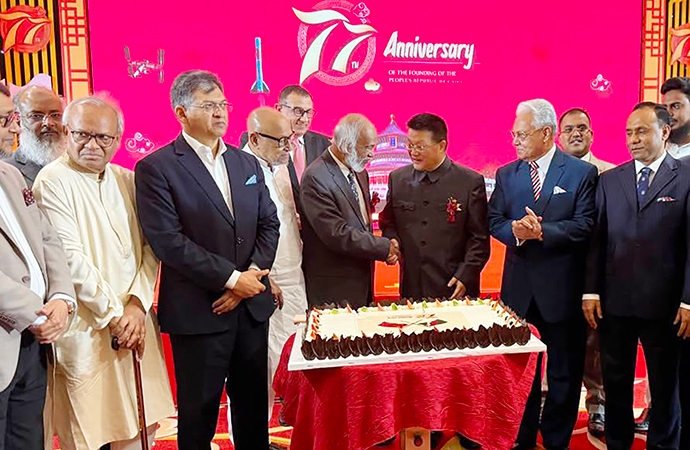
The State Minister made the remarks while speaking at a reception on Tuesday night that brought together a delegation from the Confederation of Indian Industry (CII) and leading members of the business community in Bangladesh for meaningful interactions aimed at advancing bilateral economic and commercial cooperation and fostering stronger business-to-business linkages between Bangladesh and India.
Indian High Commissioner Dinesh Trivedi hosted the reception in honour of leading Bangladeshi business leaders and members of the CII delegation.
Delegation leader and CII Director General Chandrajit Banerjee and Indian Deputy High Commissioner Pawan Badhe also spoke at the reception.
High Commissioner Dinesh Trivedi highlighted the shared aspirations of the youth and the development goals of both countries.
He underscored the important role of businesses in translating these aspirations into opportunities, building enduring partnerships and fostering long-lasting ties between India and Bangladesh.
Shama Obaed held discussions with Indian business leaders, during which they identified several issues.
She said the new government has a forward-looking approach to trade and investment, which the Indian business community may explore for mutually beneficial Bangladesh-India economic cooperation.
"From my side, I have assured them that we will try our best to resolve those issues, and we want more vibrant trade, investment and communication between the two countries," she said, describing the meeting as productive and fruitful.
Investment: An Important Pillar
The State Minister said business visas for Bangladeshis should be issued more quickly so that businesspeople can travel to India more frequently.
"We want our businesses and private sectors to communicate with their counterparts in India more frequently," she said, noting that investment is an equally important pillar of the future economic relationship.
Bangladesh has offered Indian companies a large and growing domestic market, a substantial industrial workforce, competitive production capabilities, geographical proximity and opportunities to connect with markets beyond Bangladesh.
"Our economic zones provide Indian companies with opportunities to establish dedicated manufacturing and export facilities. We would particularly welcome investments that bring technology, integrate local suppliers and create employment. And, in the process, connect Bangladeshi products to regional and global value chains," Shama Obaed said.
She said the strength of the economic relationship between the two countries would ultimately be measured not only by government-to-government engagements and bilateral mechanisms, but also by the contacts and partnerships that businesses establish with each other.
The State Minister said Bangladesh and India are geographically proximate, historically connected and economically complementary.
"These advantages provide us with a strong foundation to build a more balanced, interdependent and mutually beneficial economic partnership, a partnership that may generate greater trade, investment, technology cooperation and integration of value chains, and expansion of markets," she said.
The State Minister said India remains a major trading partner of Bangladesh in the region and that bilateral trade has grown significantly over the years.
"Yet we must also acknowledge that bilateral trade remains structurally imbalanced and much lower than its actual potential."
The State Minister said the objective should be to expand the overall economic partnership, overcome challenges and create greater opportunities for trade, business and investment on both sides.
Shama Obaed sees an important role for the Indian business community, saying Indian companies with established distribution networks can increase sourcing from Bangladesh in areas where Bangladeshi industries are already competitive, including ready-made garments, textiles, jute and jute products, leather and footwear, pharmaceuticals, agro-processing, ceramics, plastics and light engineering.
"We also recognise that there are challenges in doing business arising from non-tariff barriers, standards and testing-related difficulties, procedural delays and infrastructure constraints that affect the smooth movement of goods and services," she said.
Shama Obaed requested the Indian business community, particularly members of the CII, who have considerable influence in India, to share the experiences and perspectives gained through this visit with the relevant authorities in India so that they can collectively identify practical solutions to the challenges.
Business Community's Role
Highlighting the importance of economic and people-to-people ties, High Commissioner Dinesh Trivedi said the private sector has a crucial role in bridging differences between the two countries.
"No government in the world can provide everything. It always needs the private sector," he said, expressing gratitude to the business communities on both sides.
The envoy identified people-to-people relations, employment, education and health as key areas where Bangladesh and India can deepen cooperation.
"People all over the world have a big role to play in bridging this gap," he said, referring to the business community's role in strengthening bilateral ties.
The High Commissioner said India's "Neighbourhood First" policy reflects the importance New Delhi attaches to its relationship with Bangladesh.
Trivedi acknowledged that the two countries have gone through "hiccups" in their relationship but said such difficulties should not undermine their longstanding bonds.
"We have all gone through hiccups here and there. I think that's quite natural; that also happens in a family. But that doesn't mean that we move away," he said.
"We deeply understand the concerns of brothers and sisters of Bangladesh," he said, while stressing that the relationship should be viewed as "a partnership of equals."
"This would be a golden chapter in the history of the relationship between India and Bangladesh because we have a lot to share with you," he said.
Trivedi referred to the shared cultural heritage of the two countries and called for a renewed "melody of relationship."
"Let's have this melody of relationship," he said, expressing confidence that the relationship could become "golden" and long-lasting.
The CII Director General said the warmth they received from the Bangladesh government and the country's industries was "just awesome, absolutely great."
"And this is something that we would like to live up to by creating more business opportunities," he said.
The high-level Indian business delegation from the Confederation of Indian Industry (CII) left Dhaka on Wednesday morning.
Discussions during the visit focused on addressing issues of mutual interest and benefit, identifying emerging areas of cooperation and facilitating greater engagement between businesses in the two countries.
Both sides explored opportunities for greater economic and commercial cooperation.
The delegation, led by Chandrajit Banerjee, comprised business leaders representing prominent Indian companies and institutions, including Bharat Biotech International Limited, Infravision Foundation, Godrej Industries Group, Aravind Limited, Mahindra Group, Numaligarh Refinery Limited, Larsen and Toubro Limited, Godrej Consumer Products Limited, Forbes Marshall Pvt. Ltd., Beximco IOC Petroleum and Energy Limited, Indian Oil Corporation Limited and Apollo Hospitals, representing the consumer goods, automobile, petroleum and energy sectors.
Don't Forget the Past, But Don't Be Stuck in It -Move On
Indian High Commissioner Dinesh Trivedi on Tuesday night called on Bangladesh and India to move beyond their differences and work together to build a relationship based on "mutual and unconditional trust," saying the aspirations of the two countries' young generations should guide the future of bilateral ties.
"We need to get ourselves together. Move on. I'm not telling you to forget the past, but keep the past and sort out the differences of the past. But move on. Don't get stagnant," he said.
High Commissioner Trivedi said both Bangladesh and India are aspirational countries, with their young people looking for opportunities, prosperity and a better future.
"It's aspirant Bangladesh and it's aspirant India," he said, stressing the need for the two countries to work together to create opportunities for the younger generation.
Referring to his arrival in Bangladesh, the High Commissioner said, "The day I came in, I just walked in. This is one of the symbols, I think, that we are together."
High Commissioner Trivedi said the foundation of any long-lasting relationship is "mutual and unconditional trust."
"Friends really understand each other's issues, and we are not friends if we don't understand," he said.
Acknowledging that there are issues between the two neighbours, he said such differences can be resolved through engagement and dialogue.
"I can tell you I fully understand there are issues, but these issues can definitely be sorted out once the Prime Minister of Bangladesh (Tarique Rahman) and our Prime Minister Narendra Modi meet," he said.
The Indian envoy also conveyed what he described as an assurance from Prime Minister Narendra Modi regarding a future visit by the Bangladesh prime minister to India.
"After meeting the Prime Minister here, I went straight to Delhi and had a great meeting with our Prime Minister. He (PM Modi) just mentioned one thing: we need to meet," he said.
"You can tell them on my behalf that you have the Prime Minister of India's assurance that when the Prime Minister of Bangladesh visits India, he will have such an honourable reception as he deserves," he added, quoting the Indian Prime Minister.
The visit, Trivedi said, would be "a memorable visit" whose benefits would ultimately reach people and businesses on both sides.
Highlighting the importance of economic and people-to-people ties, the High Commissioner said the private sector has a crucial role in bridging differences between the two countries.
"No government in the world can provide everything. It always needs the private sector," he said, expressing gratitude to business communities on both sides.
He identified people-to-people relations, employment, education and health as key areas where Bangladesh and India can deepen cooperation.
"People all over the world have a big role to play in bridging this gap," he said, referring to the business community's role in strengthening bilateral ties.
The High Commissioner said India's "Neighbourhood First" policy reflects the importance New Delhi attaches to its relationship with Bangladesh.
"Why did he send me? For one simple reason: we have a lot of respect, we have a lot of affection and we have a lot of need with a neighbour. And our policy is Neighbourhood First," he said.
The High Commissioner also praised Bangladesh's Prime Minister, describing him as "a people's person" and noting that Indian Prime Minister Narendra Modi was the first to congratulate him after his landslide electoral victory and the first to invite him to India.
He said the recent high-level engagements, including visits by India's external affairs minister and speaker, as well as his own posting in Dhaka, reflected India's eagerness to strengthen ties.
"We are eagerly waiting and I'm so hopeful. There are issues, there is no doubt about it," he said. At the same time, Trivedi said differences are natural in a vibrant democracy.
"If issues are not there, then it's not democracy; it's something other than democracy," he said.
He said Indian officials have been working closely with Bangladesh's ministers in recent weeks to address differences and understand the concerns of the Bangladeshi people.
"We deeply understand the concerns of brothers and sisters of Bangladesh," he said, while stressing that the relationship should be viewed as "a partnership of equals."
"These concerns can only be mitigated once you meet," Trivedi said.
Reiterating his optimism about addressing any issue through top-level meetings and interactions, Indian High Commissioner Dinesh Trivedi on Sunday night said he remains very hopeful that a visit to India by Bangladesh Prime Minister Tarique Rahman "should take place much sooner."
"Issues can only be sorted out by meeting, and I am very hopeful," he said, noting that hearts are very close and that he wants to see a golden chapter in Bangladesh-India relations.
Speaking at a welcome dinner hosted by Masud Jamil Khan, Honorary Consul of Ireland in Bangladesh, and his wife, Kate Jaro Khan, in Baridhara, the High Commissioner said Bangladesh and India do not only share a border; they also share a dream.
The Indian envoy said Bangladesh and India are two sovereign countries. "We have our challenges. There is no doubt about it. And if you do not have challenges, that is not democracy. No matter how chaotic democracy is..."
He also said, "We need our space. We have our differences. We have our arguments. That's okay. But as long as our goals are the same, we want people, not only of these two countries, but all over the world, to have dignity, respect and mutual respect for each other. And that's what we strive for. And I sincerely wish... My very objective is to have a golden period between India and Bangladesh."
Highlighting his efforts towards that goal, the High Commissioner said the two countries have to move on.
The envoy said Prime Minister Tarique Rahman is truly a people's person, as is Prime Minister Narendra Modi.
"Both are people's persons, and the objective is the same. And this is where I have said many times in the media, wherever they have asked me, that when two such leaders meet and interact, there is no problem, there is no issue that cannot be discussed and sorted out."
On Saturday, the High Commissioner highlighted the importance of working together to advance the partnership in key sectors and nurture the exceptional bond of friendship between Bangladesh and India.
"We recognise that it is the people-to-people connection, rooted in shared aspiration and mutual goodwill, that remains the true beating heart of this enduring friendship," he said while celebrating India's 80th Independence Day at the Indian High Commission in Dhaka.
Trivedi urged the two countries to work together towards shared prosperity, noting that Bangladesh and India are advancing their partnership across vital sectors, ranging from trade and connectivity to security and healthcare.
"Let us also continue to nurture the exceptional bonds of friendship between India and Bangladesh, working hand in hand toward shared prosperity," he said.
The High Commissioner reflected on the foundations of the relationship and said the two countries are bound by a shared history of the freedom struggle and had built their ties on mutual respect and partnership.
"With the history of the freedom struggle, our bond is deeply entwined. On this solid bedrock of shared history, mutual respect, and partnership, our relationship continues to flourish," Trivedi said.
Describing his first meeting with Prime Minister Tarique Rahman as fruitful, Indian High Commissioner to Bangladesh Dinesh Trivedi recently said Bangladesh and India not only share a border but also share dreams.
"We are looking forward to it. Our invitation is there in place. We are positive that if the two leaders meet together, there will be a discussion. There will be issues in democracies. It's not democracy if there is no issue. But there is only one people's issue, which is good relations. It's a win-win situation if there is a good relationship," he told reporters when his attention was drawn to the outcome of the meeting.
Water Issues and Bilateral Mechanisms
Noting that Bangladesh and India share 54 common rivers, India has said all water-related cooperation and discussions between the two countries should take place through their existing bilateral mechanisms, including the Joint Rivers Commission (JRC), as well as other structured dialogue mechanisms already in place.
"There are several rivers which are shared between Bangladesh and India. In fact, to pinpoint the number, 54 rivers are shared between the two countries. And all water-related collaboration or discussions that have to happen between the two countries have to be done through the bilateral Joint Rivers Mechanism or Joint Rivers Commission that we have with Bangladesh, along with the structured dialogue mechanisms that are in place," Randhir Jaiswal, spokesperson for India's Ministry of External Affairs, told reporters on Tuesday evening.
He made the remarks when a journalist drew his attention to Bangladesh's efforts to explore Chinese investment in the Teesta project.
Water Resources Minister Shahiduddin Chowdhury Anee has recently said Bangladesh does not want its friendly relations with neighbouring India to deteriorate over the long-pending Teesta water-sharing treaty, and urged Delhi to take Dhaka's interests into account while pursuing its own.
"The neighbouring country is a friendly country. They have to think that while they have their interests, we also have ours. A friend should protect the interests of a friend. They will pay attention to our interests. We never want our friendly relations with them to deteriorate," he said.
Asked about a recent report by the UN Security Council's (UNSC) monitoring team on jihadist terror groups that mentioned Bangladesh, Jaiswal said terrorism and security should be a shared concern.
"See, terrorism and security matters are something that should concern everybody because it is a common scourge for all of us. We want to together fight this problem," he said.
"You saw the report of the monitoring committee which came out recently. They specifically mentioned people who were behind the group that was behind the Red Fort terror attack as well," Jaiswal said.
The report in question is the 38th of a UNSC committee that monitors the activities of Islamic State in Iraq and the Levant (Da'esh), Al-Qaida and associated individuals, groups, undertakings and entities. The Monitoring Team to the committee every six months. The latest report, submitted on August 10, covers the period from December 16, 2025 to June 9, 2026.
It runs to 30 pages, and contains 138 paragraphs. Bangladesh is mentioned just once, on page 18, in Paragraph 101, which states:
"Al-Qaida in the Indian Subcontinent (AQIS, not listed) continued to evolve from a fragmented group into a regional terrorist entity; it established logistics and financial networks, working in decentralized small, scattered cells instead of large units. The attack in November 2025 on the Red Fort in Delhi was officially attributed to AQIS. There was some concern about AQIS trying to exploit Bangladesh to establish cells there."
State Minister for Foreign Affairs Shama Obaed Islam tried to blame Awami League propaganda for it, pointing to possible links with supporters of deposed Prime Minister Sheikh Hasina.
"It could be ... because I think I told you the other day that fascist government (the previous Awami League government) could very well have done this, and it could also be their propaganda. So we have to look into it. I and the Ministry of Foreign Affairs do not have any data on which I can comment. Of course, the Home Ministry is looking into it," she told reporters at the Ministry of Foreign Affairs on Tuesday, in response to a question.
Responding to another question, she also said Foreign Minister Dr Khalilur Rahman, who is set to assume the presidency of the UN General Assembly next month, would "definitely" raise the matter with the relevant UN authorities.
"I will agree with the Home Minister that we do not have any specific data so far. There are no facts and data on which I can talk about this," she said.
There is no further substantiation of the 'concern' in the report either.
The Indian MEA spokesperson said India wants "positive, constructive and forward-looking" relations with Bangladesh based on mutual interest and reciprocity.
"Our position on the press conference by the former Prime Minister needs no repetition. On the issue of extraditions, our consistent position has been, and you're well aware of that, that these requests are being examined as part of our established processes," he said.
On energy cooperation with Bangladesh, Jaiswal said it remains ongoing in accordance with existing contracts and agreements. He also added that any further requests for additional supplies must go through a well-established process of scrutiny, as India must meet its own needs first.
"As far as the additional request is concerned, we are examining this given our own requirements, given our refining capacity, as also the availability that is there on our side," he said.
For Bangladesh and India, the question is no longer whether differences exist, but whether they are willing to manage those differences through sustained engagement. Tarique Rahman's possible visit to India could provide an important opportunity to reopen high-level dialogue, but neither side has confirmed that the visit has been finalised. Dhaka should therefore weigh the broader national interest, rather than allowing any single contentious issue to define the entire relationship.
India's repeated signals of readiness for engagement, including the assurance of an "honourable reception" for Tarique, should not be ignored. At the same time, New Delhi must recognise that a durable partnership requires sensitivity to Bangladesh's concerns and respect for its sovereignty. The two neighbours have disagreements, but they also share deep economic, geographic and people-to-people links. As Dinesh Trivedi put it, the countries should not forget the past, but neither should they remain stuck in it. The real challenge now is to move forward - through dialogue, mutual respect and a relationship that delivers tangible benefits to the people of both countries.
A Independent Newsweekly
© Copyright 2026 | Designed by ARK Reepon & Developed by Cosmos Group Software Team




Leave a Comment
Recent Posts
The government passes the test ...
One of the cornerstones of the political earthquake Bangladesh witness ...
The government hiked the price ...
The government hiked the price of a 12kg cylinder of liquefied petrole ...
Police in France stand accused of using excessive fo ..
The India-Pakistan Cold War
A week on from DNCC’s eviction drive, Mirpur-10 rema ..
Equal Service, Unequal Pensions: Time for a Fairer S ..