



Featured 2
FARRM Schools and Climate Smarts for Bountiful Ruralities


An Independent Newsweekly





Featured 2
Source: Jayed Hossain, Field Coordinator, RIMES Bangladesh
RIMES is ahead of the weather In Bangladesh, teaching farmers to act on precognitions that save harvests and lives.
In August 2024 the floodwaters climbed to the front yard of Shaheda, a 19-year-old on the river islands of Gaibandha, where survival hangs on how much water India releases upstream. She had a government text alert, and little else. With it she laid in 50kg of cattle feed and a watertight silo drum, and kept her animals alive through the week the village spent underwater. In Kurigram nearby, her friend Shurjo spent a 5,000-taka ($42) mobile cash grant from an NGO on dry food and a portable stove, and moved the household's valuables to high ground - enough to carry his family to an emergency shelter when relief did not reach them for weeks.
In the hills of Lama, at the other end of the country, monsoon landslides once killed every year. This one brought a warning instead. A youth volunteer hurried through the village with an alert translated into Marma and Chakma, the local tongues. Communities in Rangamati and Bandarban had received the same warning through a landslide-inventory app built by Save the Children and RIMES, the Regional Integrated Multi-Hazard Early Warning System. Villagers cleared their steep jhum plots, and the fruit trees intercropped among them, hours before a slide carried the land away. Nobody counts the harvests that were never lost, but the households know.
What? RIMES with FARRM
Since 2025 the app, fed by the Bangladesh Meteorological Department and paid for by Germany's foreign office, USAID and Britain's Met Office, has readied more than 50,000 people for 19 landslides, halting hill-cutting and emptying slopes before they gave way. In the high-risk districts of Bandarban and Chittagong, 97% of households received advance warning and over 80% acted on it. CARE, a charity, found that nine in ten families in and around Kurigram prepared their fields the moment a flood forecast arrived, sharply cutting their losses. Two years earlier almost none of this existed.
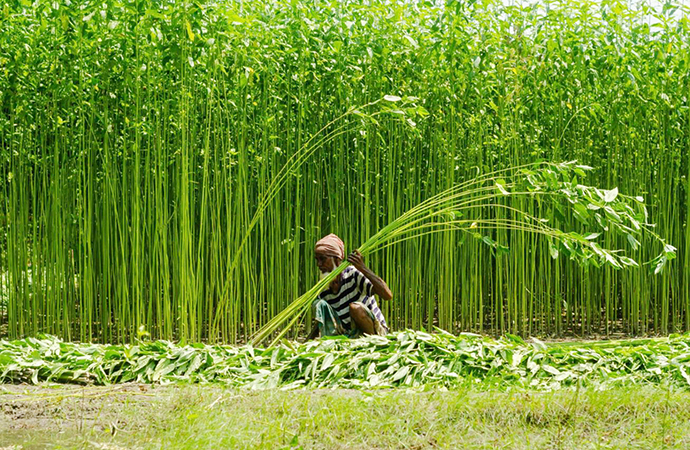
The farmers behind these numbers grow between a quarter and a half of Bangladesh's domestic crop, and until recently met each disaster more or less blind. What has changed for them is a classroom. The Agromet FARRM School - for Farmers' Anticipatory Resilience and Risk Management - runs 24 sessions on crop-weather cycles, the government's BAMIS forecasting app, the life cycles of pests and the economics of irrigation, aimed at people who have often gone no further than grade five. "It packs real decision-support into a crash course," says Ibrahim Risat, a RIMES project officer. Local agriculture officers teach it, and a spell of door-to-door appraisal beforehand tailors each course to the crops and hazards of the place.
The pupils range from nine years old to 55, says Jayed Hossain, a RIMES field coordinator. They learn to read an app and to farm ahead of the warnings it carries: shifting planting dates before a predicted flood, mulching, switching to hybrid rice that crops the year round, planting in contoured steps so the rain cannot wash the soil away, harvesting early before a storm. In Gaibandha farmers crowd over smartphones in the village square to study pheromone traps, small caged lures that draw insects off the crop and hold them, after decades of overused insecticide stopped working. Voice alerts buy time to move animals and secure seedlings, farmers in Kurigram report, and so lift yields. "It may seem akin to magic at first," says Raihanul Haque Khan, who runs RIMES's Bangladesh programme, "but they make it part of daily life in no time."
The division of labour is elaborate and discreet. Save the Children and two local NGOs, Jago Nari and SKS, work the coast and the river islands; YPSA covers the hill tracts; the agriculture-extension department and the weather office supply forecasts; RIMES brings the climate science, and Germany's foreign office pays. Together they aim to reach 11,310 farmers across nine districts, from Gaibandha, Kurigram and Lalmonirhat in the north to Patuakhali and Khulna on the coast and Sunamganj in the north-east. RIMES describes years of planning behind what it calls a "localised climate-service infrastructure" - the unglamourous work of turning an official bulletin into a tribal-language instruction a farmer can act on. Graduates form clubs and pass the alerts on by text.
Bhutanese farmers under the same RIMES protocol learned to lay in fodder for their sheep and watch for blight before storms hit. They cannot afford a lost season, and the warnings help them avoid one. The scheme echoes Bangladesh's own National Livestock Advisory Service, which already reaches more than 75,000 users, proof that a homegrown fix can travel. The farmer field school on which FARRM is modelled is older and larger still: between 400,000 and a million farmers in more than 26 countries pass through one each year. In Kenya the method has lifted crop yields by as much as 80%, and by more for women. Across Asia it has taught farmers to read how insects actually behave, cutting the spraying and the bills at once. Between 1989 and 2004 more than $100m went into pest-management field schools in the region, training two million farmers.
But the ledger is still thin, despite the gains. Umme Qulsum Ila of SKS' Gender, Child Protection and Safe Guarding Coordination calls climate services "lifelines when fused with extension networks", and cites early-action gains of 98.3% - a figure, like most here, drawn from the programme's own pilots. Attendance is coaxed with cash and other incentives, which leaves open whether the new habits outlast the payments and the donor grants behind them. Eleven thousand farmers is a rounding error against the tens of millions in the path of Bangladesh's floods and cyclones. The model plainly works, but whether it can be made cheap and durable enough to matter at national scale is the harder question.
The bet is on the young. In the coastal classes teenagers take to the smartphones and call-centre hotlines faster than their elders, fitting the lessons around their schoolwork, and Save the Children treats them as multipliers who spread bulletins, post to social media and run local farmer clubs. In May 2026 RIMES held its first "Mapathon" for students in Bangladesh.
Young farmers are already reporting payoffs. Aklima Khatun, a 22 year old carrot grower, a FARRM school beneficiary and a student of agriculture at National University, used training seeds and greenhouse techniques (learned from the 24 sessions) to triple her vegetable yield. Reflecting on her ambitions, she says: "There will come a day in the next 5 years wherein these carrots of mine will become a matter of headlines, and I would want my children to never suffer like me or my parents have suffered, that goes for my neighbours too, and I would not have had this drive if not for FARRM school." Spurred by such case stories, project planners aim to scale up FARRM Schools to all vulnerable upazilas. Banking on this demographic dividend, many of whom are newly trained young farmers poised to be tomorrow's agri-entrepreneurs, the initiative may very surely induce a cascade for those who dream while caught in the eye of a storm.
Ultimately, these efforts converge on one conclusion: climate smart farming is not beyond reach for Bangladesh's grassroots, even though the responsibility was never ours to become resilient. Bangladesh is scripting a story of rural empowerment. In a nation where floods, cyclones and landslides were once fate's lottery, forewarned farmers now stand ready, and the initiative is schooling a whole generation in how to cultivate hope against the odds.
Bangladesh did little to warm the planet that now floods it, a point its farmers make more often than its ministers. The FARRM schools show that the remedy need not wait on the guilty. In a country where a landslide or a flood was once simply fate, a forewarned farmer is learning to move first.
Shoumik Zubyer is a science correspondent, a researcher at the Bangladesh Atomic Energy Commission and the Space and Environment Research Centre
A Independent Newsweekly
© Copyright 2026 | Designed by ARK Reepon & Developed by Cosmos Group Software Team






Leave a Comment
Recent Posts
The government passes the test ...
One of the cornerstones of the political earthquake Bangladesh witness ...
The government hiked the price ...
The government hiked the price of a 12kg cylinder of liquefied petrole ...
Police in France stand accused of using excessive fo ..
The India-Pakistan Cold War
A week on from DNCC’s eviction drive, Mirpur-10 rema ..
Equal Service, Unequal Pensions: Time for a Fairer S ..