



Reportage
Can Delhi separate the signal from the noise in Dhaka’s messaging?

An Independent Newsweekly

Reportage
The unhelpful circus of speculation and innuendo in the Indian media over a possible visit to India by Prime Minister Tarique Rahman reached a crescendo on Friday (Aug. 21), as the Indian Express came up with the blaring headline that "Amid Sheikh Hasina extradition row, Bangladesh PM Tarique Rahman's India visit likely next week".
The rewriting of the rules of engagement between Dhaka and Delhi is unquestionably one of the most intriguing developments in the geopolitics of the region in recent times, so it certainly had news value. Which meant news editors at even some of the bastions of good journalism like the Express, paid no regard to its sheer improbability. Or what a spectacular turnaround it would represent from the quite hardline position communicated by the Ministry of Foreign Affairs here just five days earlier, that had raised eyebrows across the region and beyond.
That came at the start of the working week in Bangladesh, while it was still the weekend in India (Sunday, Aug. 16). The preceding days had been marked by feverish speculation in the Indian media - even its more credible, reputable corners - that suggested the two sides were close to finalising a bilateral summit in Delhi at incredibly short notice. Ultimately, it was the intensity of the messaging coming from Delhi that forced Dhaka to come out and make clear, that too in unusually direct and strong language, that the environment simply did not exist for Prime Minister Tarique Rahman to visit India at the moment.
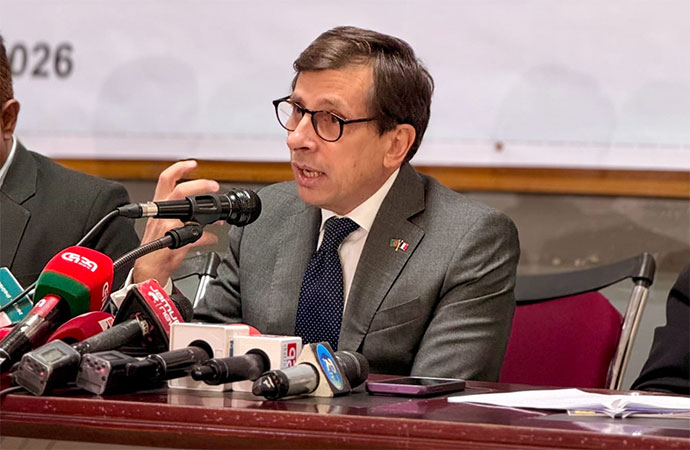
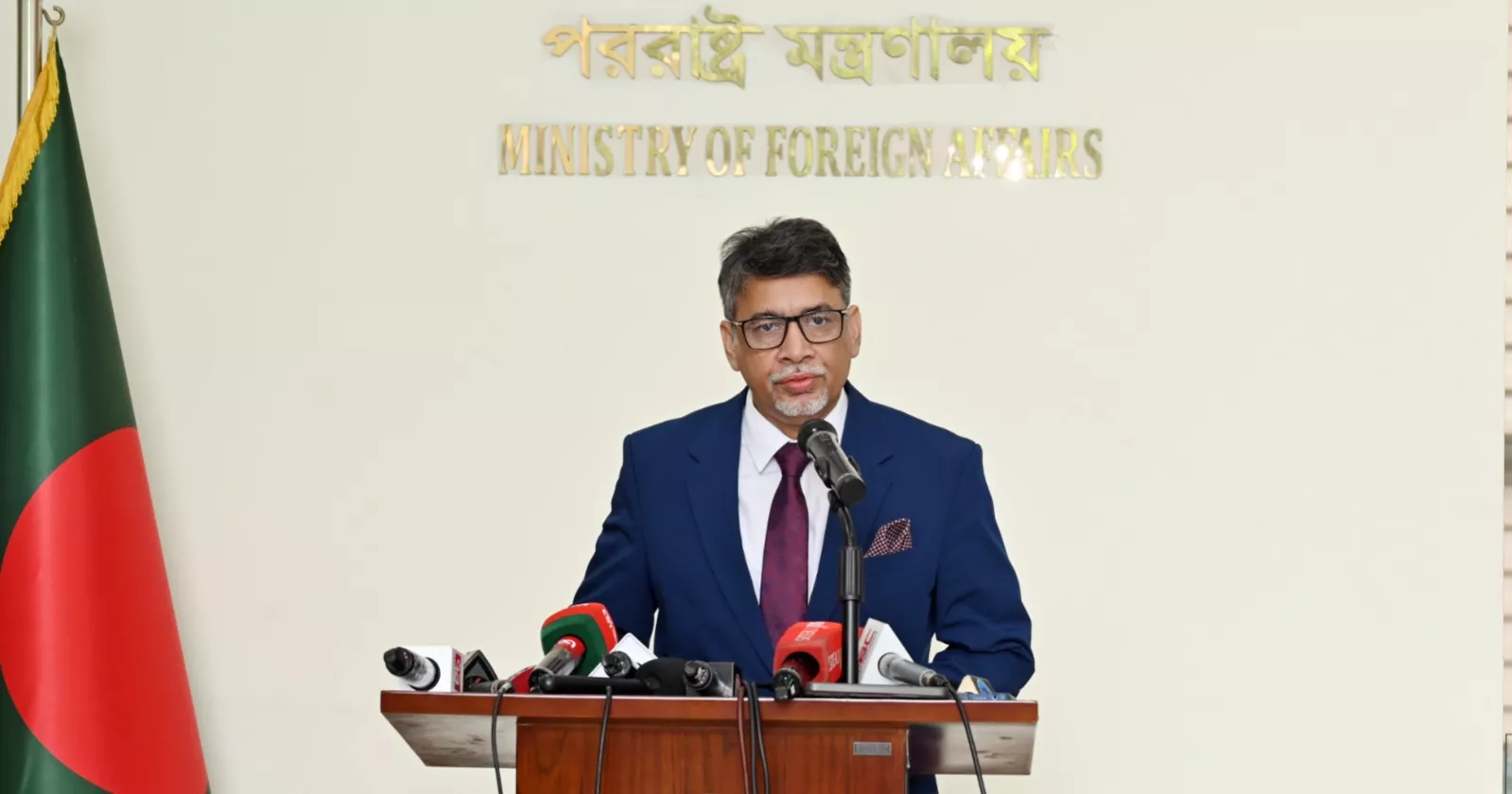
"We are of the view that a propitious environment needs to be created for the visit," said A.K.M. Shahidul Karim, spokesperson at the Ministry of Foreign Affairs, in a written statement delivered in English - not just to spare its intended audience the trouble of translating it, but also to remove any doubt as to who they were.
To that end, Bangladesh requested the Indian authorities to act expeditiously on its request to extradite Sheikh Hasina, who has been convicted of committing crimes against humanity by the International Crimes Tribunal, "other fugitive criminals", as well as the accused killers Osman Hadi, in compliance with the extradition treaty signed in 2013 between the two countries.
The statement closed by reiterating that Dhaka would continue to pursue a "Bangladesh First" foreign policy that promotes friendly bilateral relations with other countries, including neighbours, setting out its four pillars (for the very first time) as sovereign equality, national dignity, non-interference in each other's internal affairs and mutual benefit.
India's own Ministry of External Affairs spokesmen have been repeatedly drawn into clarifying the Indian position on Hasina's August 5 press conference, hosted by the Foreign Correspondents Club of South Asia in New Delhi. It has largely consisted of repeating glibly, and in extremely careful diplomatic language, that the Indian government had no role in organising the event, nor did they endorse anything that was said there. Unfortunately for them, this has not passed muster outside its borders.
No one is quite ready to believe that a press conference that Hasina joined by audiolink from the Indian Air Force safehouse that now serves as her residence, could take place without some sort of green light from her handlers. It was promoted for days in advance. The Bangladesh government even raised its concerns with their Indian counterparts. It still went ahead. It was allowed to.
And that carries geopolitical ramifications that cannot be glossed over, is what Dhaka has tried to impress upon its counterparts in Delhi. If the first, almost vituperative reaction on August 5 itself was a bit too rough around the edges for the real message to get through, the statement read out by Karim was toned down, but more penetrative.
In the grammar of international relations, a bilateral summit means more than just a meeting between two nations' leaders. It confers standing, and signals to both domestic and foreign observers that the nations in question enjoy the requisite trust and confidence to meet new horizons. Delhi may like the new Bangladesh prime minister to pick up from where the last one left off (and fled there). But now it needs to understand that cannot simply happen, because doing so would be a betrayal of his mandate. Sheikh Hasina was forced to flee, so fast that she couldn't even hand in her resignation letter. If the governments that follow hers don't signal a departure from the way things were, the entire meaning of the July Uprising gets lost upon us.
So for now, it is perhaps more prudent for the Indian government to sit back and take a moment to reflect and rethink its approach, instead of keeping up this mad rush to take Tarique Rahman to Delhi. It may, in the intervening period, pursue other measures aimed at rebuilding the trust and confidence that you cannot just conjure up between nations. One positive, for example, is that it has relaxed visa restrictions recently, though you have to wonder why it took almost four months (till June). There is also the relatively new irritant of 'push-ins' being pursued by the Indian side along various points of the long and porous border. It is clearly antithetical to the tenets of international law - a 'might is right' approach, and Bangladesh does not plan to stand for it anymore.
As Aishwarya Roy of Rajshahi University's international relations department has written, instances of smaller, aggrieved parties absorbing discomfort so that larger, more powerful counterparts are spared the discomfort of having to make a choice, particularly one that calls for a course correction, are rife in international relations. Indeed, that perfectly describes the situation in which Hasina made her infamous "Given so much to India, that it will remember forever" statement in 2018. In 2026, the people of Bangladesh did not elect Tarique Rahman to see him do the same thing.
The longer the Indian side refuses to accept this changed reality - well, let us be frank about it - both nations suffer. But the onus is on the Indians to change the dynamic. To be clear, this is not something Bangladeshis have dreamt up. India has many foreign policy experts of its own, who have shown the wrongheaded approach pursued by successive administrations in Delhi, in putting all their eggs in the Awami League basket, when it came to policy on Bangladesh. To see it all come crashing down as it did on August 5, 2024 and then expect to not pay a price for it, while also providing a base for AL to continue operating as a political entity, is to live in a fool's paradise. Sooner or later, Delhi will have to wake up to that realisation.
Till that happens, the two governments can remain engaged on pressing or upcoming matters - like the renewal of the Ganges Waters Treaty. That should happen in the coming months, before the year runs out. It shouldn't need the two prime ministers to meet for such engagements to be completed in an equitable manner. This is where the 'trust deficit' can be addressed, to lay the groundwork for a bilateral summit at a more appropriate time.
A Independent Newsweekly
© Copyright 2026 | Designed by ARK Reepon & Developed by Cosmos Group Software Team




Leave a Comment
Recent Posts
The government passes the test ...
One of the cornerstones of the political earthquake Bangladesh witness ...
The government hiked the price ...
The government hiked the price of a 12kg cylinder of liquefied petrole ...
Police in France stand accused of using excessive fo ..
The India-Pakistan Cold War
A week on from DNCC’s eviction drive, Mirpur-10 rema ..
Equal Service, Unequal Pensions: Time for a Fairer S ..