



Reportage
BIMSTEC and the changing dynamics of regional cooperation


An Independent Newsweekly

Reportage
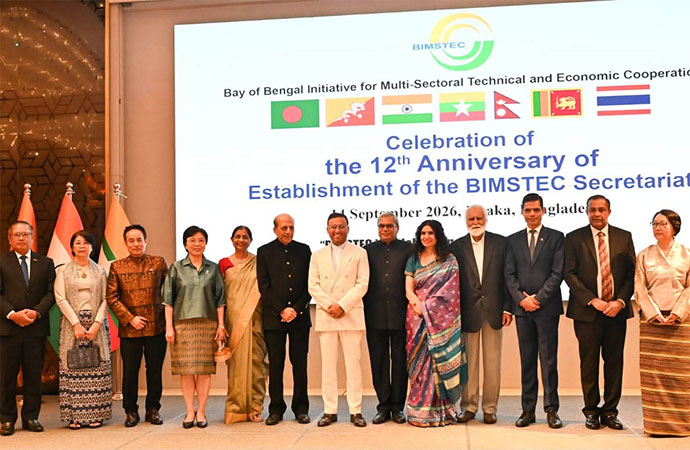
Photo: Collected
The silent victim of Prime Minister Tarique Rahman's decision to not join the BRICS meetup in New Delhi, at first glance, would seem to be BIMSTEC, which incidentally celebrated the 12th anniversary of the establishment of its Secretariat in Dhaka this same week. The official reason for Dhaka turning down the invitation, on account of it being accorded "only" in his capacity as the chair of BIMSTEC, itself wasn't flattering to the 7-nation group, that mainly emerged as a substitute for SAARC, along with one or two others. Was it akin to turning your back on them, on the part of the chair?
Or did the issue dovetail with the present power dynamics within the grouping? As a mainly India-driven instrument to, in a sense, make up to its neighbours for driving SAARC into the dust over its relationship with Pakistan (establishment figures in India have described it as a "a weapon of choice," see below), the fact that Bangladesh was now challenging or at least defying India, and more specifically, Indian hegemony, was perhaps the cue for members to sit back and see how it all plays out.
As a theatre to witness this and monitor this challenge, few stages might be more interesting or accurate than to find out how the future pans out in these organisations. Because the alignment of foreign policy, such as we had between the Awami League regime and successive governments in India, marks out a very advanced state in bilateral relations.
The central question organisations like BIMSTEC and BBIN (Bangladesh, Bhutan, India, Nepal) must answer, is how the internal dynamics within each grouping reacts to the changes in Bangladesh's approach to foreign policy, its changed foreign policy matrix, in the wake of the political earthquake experienced here in 2024. During this period, both the interim government and the present dispensation led by the BNP have sounded out their determination to revive the flagging SAARC, although not to much avail as yet. It has been more than a decade since SAARC held a summit.
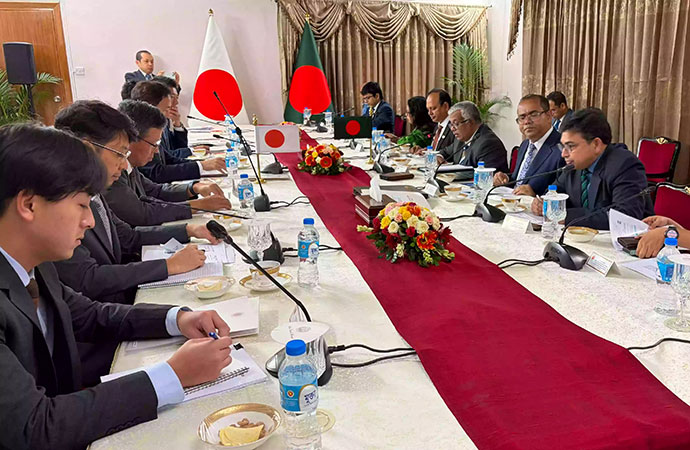
Since its establishment in Dhaka in September 2014, the BIMSTEC Secretariat has emerged as the anchor for implementing regional cooperation initiatives, facilitating consultation, communication and coordination among member states and monitoring the implementation of their decisions.
The Bay of Bengal Initiative for Multi-Sectoral Technical and Economic Cooperation (BIMSTEC) comprises seven countries of the Bay of Bengal region: Bangladesh, Bhutan, India, Myanmar, Nepal, Sri Lanka, and Thailand. It pursues regional cooperation in multiple sectors of converging interest.
At the event to mark the Secretariat's establishment on September 14, State Minister for Foreign Affairs Humaiun Kobir urged BIMSTEC member states to remain committed to regional cooperation despite bilateral differences and tensions, stressing the need for mutual trust, political will and a shared sense of purpose.
"Let us not walk away from regional cooperation regardless of differences. We must have the tenacity. We must have the vision to digest difficult challenges, difficult tensions, and difficult dialogue to make regional cooperation a success with mutual trust, political will, and a shared sense of purpose," he said while speaking as the chief guest.
The State Minister said BIMSTEC could become an even more dynamic bridge between South and Southeast Asia and a strong force for regional peace, progress and sustainable development.
"For BIMSTEC to be successful, we must not dwell on bilateral tensions but widen the nets of engagement," Kobir said.
The reception was also attended by State Minister for Disaster Management and Relief M Iqbal Hossain, along with ambassadors and high commissioners of BIMSTEC member states, ambassadors of embassies in Dhaka, representatives of diplomatic missions, members of the business, media, think tank, cultural and academic communities, development partners, and officials of the BIMSTEC Secretariat.
BIMSTEC Secretary General Indra Mani Pandey reaffirmed the Secretariat's commitment to supporting member States in expanding and deepening cooperation under BIMSTEC and expressed appreciation to the Government of Bangladesh for hosting the Secretariat and providing continued support, as well as to the Embassies and High Commissions of BIMSTEC member States in Dhaka for their continued support.
He highlighted the progress made by BIMSTEC in strengthening regional cooperation and developing the institutional framework required for it to function as an effective regional organisation.
He noted that BIMSTEC's cooperation is guided by its Charter and the BIMSTEC Bangkok Vision 2030, and supported by an extensive institutional architecture comprising summits, ministerial and senior officials' meetings, sectoral mechanisms and BIMSTEC centres.
The Secretary General also highlighted BIMSTEC's growing partnerships with international and regional organisations in support of the shared development aspirations of its member states.
The State Minister said Bangladesh would work closely with member states and the Secretariat in the coming months to advance implementation across BIMSTEC mechanisms and prepare for the next BIMSTEC Summit.
He highlighted the role of BIMSTEC as a bridge between South and Southeast Asia and stressed the need for member states to work together to address common challenges and advance shared prosperity.
The State Minister also underscored the importance of strengthening regional economic integration, connectivity and people-to-people contacts, while emphasising the need to translate BIMSTEC decisions into practical outcomes.
Kobir said Bangladesh would work closely with all member states and the Secretariat in the coming months to advance implementation across mechanisms and prepare for the next BIMSTEC Summit, which Bangladesh is slated to host in Dhaka in 2027.
The gathering of heads of state and government in Dhaka will provide an important opportunity to review progress, set new priorities and provide further political direction to the common regional agenda, he said.
On behalf of the government and people of Bangladesh, Kobir extended warm felicitations to the governments and peoples of all BIMSTEC member states on the occasion.
"Bangladesh is proud to host this regional institution and remains committed to providing the support necessary for it to discharge its responsibilities effectively," he said.
The seven BIMSTEC member states together represent a vast pool of people, resources, talent and economic potential. "Our task is to transform this shared geography into shared prosperity," Kobir said.
He noted that economic uncertainty, fragmented supply chains, climate change, energy insecurity, public health risks, cyber threats, transnational crime and humanitarian challenges do not respect national borders.
"No country can address them effectively in isolation. A stronger BIMSTEC is therefore not simply desirable; it is a strategic necessity for the peace, resilience and prosperity of our region," he said.
Referring to the 6th BIMSTEC Summit held in Bangkok on April 4, 2025, Kobir said it had provided renewed momentum to the regional process through the adoption of the Bangkok Vision 2030, the BIMSTEC Rules of Procedure and the report of the Eminent Persons Group.
The signing of the BIMSTEC Agreement on Maritime Transport Cooperation and important partnerships with international organisations also provided a stronger institutional and strategic foundation for the future, he said.
"Our responsibility now is to move decisively from adoption to implementation, from declarations to delivery," Kobir said.
Bangladesh assumed the BIMSTEC chairmanship with a clear commitment to making the organisation more functional, visible, inclusive and, importantly, people-centred, he said. "Our approach is guided by practical cooperation and measurable outcomes," he said.
As the lead country for trade, investment and development, including the blue economy, Bangladesh attaches particular importance to strengthening regional economic integration, expanding connectivity, promoting the sustainable use of marine resources and creating opportunities for businesses and people, Kobir said.
"More than two decades after the framework agreement, our region still trades far below its potential," he said, calling for renewed political and technical momentum to conclude constituent agreements, reduce barriers to trade, improve customs and logistics cooperation, strengthen regional value chains and create a more enabling environment for investment and enterprise.
"We should have the vision to look at an integrated economic market for the BIMSTEC region," Kobir said.
He also highlighted the importance of the blue economy, describing the Bay of Bengal as one of the region's greatest shared assets. "Connectivity must remain at the heart of the BIMSTEC project," he said.
"What we now need is sustained implementation, innovative financing, and stronger engagement with the private sector and our development partners," Kobir said.
He also underscored the importance of people-to-people connectivity through tourism, education, culture, youth exchanges, professional networks, think tank cooperation, innovation and greater interaction among private-sector stakeholders.
He reaffirmed Bangladesh's commitment to BIMSTEC and the Secretariat in Dhaka, saying the government deeply values the contribution of the Secretary General and his team and will continue working with all member states to strengthen the Secretariat's capacity and institutional effectiveness.
India's 'strategic weapon of choice'?
Ajay Bisaria, former Indian high commissioner to Pakistan and a distinguished fellow at the Observer Research Foundation, a Delhi-based think tank, has been exploring how the evolving global and regional order is reshaping the role and relevance of regional institutions. He spoke at an event hosted by ORF in late July, closely on the heels of the fifth BIMSTEC National Security Chiefs' meeting in New Delhi, titled "Resurgence or Redundancy? Debating Regional Institutions in South Asia."
This week, in the midst of the discussions concerning BRICS and BIMSTEC, and the future of such organisations in general, ORF released a monologue from Ambassador Bisaria on its verified social media handles, that tackles these questions. It is worth reproducing here in full, with minimum edits for relevance.
"The question is, what is our weapon of choice? What new regional mechanisms can we create? Should they be India-centric, with India being the major power here? Or should there be multiple options or a menu of options available? We're talking of the Colombo Security Conclave as the new kid on the block. We also have BIMSTEC, which has been sort of a weapon of choice for India because of the Pakistan factor and the Pakistan veto, in a sense, in SAARC and other options. And I think this is the way India is perhaps framing it.
"When India looks at its neighbourhood, it does recognise a very tough neighbourhood. This is a neighbourhood with two adversaries, which are China and Pakistan, two traditional adversaries, two failing states, which are Afghanistan and Myanmar, which saw coups coincidentally in the same year, 2021, but have been more or less failing. And other states in different stages of fragile democratic process, which have gone through regime changes and so on. But the logic and the argument of regionalism is something which is very clear to India. It takes on many forms, including with this government has articulated it as neighbourhood first, but it has been an argument all along that if India is to be the tide that lifts the boats, it has to lift all the boats of the region. And it is India's responsibility to be part of a regional architecture, which benefits each of these countries, apart from the bilateral one.
"So I would make the argument that while we should look at the BIMSTEC seriously, we look at the CSC as a promising new platform, we should not discount or not give up SAARC for debt. It might be in coma, but we perhaps should revive it or consider reviving it or at least have it as a possible option in our diplomatic toolkit to be used at a later stage. And I say this as someone who's been part of a few SAARC summits, because they were often held in very trying circumstances. So just staying for a moment on SAARC, I feel that SAARC was something that was sort of created with a lot of push from India, but with equal investment from regional countries. And that is not a regional instrument that should be abandoned easily.
We have a problem of SAARC being stalled for a decade, because the next summit was to be held in Islamabad from 2016. And that hasn't been held because of not just the India-Pakistan problem, but the Pakistan problem of a great deal of terrorism emanating from there. But I think that there is a way of finessing around SAARC as well, which is that we don't need a summit. We could have a sub-summit level engagement. We could have ministerial engagements or we could have issue-focused engagements. Like, for instance, we had during COVID, a conversation on vaccines and on health. We could have conversations on disaster management.
"So for each of these regional instruments, I don't think it's essential to immediately raise them to the summit level. We tend to have that summit ambition for all plurilateral and minilaterals, including the Quad. We declare it a failure if the Quad hasn't met at the summit level. Whereas, you know, the foreign ministers meeting, engaging with robust outcomes is also an outcome that should be recognised. So I would make the case, and I clarify that I don't speak on behalf of the government, that SAARC should not be given up as a thing of the past. But we should have a conversation about potentially using the SAARC mechanism for having all those eight countries around the table on specific issues, not necessarily raising them to a political and summit level.
"We continue using BIMSTEC, but the difference, of course, is that Pakistan, Afghanistan and Maldives are not on the table. So I think we need a bouquet of different minilaterals from India's point of view. The lead could be taken by countries of the region. The CSC is one such example. But I think it is essentially in India's interest to promote this kind of regionalism, no matter where it comes from. It needn't be India-centric, but it needs to include a large number of countries in the region. And India should play an important role in pushing it forward."
BIMSTEC 'PRO'
Even amidst the geopolitical tensions shrouding South Asia, BIMSTEC did witness a breakthrough in 2025. Building on the legal mandate endowed by its adopted Charter in 2023, the organisation undertook an initiative to address long-standing criticism that it lacks a necessary action plan. For the first time in its twenty-eight-year existence, BIMSTEC adopted a Vision statement outlining its priorities for the next five years. The "Bangkok Vision 2030" is framed around the theme "A Prosperous, Resilient and Open BIMSTEC by 2030 for our people and future generations."
The Vision essentially recategorises BIMSTEC's seven comprehensive areas of cooperation under the three heads: 'Prosperous', 'Resilient', and 'Open' (abbreviated as 'PRO'). BIMSTEC originally had thirteen sectors of cooperation, which were regrouped into seven sectors in 2023, to improve functionality. These are: (i) Trade, Investment and Development (ii) Environment and Climate Change (iii) Security - Sub-sectors: Counter-Terrorism and Transnational Crime; Disaster Management; Energy (iv) Agriculture and Food Security - Sub-sectors: Agriculture; Fisheries and Livestock (v) People-to-People Contact - Sub-sectors: Culture; Tourism; People-to-People Contact (vi) Science, Technology, and Innovation-Sub-sectors: Technology; Health; Human Resource Development (vii) Connectivity. This value-laden re-classification in the Vision document draws on the Bangkok Declaration of 1997, which serves as BIMSTEC's foundational mandate to create an enabling environment for rapid economic development and social progress in the region through cooperation in common areas of interest.
Additional reporting by AKM Moinuddin
A Independent Newsweekly
© Copyright 2026 | Designed by ARK Reepon & Developed by Cosmos Group Software Team





Leave a Comment
Recent Posts
The right time for an apology
The publication of the posthumous memoirs of lawyer Abdur Razzaq, who ...
Human rights experts commissio ...
Human rights experts commissioned by the UN’s top human rights b ...
Teesta erosion leaves several hundred families homel ..
Housing Without Houses: The Hidden Cost of Banglades ..
The Election Commission will review the timeframe
The story behind the Arafat brothers' ‘Kolpona’