



Column
Imagine. Live. Create.

An Independent Newsweekly



Column
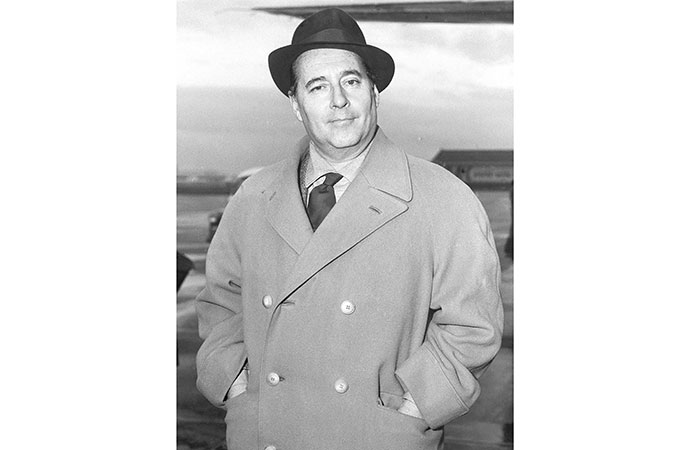
Roberto Rossellini. Photo: Collected
Roberto Rossellini praised Charlie Chaplin's 1957 masterpiece, A King in New York, as "the work of a free man". That was because Chaplin, who was facing political exile from the United States and McCarthy-era blacklisting, tore satirically into the very structures of power and privilege that were trying to silence him. His film filmed the silenced times. Therein lay Chaplin's freedom.
In the spirit of Rossellini, I aChapver that all art is the work of free humans. Indeed, the only purpose of art - if any - is to release humans into the wilderness of freedom, where they may begin to find themselves at long last in collective rejection of the Garden of Eden from which the first humans were exiled. Heaven became lighter with the departure of Adam and Eve, and the earth heavier with their arrival. An artist's work today - any day - must add meaning to the weight of the universe, but only to make it lighter for those alive to bear. That is the paradox at the heart of art. It makes the world uncomfortable, but it makes existence worthwhile by attaching meaning to the anarchic flow of life.
An artist's imagination is her or his personal compensation for the collective existence of humanity. The compensation must be greater than the burden in order to be worthwhile. In the best works of art, the compensation is so generous that humans invest it back into their own freedom. No one remains the same after having read Sophocles' Antigone or Shakespeare's King Lear or Rabindranath's Shesher Kobita or Gabriel Garcia Marquez's Love in the Time of Cholera.
Of course, no one remains the same person in any case. People grow old; their minds wither away; their desires shrivel; they become caricatures of their youth; and then their bodies just die one unannounced day. But Marquez is instructive here. His novel, Memories of My Melancholy Whores, pronounces perhaps the final verdict on life, age and death. It says: "It is not true that people stop pursuing dreams because they grow old, they grow old because they stop pursuing dreams." So, to dream is to imagine. To imagine is to live. To live is to create. To create is to make the world worth inhabiting, and worth leaving behind for others to inherit and inhabit.
Art does not build cities or renovate homes. Art makes it possible to survive in a disappearing world in the full, authentic knowledge that every human is complete in herself or himself and needs neither the concrete here nor the promised hereafter.
Art frees all from illusion and delusion, from hope and regret. As Andy Warhol said, "Art is what you can get away with". I think that his words had the artiste in mind, but they apply to the viewer or the listener or the reader as well - the audience of art, you and I. Humans do not get away with too much in this world. Even the best minds can go into decline, the loftiest morals go missing in action. What remains is art, the greatest of reminders that humans are autonomous even though they are dispensable. What matters is what mortals can get away with. How much? "I think having land and not ruining it is the most beautiful art that anybody could ever want."
Warhol's wicked humour draws boundaries even there. "I'm not afraid to die; I just don't want to be there when it happens," he averred. On the whole, though, he was defiant. "Don't think about making art, just get it done. Let everyone else decide if it's good or bad, whether they love it or hate it. While they are deciding, make even more art." Why? Because "it does not matter how slowly you go so long as you do not stop". But what if circumstances tear the artiste apart? Well, here is Warhol's answer: "I never fall apart, because I never fall together."
A note of finality is struck by Dustin Hoffman in his words on the role of performance - for art is performance - in history. "I think the most insulting thing you can do to a director is to challenge when he or she is satisfied with your interpretation." Gosh! It is like confronting the Creator when the greatest director of human affairs declares satisfaction with our theatrical performance in life. It would be like saying to the Creator: "But I wasn't satisfied with my own performance because the world that you created wasn't good enough for me."
That would be the perfect artistic response to the reality of creation.
The writer is Principal Research Fellow of the Cosmos Foundation. He may be reached at epaaropaar@gmail.com
A Independent Newsweekly
© Copyright 2026 | Designed by ARK Reepon & Developed by Cosmos Group Software Team





Leave a Comment
Recent Posts
Is the international community ...
A spate of downgraded economic projections, from Bretton Woods to Mani ...
A Childhood Lesson in Arithmet ...
As children, we learned a simple mathematical rule: if we know the pri ...
Indian authorities launched a major security crackdo ..
Police dispersed garment workers from the Azampur ro ..
Why Saudi Arabia has struggled to defend itself agai ..
Iran-backed Houthis strike Saudi oil company Aramco’ ..