



Essays
On the trail of the Asian Wild Elephant


An Independent Newsweekly







Essays
Photos: Md. Rakibul Hasan
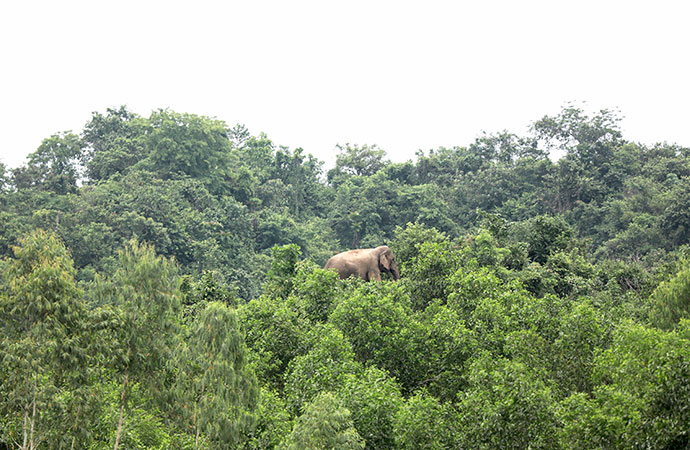
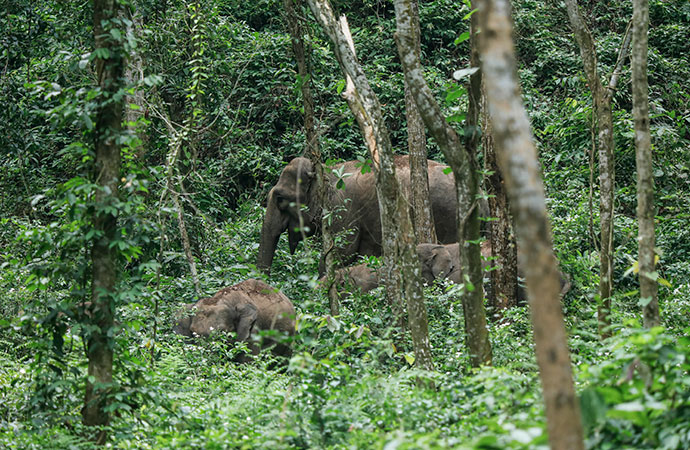
The conflict between humans and elephants has reached an extreme level as herds of wild elephants descend on the Garo Hills area bordering Sherpur in search of food. It is especially severe during the respective seasons for Aman and Boro, two distinct rice paddies in Bangladesh, or when jackfruit and bananas ripen. The crisis has arisen due to deforestation, food shortage in the hills and encroachment on the natural migration routes (or corridors) that Asian Wild Elephants have maintained over aeons, before human beings started getting in the way, according to local sources at the regional Forest Department office.
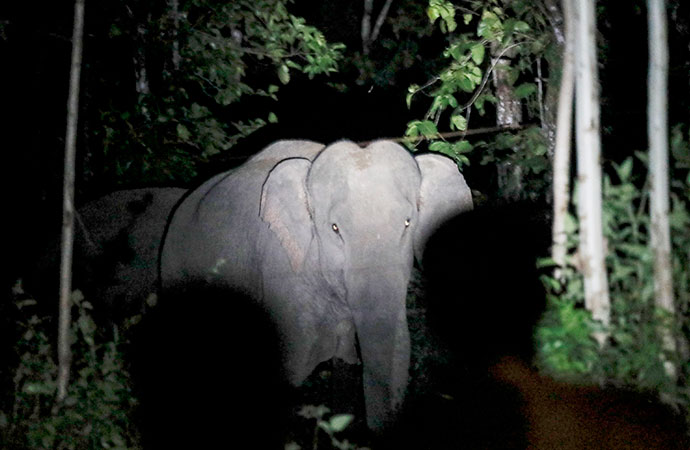
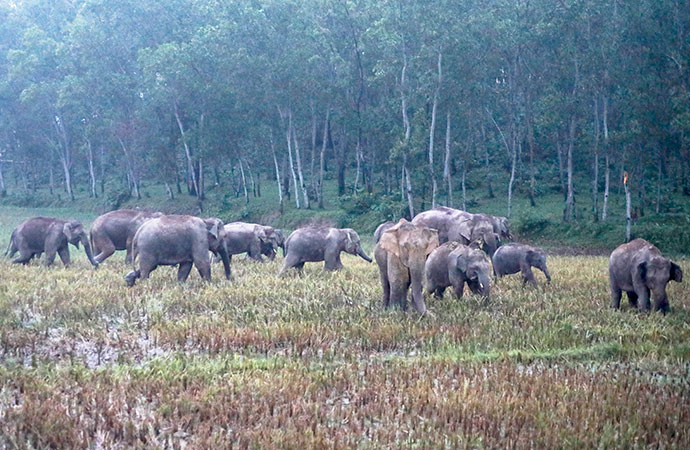
They said that the border villages of Nalitabari, Jhenaigati and Sribardi upazilas of the district are the most affected by elephant attacks. Currently they are dealing with a particular herd, of unknown numeric strength, that shelters in the deep hill forests adjacent to the borderlands between Bangladesh and India in the daytime. However, as soon as evening falls, pandemonium breaks out as this herd stages attacks on the paddy fields, banana trees and jackfruit gardens of the locality. Villagers tried to scare away the elephants by lighting torches, beating tin cans and bursting crackers to protect their crops, but they have been startling locals with their resilience and endurance. At times they also risk the herd growing even angrier and staging even more chaotic, more destructive, attacks.
Environmentalists say that this deadly conflict cannot be stopped unless the elephants' traditional corridors are restored and suitable food and water sources are restored to previous levels in the mountains.
According to the Forest Department, in the past decade, at least 35 people have died and more than 200 have been injured in wild elephant attacks in the Sherpur area as part of the human v elephant conflict. On the other hand, many elephants have died in falling into electric traps, into pits and even retaliatory attacks by angry people. Locals claim that whereas 30 to 40 elephant herds could come long in a season once, now the number of elephants visiting the locality has almost doubled.
The Forest Department's records also confirm this: while 100 to 120 elephants used to roam the Garo Hills, this number has now increased to about 170 to 180. Just in the last few years, at least 50 elephant cubs have been born in this area. At least 32 wild elephants have died in the past nine years in the Sherpur, Jamalpur and Netrokona regions of the Mymanakshi forest area. Illegal power line snares and bullets just happen to be the most frequent killers.
A Independent Newsweekly
© Copyright 2026 | Designed by ARK Reepon & Developed by Cosmos Group Software Team






Leave a Comment
Recent Posts
Is the international community ...
A spate of downgraded economic projections, from Bretton Woods to Mani ...
A Childhood Lesson in Arithmet ...
As children, we learned a simple mathematical rule: if we know the pri ...
Indian authorities launched a major security crackdo ..
Police dispersed garment workers from the Azampur ro ..
Why Saudi Arabia has struggled to defend itself agai ..
Iran-backed Houthis strike Saudi oil company Aramco’ ..