



World this week
Protests and strikes in Iran over inflation and currency devaluation


An Independent Newsweekly
World this week
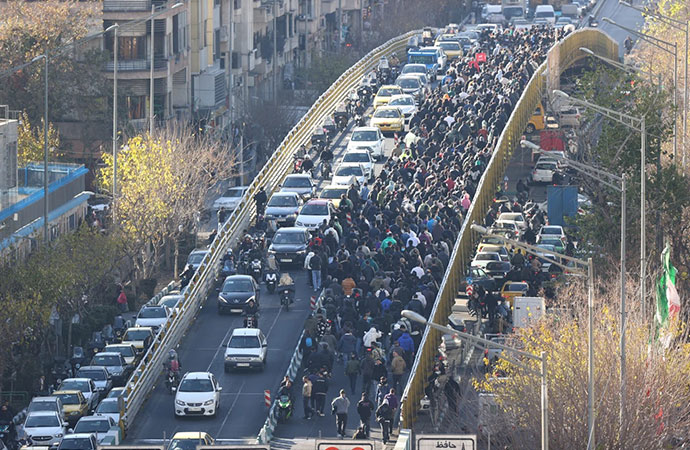
Photo: AP/UNB
Protests and strikes in Iran over inflation and currency devaluation spread from the capital, Tehran, to several other cities over three day of unrest. The protests began on Sunday (Dec. 28) after shopkeepers in Tehran's Grand Bazaar staged a strike when the Iranian rial hit a record low against the US dollar on the open market. Since then, videos verified by BBC Persian have shown demonstrations in the cities of Karaj, Hamedan, Qeshm, Malard, Isfahan, Kermanshah, Shiraz and Yazd. Police were also seen using tear gas in an attempt to disperse demonstrators.
The Iranian government said it "recognises the protests" and would listen "with patience, even if it is confronted with harsh voices".President Masoud Pezeshkian wrote on X late on Monday that he had instructed the interior minister to hold talks with what he described as "representatives" of the protesters so that measures could be taken "to resolve the problems and act responsibly". He also accepted the resignation of Iran's central bank governor.
Islamic State militants clashed with police in northwest Turkey, leaving three police officers and six militants dead, Turkey's interior minister said. At least eight other police officers and a night guard were wounded. The shooting occurred in Elmali district in Yalova province, south of Istanbul, as police stormed a house where the militants were hiding. Special forces from neighboring Bursa province were dispatched to reinforce the operation.
Interior Minister Ali Yerlikaya said the operation in Yalova was one out of more than 100 simultaneous raids carried out against IS suspects in 15 provinces across the country. The operation in Yalova was carried out with "great care" because women and children were inside the house where the militants were located, Yerlikaya said. All five women and six children were safely evacuated from the house, he said. Turkish President Recep Tayyip Erdogan offered his condolences for the police officers who were killed and vowed to press ahead with the fight against extremist groups.
Saudi Arabia bombed Yemen's port city of Mukalla on Tuesday after a weapons shipment from the United Arab Emirates arrived for separatist forces in the war-torn country, and warned that it viewed Emirati actions as "extremely dangerous." The bombing followed tensions over the advance of Emirates-backed separatist forces known as the Southern Transitional Council. The council and its allies issued a statement supporting the UAE's presence, even as others allied with Saudi Arabia demanded that Emirati forces withdraw from Yemen in 24 hours' time.
The UAE called for "restraint and wisdom" and disputed Riyadh's allegations. But shortly after that, it said it would withdraw its remaining troops in Yemen. It remained unclear whether the separatists it backs will give up the territory they recently took. The confrontation threatened to open a new front in Yemen's decade-long war, with forces allied against the Iranian-backed Houthi rebels possibly turning their sights on each other in the Arab world's poorest nation.
Mali and Burkina Faso said they would ban US citizens from entering their countries in retaliation for Donald Trump's decision to ban Malian and Burkinabe citizens from entering the US. The announcements, made on Tuesday (Dec. 31) in separate statements by the foreign ministers of the two west African countries, marked the latest twist in the frosty relationship between west African military governments and the US.
On December 16, Trump expanded earlier travel restrictions to 20 more countries, including Mali, Burkina Faso and Niger, which are run by juntas and have formed a breakaway association from the regional bloc, the Economic Community of West African States. The White House noted persistent attacks by armed groups as one of the reasons for the travel ban. The expanded ban imposed by the US represents an intensification of Trump's crackdown in the aftermath of the shooting of two national guard members in Washington DC on November 26.
A Independent Newsweekly
© Copyright 2026 | Designed by ARK Reepon & Developed by Cosmos Group Software Team




Leave a Comment
Recent Posts
Dhaka, Tokyo relationship to c ...
Deputy Chief of Mission of the Embassy of Japan in Bangladesh Yoshida ...
Democracy puts a premium on et ...
And just like that, the deed was done. With a volley of 'Ayes!’( ...
Dhaka still eyeing ‘conducive’ setting for PM’s Delh ..
Gallery Cosmos Artist Residency, 2026
Summit seeks reinstatement of FSRU deal
Hatful of medals for Bangladeshi whiz kids at WMI 20 ..