



Featured 1
Another stress-test for the world economy


An Independent Newsweekly




Featured 1
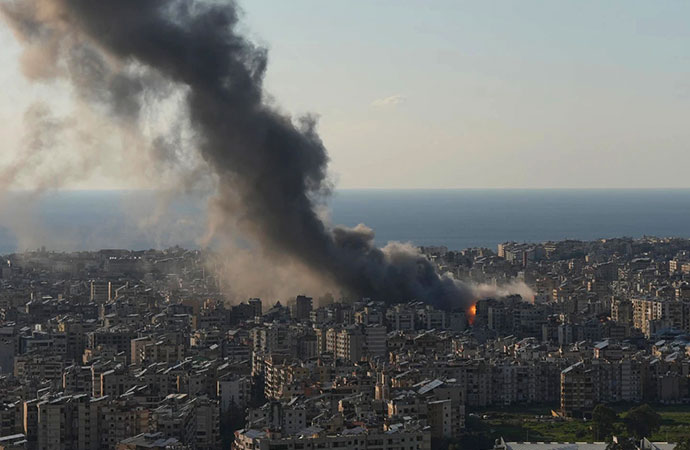
Photo: AP/UNB
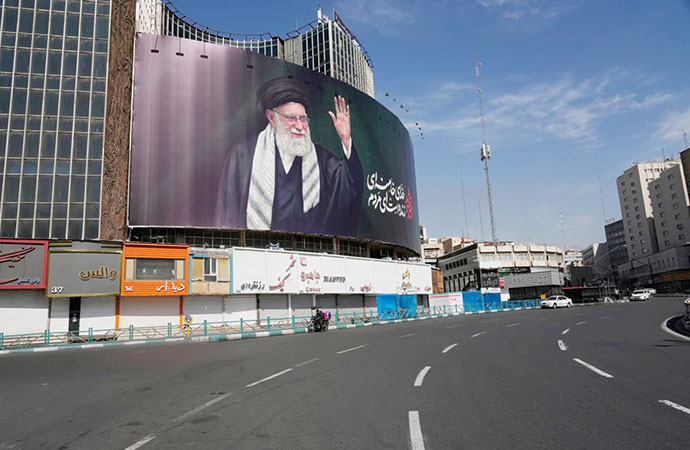
And just like that, the world economy has been thrown into turmoil once again, with the start of another war. That the US and Israel together have had it in for Iran was evident in the 12-day war last summer, when Israel struck first and the US joined days later. This time, the evidence suggests a far more coordinated invasion, with attacks launched simultaneously. It has been glorified in parts of the West as a 'just war'. But the impact on the global economy is only starting to be felt.
The surge in oil prices has started to bring back memories of 2022 when oil prices went above 100 USD/b amid quickly accelerating inflation, following the start of Russia's war against Ukraine. The least bad outcome would be a quick end to the conflict, but all the signs are that after suffering some quick, heavy losses early on, Iran is determined to drag it out, with a strategy built around 'deterrence and endurance'.
So far, Israel and the US have relied almost exclusively on strikes from afar and from the air, supplemented by influence operations targeting the Iranian public directly - exposing the regime's vulnerabilities and signalling that the moment for action to overturn the regime is approaching. But analysts argue that regime change of the kind sought by the US-Israel combine is simply not achievable through air power alone; it requires an organised force on the ground capable of assuming control of government institutions, security structures, and the machinery of the state. That would entail a ground offensive, for which the appetite on the part of both the US and Israel is questionable.
Currently, the global economic impact depends largely on its duration, and disruptions on the Strait of Hormuz - the world's most important shipping route for oil and gas, that Iran controls. Traffic through the normally busy strait faded away in the first few days of the conflict, as Iran declared the strait closed and attacked some ships that attempted the route. It has since said the Strait is only closed for the US, Israel and Europe.
Bangladesh's power plants and factories are at risk of fuel shortages after QatarEnergy invoked force majeure on its long-term LNG contract, forcing Petrobangla to scramble for costly spot cargoes in an increasingly strained global market. Six LNG cargoes were supposed to arrive in Bangladesh from Qatar in March - of which four already have. The fate of the other remains uncertain for the time being. But Dhaka is far from alone in having to deal with these disruptions.
IMF chief Kristalina Georgieva has warned that the war presents a new test of resilience for the world economy, and that energy security was "at stake" for most of Asia, she told a conference in Bangkok, noting that markets have fluctuated "like a roller coaster over the last couple of days". The scariest aspect is that what we have seen so far may not even be the worst of it. That may still be to come.
A Independent Newsweekly
© Copyright 2026 | Designed by ARK Reepon & Developed by Cosmos Group Software Team





Leave a Comment
Recent Posts
Dhaka, Tokyo relationship to c ...
Deputy Chief of Mission of the Embassy of Japan in Bangladesh Yoshida ...
Democracy puts a premium on et ...
And just like that, the deed was done. With a volley of 'Ayes!’( ...
Dhaka still eyeing ‘conducive’ setting for PM’s Delh ..
Gallery Cosmos Artist Residency, 2026
Summit seeks reinstatement of FSRU deal
Hatful of medals for Bangladeshi whiz kids at WMI 20 ..