



Reportage
The Fruits of July


An Independent Newsweekly
Reportage
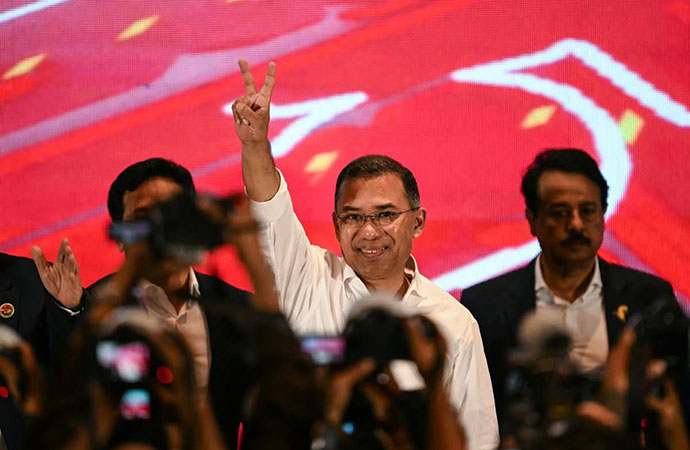
Photo: BNP Media Cell
Elections can be hard, and they usually tend to be messy in countries like Bangladesh, with its high population, relative poverty and low landmass. On the one hand, it's hard due to the zero sum game to which power is reduced in post-Colonial societies. Losing candidates don't just lose an election or vote count. There's a good chance they may even have to leave the area for a while at least. Opposition figures tend to be hounded and persecuted by state agencies simply for pursuing a different brand of politics to the government of the day.
That certainly was part of the political culture in Bangladesh, even widespread and rampant, in 2015. That is about when the likes of Nahid Islam, Nasiruddin Patwary, Hasnat Abdullah, Asif Mahmud, and so many others, were just getting started in the student politics of the day, mostly centred around Dhaka University. Akhter Hossain is a year or two senior to them, and already in league with the movement of Nurul Huq Nur, who had emerged from underneath the shadow of the Chhatra League, the ruling Awami League's feared student wing that by then was the dominant force on every public university campus in the country, to lead his own students movement centred around the single issue of quotas in government jobs.
It was also around then that the High Court banned coverage of BNP vice-chairperson Tarique Rahman's speeches in print, electronic, and social media while he was considered "absconding" following corruption cases. At the time, Tarique was 8 years into a life of exile in the UK, and with AL wielding unprecedented power at the head of an administration growing increasingly authoritarian, one leading broadcast media, Ekushey TV, had been forced off air for carrying the livestream of a speech Tarique had delivered for activists back home via video conferencing.
The owner of the channel was sent to jail as well. Back in 2016, you simply couldn't have foreseen that ten years down the line, Bangladesh would have another election in which the Awami League would be the party banned, some of the principal actors would be drawn from among those students, and Tarique Rahman would be very much in the lead.
Yet that is the election we've just had, and hardly any questions have been raised over its legality or credibility.
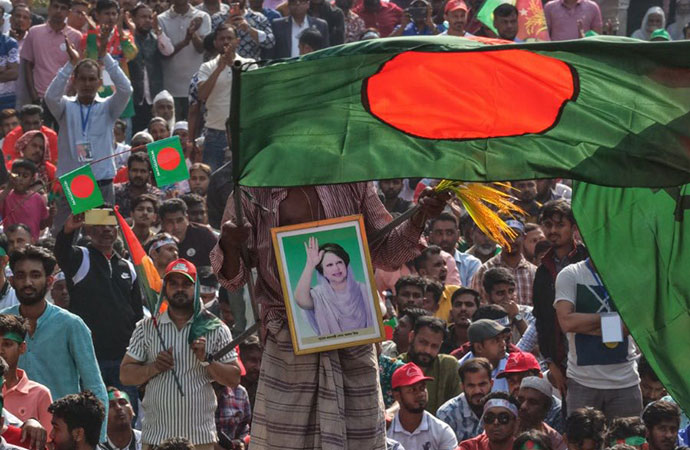
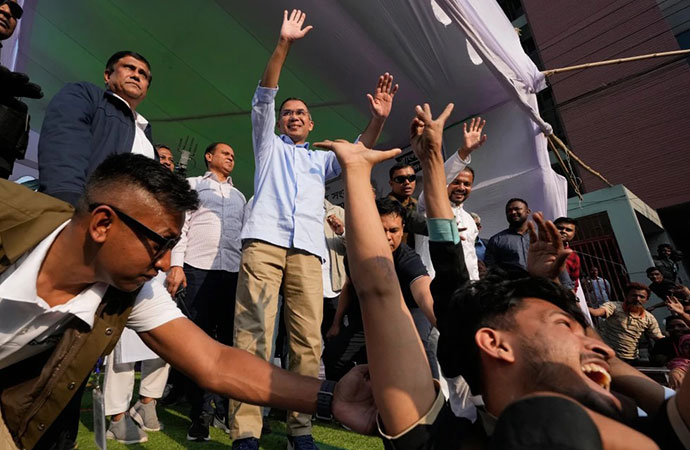
After a tough, hard fought race in which two major factions - one led by the BNP, the other by Jamaat-e-Islami - went toe to toe in a refreshingly violence-free campaign, Bangladeshis made their way in droves to voting booths on February 12, the first day offalgun,to have their say in the first free-and-fair elections since 2008.
In the end, the BNP secured 209 parliamentary seats, while Jamaat-e-Islami won 68, as the Election Commission disclosed the unofficial, or semi-official election results of 297 constituencies on Friday afternoon (they still have to be gazetted to be official).
The child of 2024's July Uprising, the National Citizen Party (NCP), secured victory in six constituencies, independent candidates in seven constituencies, Bangladesh Khelafat Majlish in two, Islami Andolan Bangladesh in one, Bangladesh Jatiya Party-BJP (led by Andaleeve Rahman Partho) in one, Ganaodhikar Parishad in one, Ganasamhati Andolan in one and Khelafat Majlish in one parliamentary seat.
EC Senior Secretary Akhtar Ahmed revealed the numbers at a press briefing in the city's Nirbachan Bhaban.
He said the average voter turnout was 59.4 percent (297 constituencies) in the parliamentary election, while the average voter turnout was 60.26 percent (299 constituencies) for the referendum.
The EC Secretary said the unofficial results of Cumilla-2 and 4 constituencies have been kept pending following a court's decision.
The elections to Sherpur-3 was earlier cancelled following the death of a Jamaat candidate.
About the referendum, he said 4,80,74,429 voters (68.05 percent of total votes cast) voted for 'Yes' option in the referendum ballots, while 2,25,65,627 voters (31.95 percent) for 'No' option to decide the fate of the implementation of the July National Charter (Constitutional Reform) Order 2025.
Jamaat raised questions over the results in some 32 constituencies, but showed impressive maturity and strategic forbearance by accepting the result, and taking the opportunity to redefine the role of the opposition. It came as a pleasant surprise to the entire nation that they were able to find it in themselves to reject the same, predictable response of losing parties in the past.
'Credible, genuinely competitive': EU
Chief Observer of the European Union Election Observation Mission (EU EOM) to Bangladesh Ivars Ijabs on Saturday described the national election as 'credible, hugely and genuinely competitive and pluralistic' but observed that there was lack of proper women's representation.
"Parliamentary elections were credible and competently managed, marking a pivotal step towards restoring democratic governance and rule of law," he told reporters at a city hotel.
Ijabs noted that for the first time since 2008, elections were genuinely competitive, conducted under a renewed legal framework that largely accords with international standards and with fundamental freedom broadly respected.
He, however, said sporadic, localised political violence and persistent fear of mob attacks, often triggered by manipulated online narratives, harmed the democratic process.
Regarding the voter turnout, Ijabs said this is historically higher and lower and noted that it is shrinking everywhere and it is something concerning for all democracies.
He said the limited political space afforded to women undermined their equal participation but the EC worked independently and transparently, maintaining the confidence of stakeholders and upholding the integrity of the polls.
"Women candidates were, regrettably, almost absent from these elections," Ijabs said, noting that only four percent of the contestants were women, with BNP fielding 10 and NCP two candidates, while Jamaat and 30 other parties did not have any, evidencing a 'clear lack of political will' to advance women in national politics.
He also highlighted the vital role of citizen observers, fact-checkers, as well as youth and women activists in rebuilding public trust in elections, enhancing transparency, and helping voters to make informed choices.
The EU EOM observers noted that the election day was orderly, festive, and calm, while dedicated poll workers managed the opening, voting, and counting efficiently.
The presence of party agents at all stages of the process enhanced integrity, while regular updates on results tabulation at the local level by returning officers and by legacy media helped to maintain public confidence. Independent participation of persons with disabilities was not always ensured.
The absence of affirmative action measures still leaves indigenous communities and minorities underrepresented in the political arena.
"It is time to abandon the old practices that no longer reflect the growing maturity of Bangladesh's democracy and to chart a new course promoting independent institutions, human rights and accountability," said Ijabs.
Commonwealth: Stay united
Chairperson of the Commonwealth Observer Group Nana Addo Dankwa Akufo-Addo on Saturday described Bangladesh's 13th parliamentary election as 'acceptable, transparent, peaceful and orderly'.
He commended the peaceful conduct of Bangladesh's parliamentary elections and the July Charter referendum, while highlighting areas where further progress on 'inclusion and accessibility' could strengthen the democratic process.
"The people of Bangladesh have exercised their democratic rights to seek the fulfillment of their aspirations. We encourage them to be magnanimous and united in their shared democratic future," said the former President of Ghana while presenting the Group's interim statement on Thursday's national election and referendum at a city hotel.
Looking ahead to the next election cycle, he encouraged the Bangladesh Election Commission to conduct a post-election review, including of all observer recommendations, as is consistent with good practice.
The final report, which will set out the full findings on the process and recommendations in greater detail, will be submitted to the Commonwealth Secretary-General, Shirley Botchwey, and thereafter shared with the government of Bangladesh, the Election Commission, political parties, and Commonwealth governments and then made public.
The Chairperson acknowledged the context in which the elections were conducted, including the significant political developments following the July Uprising of 2024, as well as decisions affecting the participation of some political parties.
While the Group noted isolated reports of post-election tensions, it encouraged all stakeholders to continue to promote calm and peaceful conduct during the post-election period, and to resolve any disputes through the relevant legal channels.
The Observer Group praised the vibrant media coverage, noting its important role in informing citizens and encouraging political debate.
At the same time, it raised concerns about online misinformation, cyber harassment and hate speech, which continue to affect public discourse.
The participation of women and youths emerged as areas requiring greater attention.
Women accounted for only 4 percent of candidates, with seven elected, while youth activism did not always translate into formal influence within political party structures, he said.
According to the Group's statement, despite isolated pre- and post-election tensions, polling officials, security personnel and election agents generally carried out their duties with professionalism.
The Group also noted that officials assisted elderly voters and persons with disabilities.
However, many polling stations remained inaccessible, particularly on upper floors, and lacked provisions for other forms of disability.
On the referendum, the Group said it recognises the Charter as a response to multiple and urgent demands for reform. "At the same time, some stakeholders expressed concerns as to whether the referendum process was sufficiently consultative and clearly communicated."
The Group encouraged all stakeholders to maintain calm during the post-election period and consider the recommendations that will be outlined in its forthcoming final report. The Commonwealth Observer Group is an independent body that will make recommendations to the Commonwealth Secretary-General.
It was constituted by the Commonwealth Secretary-General. Twelve experts, drawn from the fields of politics, law, media, gender, and election administration from several Commonwealth regions, were part of the group. The Commonwealth admitted Bangladesh as its 34th member on 18 April 1972, after its independence in December 1971. This is the fourth time that a Commonwealth Observer Group has been deployed.
UN stresses Unity
The United Nations (UN) also congratulated Bangladesh on holding the elections and a referendum and reiterated its commitment to supporting Bangladesh in its effort to build a peaceful and prosperous future.
"The Secretary-General (António Guterres), as he does often after many elections, he encourages all political stakeholders to build on the momentum so as to strengthen national cohesion, uphold the democratic norms and the rule of law," Spokesman for the Secretary-General Stephane Dujarric told reporters at a regular briefing at the UN headquarters on Friday (February 13).
The UN chief encouraged all political stakeholders to ensure the full enjoyment of human rights by all, and protecting minorities as the country advances its transition and pursues inclusive and sustainable reform.
"Look, we were not observers to the elections, so it's not for us to give a grade, so to speak, if that's the intent of your question. What I can tell you is that we, of course, congratulate the people of Bangladesh for the holding of the elections, legislative elections and a referendum," said the spokesman while responding to a question.
"But we continue to be committed to supporting Bangladesh in its effort to build a peaceful and prosperous future," he added.
IRI focuses on road ahead
The International Republican Institute (IRI), a Washington-based organisation dedicated to advancing democracy and freedom globally, on Saturday said the new government in Bangladesh, to be formed within days, should swiftly implement the July Charter reforms and ensure institutions deliver for all Bangladeshis.
"Now that the election is over, the hard work of governing lies ahead and the enthusiasm of the Bangladeshi people needs to be translated into action," said David Dreier, the IRI delegation leader and former United States Congressman (R-CA).
Significant underrepresentation of women, along with ethnic and religious minorities, among candidates remains a serious concern, said the IRI.
The IRI deployed a delegation of international election observers to Dhaka from February 9 to 13, 2026, to assess the conduct of the February 12 elections.
The election marks an inflection point for a country navigating a complex democratic transition following the July 2024 uprising that ended over 15 years of Awami League rule, IRI said.
The delegation met with a broad range of stakeholders, including the Bangladesh Election Commission, political parties, interim government officials, and civic organizations from across the Bangladeshi political spectrum, to assess the electoral environment and prospects for democratic renewal.
"Security forces and the Election Commission performed admirably. After years of authoritarian rule, Election Day was mostly peaceful and incident-free. Given the historical context, that is a big step forward for Bangladesh," said Dreier.
While election administration was technically sound, the broader political environment remains fragile, IRI said.
In the immediate post-election period, the delegation encourages political candidates to use legal channels to resolve disputes.
The delegation will continue to monitor the post-election process and issue a final, comprehensive report that includes in-depth analysis and recommendations to improve future elections.
Additional reporting by AKM Moinuddin
A Independent Newsweekly
© Copyright 2026 | Designed by ARK Reepon & Developed by Cosmos Group Software Team




Leave a Comment
Recent Posts
Dhaka, Tokyo relationship to c ...
Deputy Chief of Mission of the Embassy of Japan in Bangladesh Yoshida ...
Democracy puts a premium on et ...
And just like that, the deed was done. With a volley of 'Ayes!’( ...
Dhaka still eyeing ‘conducive’ setting for PM’s Delh ..
Gallery Cosmos Artist Residency, 2026
Summit seeks reinstatement of FSRU deal
Hatful of medals for Bangladeshi whiz kids at WMI 20 ..