



Featured 1
The Chequered Flag of Democracy

An Independent Newsweekly
Featured 1
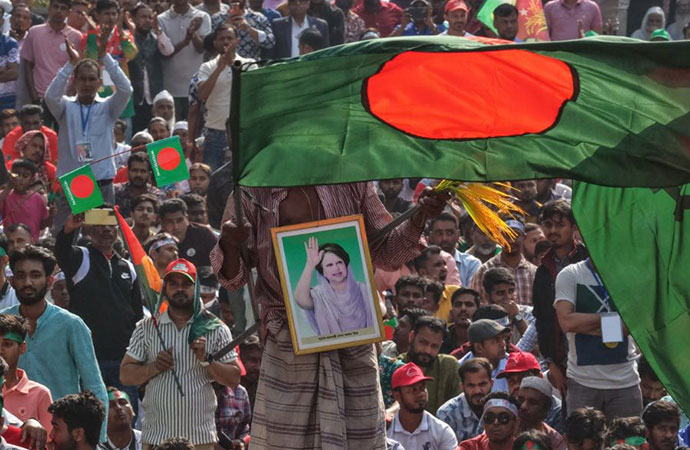
Photo: BNP Media Cell
In an almost fairytale ending, practically none of the fears apprehended by analysts, government officials, advisers or politicians of various hues came to pass on February 12, slated as the date for Bangladesh's hugely anticipated 13th general election. Coming just 18 months after a monumental student-led uprising that successfully toppled an entrenched autocratic regime that had ruled for 15 years, no one was ready to take anything for granted.
As morning broke, it became clear that falgun (spring) had arrived a day early, as the sun came out in earnest for the very first time this year. The days and nights leading up to the vote had been spent in a fever pitch, as the country re-acquainted itself with the debate and drama that is the cornerstone of competitive, democratic politics, now made even more exciting (although in some ways also more toxic) and at your fingertips, thanks to the advent of social media. By the time voting day arrived, all the political factions had quite neatly arranged themselves into two blocs reminiscent of traditional two-party systems, in this case led by the BNP on one side, and Jamaat e Islami with the young revolutionaries of NCP on the other.
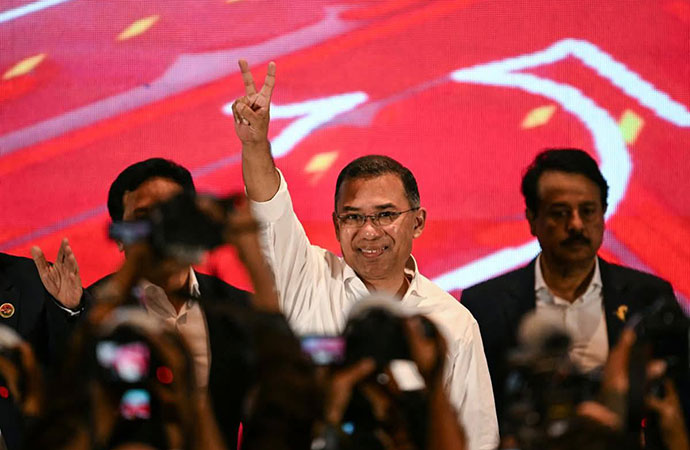
The two sides traded barbs, insults, trolls and importantly debated policy matters, although a leaders' debate between the two head honchos, BNP Chairman Tarique Rahman and Ameer-e-Jamaat Dr Shafiqur Rahman, failed to materialise. Even though the Ameer went all out in trying to get the BNP chief to debate him directly in the penultimate week of campaigning, clearly the latter was in no mood to do anything that could endanger the momentum that had been in the BNP's corner, ever since their exiled scion set foot again in Bangladesh, after 18 long years last December.
Tarique's return has indeed made a crucial difference, as he has presented himself as a bridge between the old and the new, in a society that remains in flux since the July Uprising of 2024. The crisis consists precisely in the fact that "the old is dying and the new cannot be born," as Antonio Gramsci described such societal states. It is a time for monsters, and Bangladeshis have seen some in these 18 months.
Tarique however, presents himself as a calm head and a safe pair of hands. With his wife Dr Zubaida Rahman and daughter Zaima, a UK-trained barrister who takes after her legendary grandmother in looks and mannerisms, (and their cat Zebu!), he has even given tradition-loving Bangladeshis a taste of Camelot. At the same time, he enjoys serious street cred among the generation that led Uprising, having been in constant touch with the leaders (or coordinators) as things came to a head, and directed the BNP's student front to join the protests very early.
Chief Adviser Muhammad Yunus and his council of advisers have been tested like no other time in their lives over the last 18 months. In the end, it must be recognised that they never had enough time on their hands to bring about any transformational change. What was needed from them was to hold things together and pave the way to a smooth transition. A clean, credible election was always going to be the most important factor towards ensuring that. They have now delivered that, and the transition is set to be completed in the coming week. Nationhood is hard, nationbuilding even harder. But if there is a lesson for us as a nation from these last 18 months, it is that as long as we all pitch in from our respective positions, no destination is beyond us.
A Independent Newsweekly
© Copyright 2026 | Designed by ARK Reepon & Developed by Cosmos Group Software Team



Leave a Comment
Recent Posts
Dhaka, Tokyo relationship to c ...
Deputy Chief of Mission of the Embassy of Japan in Bangladesh Yoshida ...
Democracy puts a premium on et ...
And just like that, the deed was done. With a volley of 'Ayes!’( ...
Dhaka still eyeing ‘conducive’ setting for PM’s Delh ..
Gallery Cosmos Artist Residency, 2026
Summit seeks reinstatement of FSRU deal
Hatful of medals for Bangladeshi whiz kids at WMI 20 ..