



Reportage
Losing Hadi

An Independent Newsweekly
Reportage
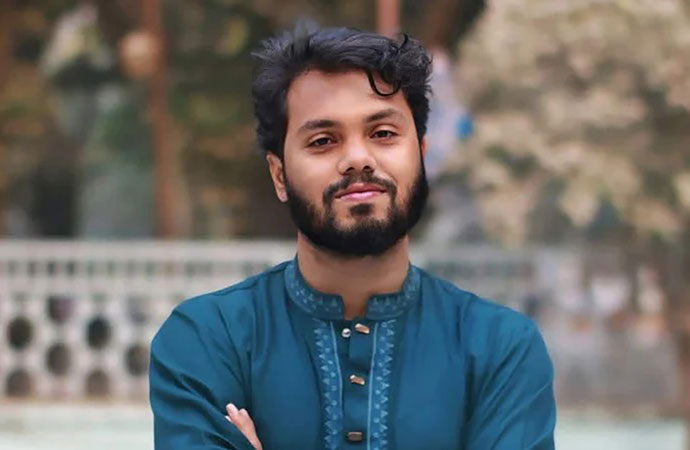
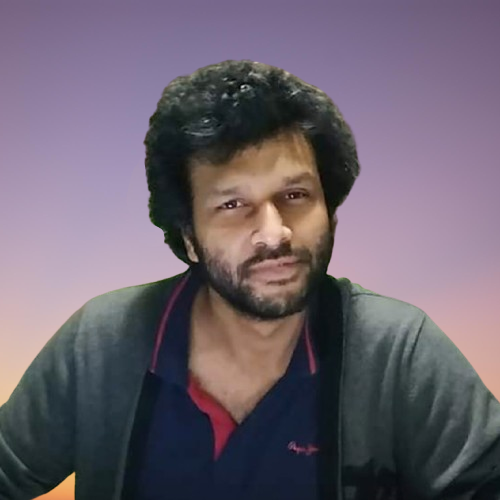
Sharif Osman Hadi. Photo: Collected
Who was Sharif Osman Hadi? What did he stand for, and who did he represent?
I first heard that Osman Hadi, the political firebrand who emerged like a comet out of the sky during those heart-stopping days of last year's Uprising, had been shot from my wife, around 30-40 minutes after it happened last Friday (Dec. 12). It was around 3pm. I'd been bingeing all morning on all the Ashes content, relishing the end of the abomination called 'Bazball' that England had imposed on the cricketing world, without much knowing what they were even doing, I suspect. It had to happen right then.
She sounded pretty distraught, but for some reason her words went completely over my head. Failed to register. I heard what she said, but it was as if I had no idea what they meant, so I had to ask her to repeat them.
"Hadi has been shot," she said, still sounding pretty upset.
I didn't know what to say. All I could do was ask: "Is he okay?"
"Janina," she said, her tone a bit how-am-I-supposed-to-know, before adding that 'they' were taking him to the hospital.
We were both befuddled, as much by what had happened, as by the awkward role reversal we had just performed. Like any responsible consumer of news and information in this age, Esha was still exercising caution over Hadi, if not being downright skeptical. It's what many people have gone through, in relation to their hopes and expectations from the band of young leaders who emerged on the political scene post the Uprising. I, on the other hand, was a believer, convinced that here was a young man with an intelligent head on his shoulders, and his heart in the right place. I found him ideologically sound, and culturally grounded. I was aware of the bad rap the establishment had tried to bestow on him, branding him first as too extreme, and then as too profane - a symbol of the breakdown in norms and mutual respect in the political arena. I found both these notions laughable, but more on that later.
For now I had to find out what happened. I saw my socials had blown up, and the news was everywhere, but all the updates were pretty rudimentary. I was still not very upset, truth be told. Something inside me failed, or refused to believe that it could be too serious. There were conflicting reports on whether they managed to get him. Some said the bullet grazed his ear, others that it didn't penetrate the brain. And I wanted to believe them, so I did.
It wasn't until the DMCH doctors came in front of the cameras and gave their first update, when he was about to be shifted to Evercare, that one learned the bullet had gone in one side, the right, and exited the left, just under the ears. Whoever had shot him, had not missed. They also said they had 'no good news to offer' at that stage. In a matter of hours, everything had gone topsy-turvy.
There was no good news, and no hope even, but I clung to a little exchange the two doctors had in front of the cameras, very fleeting, but I now realise it was all we had. While explaining that they had put Hadi on the ventilator to give him artificial respiratory support, they turned to each other momentarily and one said to the other, "Although we noticed there was effort on the patient's part, and he was able to breathe on his own, didn't we?"
It had indicated to them that he was fighting for his life, and that was encouraging to them. It was all I needed to keep hoping, throughout the next week, as they took him to Singapore and we waited painstakingly for some significant update. If Hadi was fighting, I was convinced he would make it. Even as Esha silently cried every night reading about him, right until the very end, I remained upbeat, refusing to believe he would be gone.
Over the last few months, I had come to view Hadi almost as a force of nature, like a pocket cyclone. Diminutive and unassuming, always dressed in a simple punjabi, you would never guess the boy with the permanently unkempt hair carried the kind of fire in him that he did, till he would look you in the eye and start speaking.
There was a lot said, in the wake of the July Uprising, about the new language of protest it introduced - generally, the verdict had been that it was novel and effective, but a significant quarter had also expressed reservations that it was too profane. Hadi had been a prime target for these people, who if you look up their history, would probably reveal some connection to the fallen Fascist regime. In general, as someone consuming Bangladeshi media for over three decades, working in the media for a decade-and-a-half, I had always felt that a studious refusal to be irreverent had worked to the media's detriment, limiting what we say.
Hadi arrived on the scene like a breath of fresh air. Far from profane, usually he was in fact charmingly articulate, and spoke with disarming clarity about the nation's problems (he used to write dissident poetry under a pseudonym). Along the way, yes, there were some occasions when he called out people in positions of responsibility. As far as I could tell, he was always justified on those occasions. Responding to the criticism of him, Hadi made no apologies. Instead, he asked to put the focus back on who he was swearing at: "I have no regrets about swearing at a fascist."
The day NCP went to Gopalganj, as news came in of their being trapped by the locals in a defiant show of support for AL, Hadi, standing in the rain at his own program in Dhaka, declared the end of Gopalganj as a district - with its different upazilas "to be distributed among the neighbouring districts." With some choice words thrown in between, you could take that as a threat, and that is exactly what people did of course, absurd as it was.
What was clear from the start was that Hadi was going to get no quarter from a bloated, indolent and ageing cultural establishment, who could sense that he would prefer to put them out to pasture. He had spoken of both Chhayanaut and Shilpakala with withering disdain, and branded individual artists as 'in bondage to Kolkata'.
But how was he a threat?
The boy from Nalcchity
Sharif Osman Hadi was born into a family steeped in Muslim scholarship, as the youngest of six siblings, in Nalchhity, now a municipality in Jhalakathi district down in Barishal. These are the families that retain long memories of the history of their community, particularly the plight of the Bengali Muslim community that started with the arrival of the British. Historically the Muslim and Hindu communities of this region would be interspersed among each other, when there was more parity in numbers.
Hadi's father, an imam at their local mosque as well as the vice principal at a madrasah, was a widely respected 'hujur,' who would often tell the tale, Hadi said, of the 1927 Kulkathi Massacre, that occurred minutes from their home. It was a tragic event rooted in communal tension between the Hindus and Muslims of the area, that resulted in the mass murder of 20 Bengali Muslims by the Indian Imperial Police, acting on the orders of the district magistrate, E.N. Blandy, a Brit. To this day, the Muslims of the area believe twenty of their forefathers had to die that day, simply because they couldn't speak English as well as the Hindus did. To the extent that Hadi believed it even played a part in his father sending him to Dhaka, to study political science at the country's premier seat of learning.
The late 'Hadi hujur' was a lifelong follower of President Ziaur Rahman, or 'Shaheed President Zia' as Osman always referred to him. "Abba could go on talking about Shaheed President Zia's integrity for days," he said. He would also take his son to the local BNP office, where Osman was introduced at a very young age. He grew up surrounded by the love of his family, his community and even his teachers.
The brothers all attended one of the country's most renowned madrasahs - N.S. Kamil in Jhalakathi, also known as Nessarabad Madrasah, after the respected alem who founded it. Among other things, it is famous for incorporating not just a science curriculum - but even the arts, including music, drama, public speaking, recitation - everything but dance. Hadi revelled in the extracurricular activity, and very often would travel to Dhaka to represent the school in some competition, and return with the top prize. It is his very cultural upbringing that allows Hadi to speak about Bengali culture with authority.
And of course, there is his performance of 'Bidrohi', National Poet Kazi Nazrul Islam's masterpiece. It is the most riveting recitation of the rebel's anthem you will ever see, as Hadi snarls and soars and swerves and sways (and almost swears), his every vein pulsating with its ferocious rhythm, its invincible ethos. Available on Youtube, it leaves everyone spellbound, and captures Hadi as the cultural force he had become. The boy from the madrasah, presenting a take on Nazrul like no one had ever done before, stripped down to its rawest emotions. Like Chhayanaut had never seen before. Yes, he was a threat to the establishment.
It struck me how he represented this wider trend in society, that was reflected in the recent DUCSU polls. One of the takes we heard was that DU has become overrun by madrasah students - a change that was acknowledged resentfully by the establishment. As a threat. But is it any surprise if their fellow students start voting for them?
Hadi based his work in the cultural domain with Inqilab Moncho as a channel to fight Indian hegemony. He wanted to break Delhi's "cultural hold" over Bangladeshis, that he regarded as a threat to sovereignty. Which brings us to one of the most essential insights into Hadi's thinking. Instead of forming or joining a political party after Hasina fled on August 5, 2024, he founded Inqilab Moncho, because he regarded culture as upstream from politics, or even geopolitics. In order to shape people's political choices in the long term, we need to affect change in the cultural domain first.
In the last days of his life, Hadi was increasingly busy trying to cover every inch of the sprawling urban constituency of Dhaka-8, where he was running, somewhat audaciously, as an independent candidate in the next election, pending the EC's approval. Now of course there will be no need for that.
The Assassination of Hadi
Osman Hadi had been receiving threats from Awami League leaders and activists since November this year. Awami League supporters were seen rejoicing over his shooting. A brief outline of these events was covered by Bangla Fact, that is run by the Press Institute of Bangladesh.
On August 13, 2024, he formed Inqilab Manch with the declaration of "standing against all forms of hegemony, protecting independence and sovereignty and building a state based on justice." He was the convener of this organization.
In May 2025, a movement grew demanding the banning of Bangladesh Awami League as a terrorist and seditious organisation, the inclusion of provisions for the trial of political parties in the International Crimes Tribunal Act, and issuing the July Declaration. Hadi was one of the voices of this movement.
Former Chhatra League leader Dalton Heera made several threats against Osman Hadi, calling for violence against him and revealing his address and phone number.
Before the Awami League's alleged lockdown program on November 13, Dalton wrote in a post on November 11, "Some people should be paid their dues by the 13th, if they dare to come out. Hadi is one."
On the same day, he posted Hadi's phone number and permanent address on Facebook and called for violence against Hadi and his family members. He posted at least 5 times about Hadi that day. Earlier, on September 28, he posted regarding Osman Hadi: "Killing is obligatory."
It is worth noting that Hadi had said that he had received death threats through calls and texts from at least 30 domestic and foreign numbers, according to Bangla Fact.
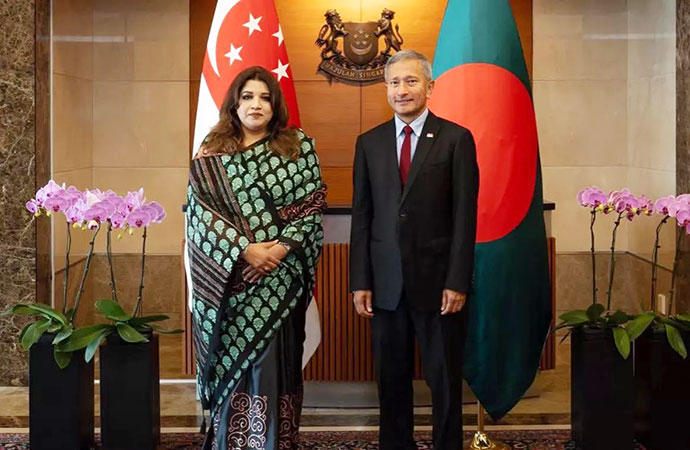
Osman Hadi was supposed to go to various mosques for his election campaign after Friday prayers on December 12. At noon, while he was riding a rickshaw along Bijoynagar Calvert Road, two helmeted men on a motorcycle rode up beside him, and one of them fired one shot from very close range. He was taken to Dhaka Medical College Hospital. Later, from there, he was taken to Evercare Hospital. On December 15, he was taken to Singapore for advanced treatment and admitted to Singapore General Hospital.
Hadi breathed his last while undergoing treatment there on Thursday, December 18.
Because he was running against BNP heavyweight Mirza Abbas, the finger of blame initially pointed, rather simplistically, at the BNP candidate. But this made no sense. Hadi had never disrespected Abbas. Till the end, his inspiration in politics remained 'Shaheed President Zia', apart from a local BNP leader in Nalchhity, whose name I don't quite recall at the moment. His decision to not join NCP, after joining the Nagorik Committee, was likely due to the new party going too hard, too soon against BNP. He repeatedly insisted in his speeches, "We must not corner BNP."
Who killed him?
After the shooting, a full-fledged nationwide effort immediately commenced, with some media outlets joining in to try and identify the killers, following the release of a suspect's photograph by the Dhaka Metropolitan Police (DMP).
On Saturday (Dec. 13), the DMP published a photograph of a suspected assailant involved in the attack and urged the public to provide any information that could help identify or locate the person.
Since the attack, various claims about the attacker's identity have circulated online. Digital investigative outlet The Dissent published a report using OSINT tools (open source intelligence) that identified the suspected shooter as an activist of the banned Chhatra League from the capital's Adabor area.
According to The Dissent, the claim was made after a comparative analysis of multiple photographs, including CCTV footage gathered from police, images of the person seen shooting Hadi, images from Hadi's election campaign, and footage of an individual seen at the Inquilab Cultural Centre on December 9.
The outlet reported that the individual appearing in all three incidents closely resembles a person named Faisal Karim Masud, also known as Daud Khan. It said facial similarities were found after analyzing CCTV footage from the Inquilab Cultural Center dated December 9, police-collected CCTV footage from the December 12 attack, photographs published by mainstream media, and more than 50 images posted on Facebook and Instagram accounts under the name Faisal Karim Masud, as well as posts from pro-Awami League pages and individuals.
The Dissent further stated that verification using two facial detection applications showed a match between Faisal Karim's images and the person visible in the CCTV footage from the Inquilab Cultural Center.
Their investigation also identified Karim as an ex-leader of Chhatra League, who held a post in the organisation's Adabor unit. A notable detail highlighted was a distinctive wristwatch seen on the shooter's left hand, which closely matches the same design of wristwatch worn by Faisal Karim Masud in multiple photos found on his Facebook and Instagram profiles.
In November 2024, several mainstream media outlets published reports with photographs of Faisal Karim, stating that he had been arrested by RAB as the prime accused in an armed robbery case involving the looting of Tk 1.7 million from an office in Adabor, Mohammadpur. However, he was later released on bail.
During the course of the week, more details came out to support the claim, and also identified the motorcyclist he rode with as an AL associate.
'Jaan diye dibo, July dibo na'
Sharif Osman Hadi died a hero, fulfilling a desire he had often expressed, to join his brothers and sisters who obtained shahadah (martyrdom) during the July Uprising - the movement he joined after the female students of DU broke their halls' locks and came out on the night of July 14 (the "Ami ke, tumi ke?" night). At 31 last year, he was slightly senior to the core group of students who led the uprising, but was in Dhaka teaching at a private university. He had been involved in anti-AL government movements in the past with Akhter Hossain, and called him that night to join. His most outstanding quality, unflinching courage, today inspires millions, and his politics resonated with an entire generation, relevant to the most salient issues of our time.
To those who now say he was anti-India, we can only say that is an easy distortion of his position. News published in Indian media in recent days completely missed the point of his politics, which is to be expected when you base them on fake information. Such disinformation campaigns are nothing to get into too much, but it is important to know his crusade was always against Indian hegemony, where the operative word, we should know, is hegemony in the Gramscian sense. His fiercely independent soul would have revolted against any form of hegemony. He was too human, able to endear himself to anyone, to breed hatred in his heart.
Hadi's analysis of the Awami League, as an agent of Indian hegemony, is the sharpest of all its critics in the new generation. It saw him regularly align with protests raised against the AL government. He was there at Shapla Chottor on the night of May 5, 2013. He took part in the 2018 anti-quota movement. He was even there at the BNP rally, in the face of a clampdown by police, in the capital's Golapbagh ground on December 10, 2022. Losing him in the way that it happened, is the most serious tear till now, in the fabric of the July Uprising, that brought together so many people from so many strands under one umbrella.
Today that fabric is strained, and almost at breaking point, a fact that Hadi acknowledged with anguish. He was severely critical of his "brothers and sisters" who joined NCP or the government, against whom various allegations have cropped up over the last year. It broke his heart. But he remained determined to see it through, and asserted we were still in the throes of revolutionary upheaval. Final victory, he insisted, was still in front of us. It will be harder without him, no doubt. But provided we make it, no one will be cheering harder from the heavens, maybe with an expletive or two thrown in, than Osman Hadi.
A Independent Newsweekly
© Copyright 2026 | Designed by ARK Reepon & Developed by Cosmos Group Software Team




Leave a Comment
Recent Posts
Dhaka, Tokyo relationship to c ...
Deputy Chief of Mission of the Embassy of Japan in Bangladesh Yoshida ...
Democracy puts a premium on et ...
And just like that, the deed was done. With a volley of 'Ayes!’( ...
Dhaka still eyeing ‘conducive’ setting for PM’s Delh ..
Gallery Cosmos Artist Residency, 2026
Summit seeks reinstatement of FSRU deal
Hatful of medals for Bangladeshi whiz kids at WMI 20 ..