



Featured 1
Parliament 101: Elections have consequences


An Independent Newsweekly





Featured 1
Collected
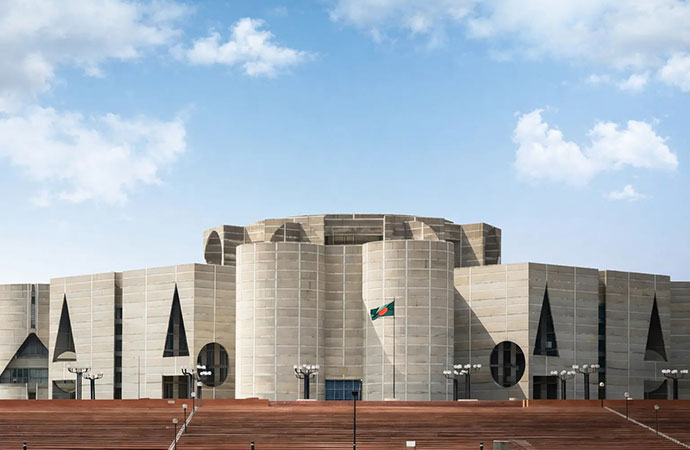
As Parliament returned for its first full week since convening on March 12, one month after the 13th general election, things heated up as the treasury benches and the opposition locked horns over the implementation of the July Charter. The faultlines were set even earlier of course, on February 17, when the BNP and its allied MPs took a single oath - as members of parliament - but the opposition MPs, comprising mostly the Jamaat and the NCP, took an extra oath as members of a Constitutional Reform Council.
The opposition MPs were acting in line with a proposal that was the brainchild of Professor Ali Riaz in his capacity as vice-chair of the National Consensus Commission (NCC), and included in the 'July National Charter (Constitution Reform) Implementation Order, 2025'. Prof. Riaz had envisioned that the 13th parliament would also serve as a constitution reform council, apart from performing its regular duties, for the first 270 days or nine months. As members of the council, MPs would work to incorporate the proposals passed in the referendum into the constitution within a set time period.
While that could be one way to implement the changes necessary to the constitution, what should be made clear is that it isn't the only way. That is essentially what Home Minister Salahuddin Ahmed has been emphasising in all his statements, and all his deliberations on the matter. For refusing to abide by the Implementation Order's path to constitutional reform, the BNP is being portrayed as adversarial to the July Charter itself, which we mustn't forget, is a different document to the Order. Yet you won't find BNP leaders ever disparaging the Charter itself. Indeed they speak of it almost reverentially.
What this means is that the BNP will look to implement the charter incorporating the notes of dissent they raised, during the televised proceedings of the NCC. With the people having spoken in favour of the party quite overwhelmingly, this is a reality the Jamaat-NCP combine must accept. Amid all the stellar contributions to the debate by lawmakers from both sides, the BNP also slipped in how they intend to go about it. The home minister, who of course led the BNP delegation at the NCC sessions, called for forming a parliamentary special committee comprising representatives from all political parties as well as independent members to amend the Constitution in light of the July Charter, emphasising that "every word of the charter signed is embraced by the BNP."
There was further disagreement over the composition of the committee. The opposition possibly overplayed its hand by proposing equal representation for the treasury and opposition benches in the committee. The government would prefer to do it proportionally, on the basis of how many seats each side enjoys in Parliament, which sounds eminently more agreeable. A well-known dictum in the mature democracies of the West says, "Elections have consequences." It seems the opposition parties in the current parliament may have to learn this the hard way.
A Independent Newsweekly
© Copyright 2026 | Designed by ARK Reepon & Developed by Cosmos Group Software Team





Leave a Comment
Recent Posts
Is the international community ...
A spate of downgraded economic projections, from Bretton Woods to Mani ...
A Childhood Lesson in Arithmet ...
As children, we learned a simple mathematical rule: if we know the pri ...
Indian authorities launched a major security crackdo ..
Police dispersed garment workers from the Azampur ro ..
Why Saudi Arabia has struggled to defend itself agai ..
Iran-backed Houthis strike Saudi oil company Aramco’ ..