



Column
Long-missing political civility signals a comeback in Bangladesh

An Independent Newsweekly
Column
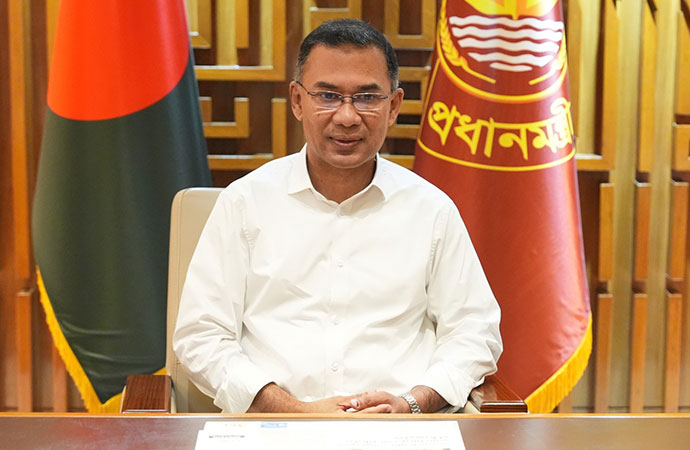
Photo: Collected
‘The superior man is modest in his speech but exceeds in his actions,’ Confucius.
Over five decades since independence, Bangladesh has made significant progress across various economic and social indicators, but it has fallen short of its desired development due to repeated disruptions in democratic governance.
Bangladesh has held 13 national parliamentary elections -- 1973, 1979, 1986, 1988, 1991, Feb 1996, Jun 1996, 2001, 2008, 2014, 2018, 2024 and 2026 -- since its independence in 1971, but the number of genuinely contested democratic elections is very few.
According to local and international observers, the national election Bangladesh held on Feb 12, 2016 was peaceful and the most-fair as it was in 1991, earning a largely positive global image.
Yet, people had concerns regarding peace over the country's fresh democratic journey, fearing the possible return of political hegemony and confrontation due to the BNP's landslide victory. But the new Prime Minister, Tarique Rahman, has been able to brush aside all concerns with his unique approach to dealing both political and governance issues.
Morning Shows the Day
There is an English proverb 'morning shows the day'. If we take the saying as a shining-line, we can say that the new Prime Minister got off to a unique start.
Days after the election results, Tarique Rahman set a very good example by visiting the residences of Jamaat Ameer Dr Shafiqur Rahman, NCP Convener Nahid Islam and Bangladesh Islami Andolan Ameer Mufti Syed Rezaul Karim, a unique gesture appreciated by all.
No Celebration
Bringing out jubilant processions by political parties after winning any election was a long tradition in Bangladesh politics, causing traffic disruptions and in some cases raising political tensions.
As bringing back political stability and peaceful coexistence worked in his mind, the BNP chairman advised the party followers to break the tradition and stand by people instead.
And this proved to be a quite good decision by the Prime Minister in demonstrating political maturity and control of temptation.
All this, according to political analysts, has helped the country's underlying political tensions to die down naturally, closing the path to street movement and 'mob culture'.
No Mudslinging
There was a time when character assassination and mudslinging was an order of the day in Bangladesh political landscape. Once people saw political leaders to start their day with character assassination and undermining their opponents and they used to close the day with the same abusive language, eroding public confidence in politics.
This is how the word 'politics', has emerged as a bad jargon, keeping the brilliant but humble people away from politics.
This is for the first time that the people of Bangladesh are seeing a prime minister who is very close to them, someone whom they can easily approach, speak to, shake hands with and have light conversations even in front of a mosque and on the street.
Tarique Rahman is a prime minister who is setting examples ignoring protocols, demonstrating humility and being courteous at all levels - meeting, speech delivery, exchanging Eid greetings with policemen on the street.
These are the stories and scenes the people of Bangladesh never saw during its history as an independent state.
Good Listener
Political leaders in Bangladesh are hardly seen to be good listeners. But they should know listening is one of the best qualities they should possess.
There is no denying that listening helps build trust and undoubtedly leads to better decision-making.
Those who have met Tarique Rahman by the time appreciate as a very good listener and advice seeker. When a leader becomes more listener than a speaker which gives him or her a diverse perspective to find solutions. It also creates an atmosphere of collaboration and mutual understanding.
Why Humility Matters
According to Cambridge University Press and Assessment, political civility refers to the practice of treating political opponents with dignity, courtesy and respect, fostering a functional relationship even during sharp disagreements.
It is distinct from politeness, acting instead as a civic virtue that sustains democracy by facilitating dialogue and maintaining social harmony.
This is true that many challenges lie ahead in ensuring political stability and sustaining development and in reshaping the political ethos itself. And political civility that is grounded in humility, dialogue and mutual respect offers a pathway to overcome this image deficit.
By embracing these values, the country can move beyond polarisation and foster a democratic environment that reflects both its achievements and its aspirations.
José Pepe' Mujica (1935-2025), who served as the President of Uruguay from 2010 to 2015, is widely recognised as one of the humblest world leaders in modern history for his simple lifestyle and austerity.
Nelson Mandela (1918-2013) was the first black president of South Africa from 1994 to 1999 who had spent 27 years in prison for his vigorous activism against apartheid in South Africa, emerging not with a message of revenge but of reconciliation.
He was widely admired for his humility and commitment to peace, setting a strong example of democratic leadership in Africa.
Lee Kuan Yew (1923-2015) was the Prime Minister of Singapore from 2004-2011. He was also widely admired for meritocracy, education and long-term national planning. But he was not above criticism for his political control. Criticisms could not rob of his reputation of personal integrity and modest living.
His vision and policies not only shaped modern Singapore but also made him one of the most influential statesmen in Asia's modern history.
In the context of modern governance, Tarique Rahman's political civility, humility, restraint and respect are widely expected to drastically change Bangladesh's political leadership and the tone of leadership. 'As the day begins, so it goes.'
Mahfuzur Rahman, Speech Writer to the Prime Minister
A Independent Newsweekly
© Copyright 2026 | Designed by ARK Reepon & Developed by Cosmos Group Software Team




Leave a Comment
Recent Posts
Cancer coverage must go beyond ...
A newspaper story can be accurate, well-sourced and informative, yet s ...
The World Economy Is Swerving, ...
For decades, companies, investors, and policymakers operated on the co ...
A Future With Chinese Characteristics
From Gaza to Trump, the age of ‘Big Security’ is her ..
PM’s popularity cutting across party lines
Bridging Horizons: Singapore and Bangladesh find a s ..