



Column
Building an Innovative Bangladesh: Connecting Talent, Research and Industry

An Independent Newsweekly



Column

For years, we have asked why Bangladesh falls behind in innovation. But who funds a young person's idea, provides research facilities or offers suitable work after overseas study? WIPO's Global Innovation Index 2026 ranks Bangladesh 105th among 139 economies, compared with China's 10th, and 128th in university-industry cooperation. Stronger links between researchers and businesses could turn ideas into better production, lower crop losses and improved healthcare.
Research Must Reach the Factory Floor
The experience of China serves as a good example: in 2024, the national spending on research and development amounted to 2.69% of GDP and enterprises accounted for 77.7% of the total investment in R and D. The latter is research that is conducted, but not necessarily funded by, businesses. The industry sector should be more engaged in research, and more problems should be identified, tested in industry and invested in by the industry to enhance solutions.
Our Talent Abroad, Our Opportunity at Home
The number of Bangladeshis studying in the United States rose by 17.9% to 20,156 in 2024-25 compared to the previous year, 17,099, according to Open Doors 2025. This count includes graduates working under the OPT program and reflects a population at a given time (with an academic year) but not the number of graduates who leave each year. It reflects the increasing availability of internationally-trained talent that brings expertise and connections which can help build Bangladesh's capacity.
Who Leaves, Who Returns-and Why?
The figures examined here do not provide reliable figures of the number of new study departures each year to all destinations, or of the number of graduates who stay abroad just to earn money. There should be a voluntary graduate survey that tracks qualifications, specialisations, employment, return intentions and barriers to return to track specialisations, employment and return intentions and barriers to return to work, as well as qualifications. A reliable source of information is required for recruitment policy to build on, and for it to tell where the expertise is and what opportunities might draw it into the home base.
A Family's Investment Shapes the Decision
Being able to afford education overseas can be years of saving or availability of loans and/or selling assets. Parents can therefore provide assistance to their children in the determination of their staying abroad until they recoup some of their investment and have financial security. They also might wish for recognition of their children's abilities, both professionally and socially. This is a reasonable possibility - that needs to be supported by first-hand accounts of the survey - and not an explanation for all families. However, return programme needs to make an allowance for the possibility that relocation may be a household choice.
Give Talent a Reason to Return
SANEM-ActionAid Bangladesh Youth Survey 2025 has surveyed 2000 youths aged from 15 to 35. The results of its motivation for overseas employment survey were that 71.5% of the respondents reported better salary and benefits as their motivation for overseas employment; 68.4% reported higher standards of living; 47.9% reported not having any jobs in the country; and 35% reported better working environment and job security. These are not overseas graduate retention rates, but rather motivation. They demonstrate the importance of honourable compensation, work, facilities and a promising career path for invitations to return.
Recognise Expertise Beyond the Degree
An engineer trained in the USA, Canada or Australia could have training in a specialty that is not offered in a domestic programme. Those abilities should be recognised when recruiting and not just everyone with an engineering degree should be given the same starting salary and responsibility. Vice versa, it is not superior to a BUET graduate if its qualification is obtained from a foreign institution. Assessment should separate out skills demonstrated, experience/ contribution. If one has acquired exceptional knowledge, it is time it is rewarded where it's from.
Build Teams, Multiply Benefits
Returning specialists can strengthen local teams through joint research, mentoring and training. Both overseas and locally trained professionals need reliable funding, working laboratories and recognition based on performance. Together, they can improve production, reduce waste and develop better products and services. My experience in industrial administration and doctoral research on export processing zones has reinforced the importance of linking knowledge to practical needs.
Five Steps from Intention to Innovation
1. Identify the skills Bangladesh needs. Government should first ask universities, research institutions and businesses where they lack expertise. This assessment should guide recruitment and research funding.
2. Arrange employment before the journey home. Establish a national register where Bangladeshis abroad can submit their qualifications, experience and intended return dates. A dedicated government team should match applicants with suitable employers. Those selected should receive a confirmed appointment, salary and details of working facilities before returning. Their homecoming should begin with worthwhile work and professional respect.
3. Make returning financially realistic. Remuneration should reflect the expertise required for each position. Moving assistance and research funding should accompany the appointment. A proposed pilot employing 200 professionals at an average monthly remuneration of Tk 2 lakh would require Tk 48 crore annually for remuneration alone. Comparable expertise among locally trained professionals should receive comparable recognition.
4. Build teams around practical problems. Bring researchers and businesses together to improve production, reduce costs or develop useful products. Release funding in stages as the teams demonstrate progress.
5. Account for the public investment. Publish an annual account of what the programme achieved: professionals retained, people trained, solutions adopted and measurable improvements in services or production.
Make Bangladesh a Place Where Ideas Can Grow
Innovation requires a trustworthy pathway between the knowledge and a working solution-with a customer. Government should facilitate the establishment of that route, and provide good jobs. Families should be able to perceive that going back to home can provide them monetary security, career recognition, and purposeful contribution. Bangladesh will be better off if its talent can not only have the opportunity to innovate but also have a future here.
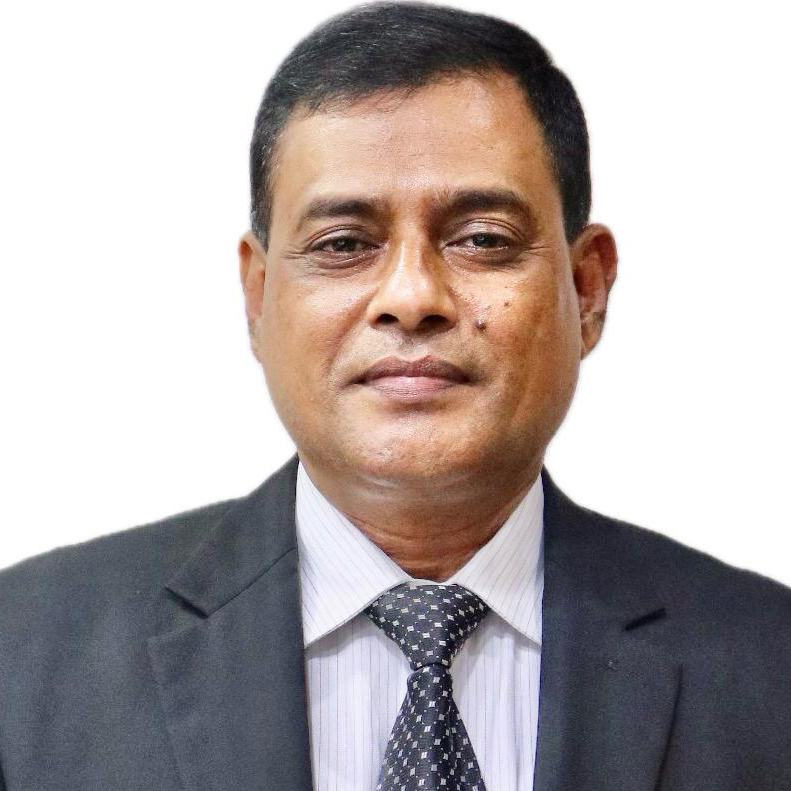
Md. Nazrul Islam, PhD, is a retired Major General from Bangladesh Army. He was the Executive Chairman of BEPZA and also served in BEZA. He is a regular columnist and writes on technology, workforce transformation and industrial competitiveness. He is the author of Zi-DoNa Trilogy, a book on self-development.
A Independent Newsweekly
© Copyright 2026 | Designed by ARK Reepon & Developed by Cosmos Group Software Team






Leave a Comment
Recent Posts
Is the international community ...
A spate of downgraded economic projections, from Bretton Woods to Mani ...
A Childhood Lesson in Arithmet ...
As children, we learned a simple mathematical rule: if we know the pri ...
Indian authorities launched a major security crackdo ..
Police dispersed garment workers from the Azampur ro ..
Why Saudi Arabia has struggled to defend itself agai ..
Iran-backed Houthis strike Saudi oil company Aramco’ ..