



Column
Why Are Bangladesh’s Entrepreneurs Holding Back?

An Independent Newsweekly





Column

Entrepreneurs must repay loans, pay lawful taxes and meet labour, environmental and safety standards. Public agencies must also fulfil their duties and provide timely services. Bangladesh needs a change in administrative attitude: investors risk their money to create jobs and national income. Confidence will return when decisions follow evidence, delays are explained and misconduct brings consequences. Business owners must answer for their enterprises and public officials for the power they exercise.
The hidden cost of doing business
Many public servants help investors with care and professionalism. Their contribution deserves recognition. Yet some officials see a new investor as a source of personal income. They seek unofficial payments through repeated requests for documents, unclear instructions and delayed decisions. Some delays result from staff shortages, poor coordination or genuine compliance concerns. Others are deliberate attempts to secure personal gain. Such abuse damages trust and creates hidden costs that investors cannot plan for. One payment may lead to another demand while refusal may bring further delays. The system then rewards personal connections and bargaining instead of following the rules.
When delay puts bank loans at risk
An idle factory still costs money. Loan interest, rent, maintenance and salaries must be paid even before production begins. Delays can also drive buyers elsewhere, leaving a business with more debt and fewer customers. This links administrative conduct to the health of the financial system. Avoidable delays and unofficial payments can push a viable business into financial distress. Wilful default, misuse of funds and poor planning must also be examined. But accountability should include a fair question: did public agencies contribute to the borrower's difficulties? This should be assessed before a loan turns bad and when repayment stops.
When political wishes override evidence
Another problem arises when an agency follows political wishes that the evidence does not support. Public agencies must implement lawful policies, provide sound technical advice and apply rules fairly. Political expectations should not shape technical findings. A sound proposal may be rejected while a weaker one receives favourable treatment. This damages trust and makes investors question whether compliance and business merit matter. Honest officials may also face pressure to ignore their professional judgment. Decisions should therefore record the evidence, reasons and responsible authority. When a technical recommendation is rejected, the reasons must be given in writing. Specific allegations of improper interference should be investigated fairly and on the basis of evidence.
My reflection on the missing responsibility
I have experience in public institutions involved in investments and I have experience in business, so I think responsibility is often limited to the walls of the office. Send a letter from one agency. Another presents a question for which one wishes to express a viewpoint. A third persons up and says, "I'm not convinced.A third comes up and says, "I'm not convinced." Each can outline its process and the entrepreneur moves around between each one. The big issue yet to be answered is who is responsible for making the case to the end? For a compliant business, investment facilitation should enable the business to receive an answer in a timely fashion. It should never say that it is a definite. If an investor is refused, with reasons, then he/she can provide the fact of the refusal and their reasons to the person who refused for the purposes of a review or to go with another plan. Neither of these are certain as the uncertainty is indefinite.
Accountability must reach every desk
The direction should be very firm - from the top - and should be reinforced by action and enforcement. Speeches will not effect the behaviour if a person doesn't care what he or she does if it doesn't affect him or her personally. An applications timeline should be recorded, with an officer of the application, and a decision date. If there are any additional needs, these should be clearly written. Repeat delays (without good cause) should be taken up to the supervisor. Investors must have an outside of the office, confidential complaint system to lodge a complaint about their application. Complaints to be treated as individual complaints, without fear of retaliation. A business should not be the subject of further inspection(s) and/or further obstruction because of an unofficial demand. When it is decided that someone is being misbehaving, he/she should be punished by the law. That may be through a combination of punishment, termination and the forfeiture and prosecution of any illegal profits. Honest officials are safeguarded by fair investigations and it is easier to believe that investigations are carried out.
Making enterprise worth pursuing
Entrepreneurs have to pay back loans, lawful taxes, and set up labour, environmental and safety requirements. The obligations apply to public agencies on an equal basis and they are obligated to provide the services for which they are responsible. There is an urgent need for a paradigm shift in the administrative attitude in Bangladesh. An investor should be looked upon as a person who is going into an expensive business which can provide employment and national income. Confidence will return with evidence of decisions being taken based on evidence, delays - explained and misconduct - consequences. The owner of a business has to take responsibility for the enterprise. Accountability for public power to the public official.
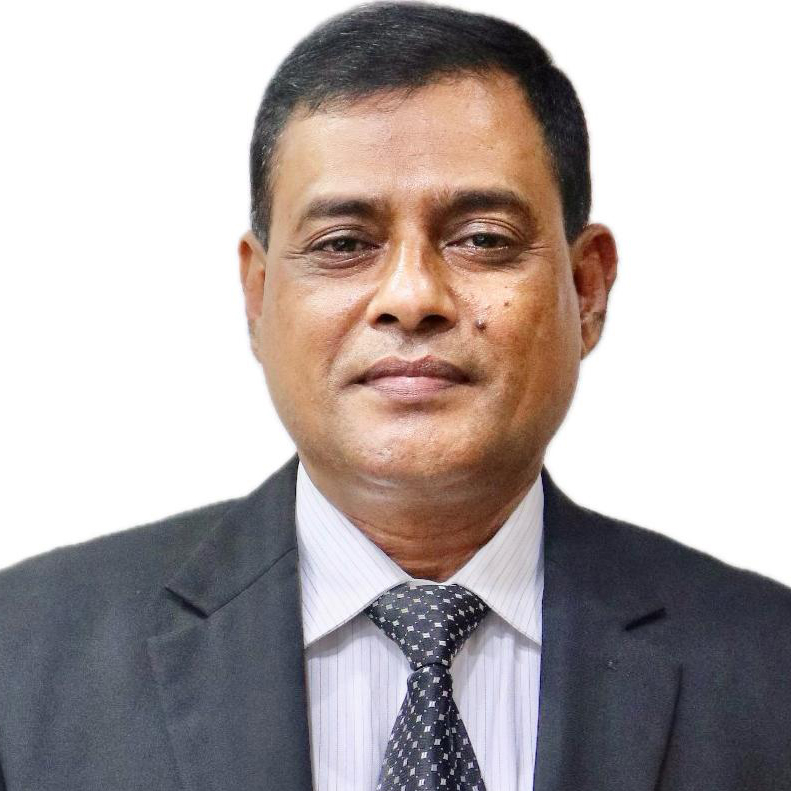
Md. Nazrul Islam, PhD, is a retired Major General from Bangladesh Army. He was the Executive Chairman of BEPZA and also served in BEZA. He is a regular columnist and writes on technology, workforce transformation and industrial competitiveness. He is the author of Zi-DoNa Trilogy, a book on self-development.
A Independent Newsweekly
© Copyright 2026 | Designed by ARK Reepon & Developed by Cosmos Group Software Team










Leave a Comment
Recent Posts
BNP on high alert to thwart AL ...
What the month of December holds has been a major topic of discussion ...
Towards a new compact between ...
The continued unrest in the garments sector, even as negotiations for ...
Doa mahfil held for UNB’s Bogura correspondent
Hasina’s extradition: India says travel documents re ..
India desires positive relationship with Bangladesh, ..
US Ambassador meets Indian High Commissioner Trivedi