



Featured 2
Professor Dr. Alimullah Miyan and the Vision of a Knowledge-Based Bangladesh


An Independent Newsweekly



Featured 2

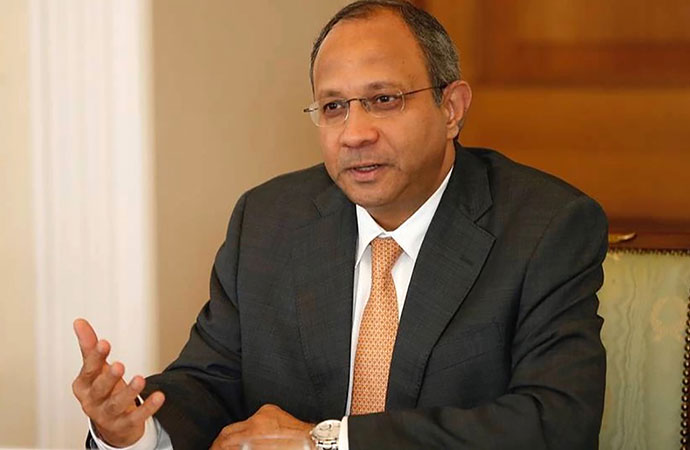
Prof. Dr. Alimullah Miyan
The 9th death anniversary of Prof. Dr. Alimullah Miyan offers an important opportunity to reflect on the intellectual and developmental significance of his contribution to higher education in Bangladesh. He was not merely the founder of International University of Business Agriculture and Technology (IUBAT); he was one of the pioneering thinkers who recognised that Bangladesh's future would depend fundamentally on human resource development and knowledge-based advancement.
Professor Miyan's vision emerged during a major global historical transformation - the transition from industrial economies to knowledge economies. In the twentieth century, economic power largely depended on land, factories, machinery, and physical capital. But by the late twentieth and early twenty-first centuries, globalisation, information technology, innovation, and digital transformation fundamentally altered the nature of economic competitiveness. Knowledge, technological capability, and human creativity became the principal drivers of development.
Professor Miyan understood this transformation remarkably early in the context of Bangladesh. He realised that a densely populated developing country could not remain globally competitive by relying solely on cheap labour or traditional economic structures. Rather, Bangladesh needed skilled human resources capable of adapting to rapidly changing technological and economic realities.
This understanding shaped his educational philosophy. He strongly emphasised "marketable knowledge and skills," not in a narrow vocational sense, but as part of a broader vision of human capability development. He believed universities should produce graduates who are not only academically qualified, but also technologically competent, innovative, productive, and socially responsible.
His philosophy reflected important ideas found in modern human capital theory and the concept of the knowledge economy. Thinkers such as Peter Drucker argued that knowledge workers would become the central productive force of the modern world. Professor Miyan translated this insight into institutional practice through his educational initiatives.
One of his most significant contributions was his concept of knowledge-based area development. He believed universities should not remain isolated academic institutions detached from society. Instead, they should function as centres of regional transformation by generating skills, innovation, entrepreneurship, technological diffusion, and social mobility.
The very structure of IUBAT reflected this integrated developmental vision. By combining business, agriculture, and technology within a single institutional framework, Professor Miyan highlighted the interconnected nature of modern development. He understood that sustainable progress in Bangladesh required not only economic growth, but also scientific agriculture, technological modernisation, and professionally skilled human resources.
Today, discussions on the Fourth Industrial Revolution, digital transformation, innovation ecosystems, and knowledge-based development have become central to national policy discourse. Yet many of these ideas were already embedded in Professor Miyan's educational philosophy decades earlier.
His legacy therefore extends beyond institution building. He helped reshape the intellectual direction of higher education in Bangladesh by emphasising the centrality of human capital, adaptability, and knowledge in national development.
On his 9th death anniversary, the most meaningful tribute to Professor Dr. Alimullah Miyan is not merely remembrance, but renewed commitment to the ideals he championed: quality education, human resource development, technological adaptability, and socially responsible nation-building. His vision remains deeply relevant as Bangladesh continues its journey toward becoming a knowledge-based society.
Golam Rasul, PhD, Professor, Department of Economics, International University of Business Agriculture and Technology, Dhaka
A Independent Newsweekly
© Copyright 2026 | Designed by ARK Reepon & Developed by Cosmos Group Software Team






Leave a Comment
Recent Posts
Is the international community ...
A spate of downgraded economic projections, from Bretton Woods to Mani ...
A Childhood Lesson in Arithmet ...
As children, we learned a simple mathematical rule: if we know the pri ...
Indian authorities launched a major security crackdo ..
Police dispersed garment workers from the Azampur ro ..
Why Saudi Arabia has struggled to defend itself agai ..
Iran-backed Houthis strike Saudi oil company Aramco’ ..