



Column
With Apologies to Professor Yunus

An Independent Newsweekly




Column
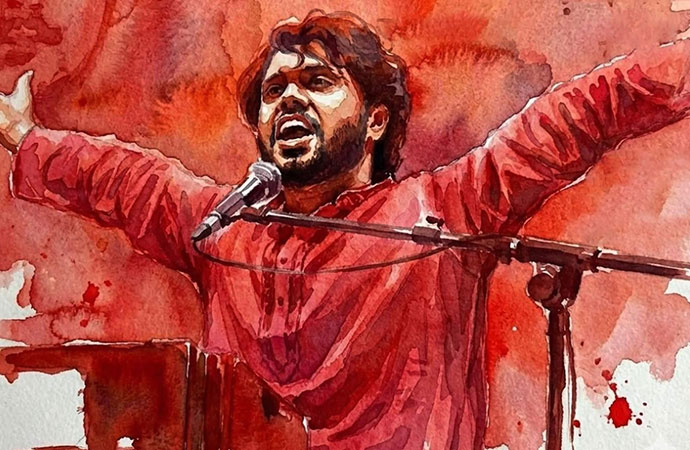
Osman Hadi
I met Dr. Muhammad Yunus in the early 1990s in New York. In a dimly lit Brooklyn apartment, he sat on a sofa chatting with a room full of admirers. I was one of them, seeking an interview for Dhaka's daily Bhorer Kagaj.
When I mentioned a remark by Badruddin Umar, the well-known leftist intellectual who had dismissed him as a sellout to the West, Dr. Yunus burst into laughter.
"Please tell Umar bhai," he said, "we have already reached 22,000 villages. Soon Grameen Bank will cover all 66,000 villages of Bangladesh."
Three decades later, Professor Yunus has indeed reached all 66,000 villages-and more. He now presides over the entire country as head of Bangladesh's interim government, a role he neither sought nor campaigned for, but was entrusted with by victorious student leaders after the July-August 2024 uprising that abruptly ended Sheikh Hasina's rule.
His ascension generated enormous hope at home and abroad. Bangladesh's most famous citizen, its only Nobel laureate, Yunus was widely seen as the one figure capable of preventing the country's descent into chaos.
Eighteen months later, Bangladesh finds itself perilously close to that very edge.
Professor Yunus appears committed to his promised election timeline. Yet faith in the institutions that make Bangladesh a functioning nation-state is rapidly eroding. Law enforcement, the judiciary, and the civil administration are not merely faltering-they are plainly failing. The uncomfortable question now being asked is whether Bangladesh is sliding toward what political science defines as a failed state.
What Is a Failed State?
Robert Rotberg, now 90, is a Princeton political scientist who has spent much of his career studying why modern states collapse. In his 2004 book When States Fail: Causes and Consequences, he defines failure succinctly: a state fails when it is no longer able-or willing-to perform its most basic duties.
Those duties are few but fundamental: protecting citizens' security, maintaining law and order, and delivering basic political rights and public services.
Measured against that standard, Bangladesh today is failing. Or, more troublingly, it may be choosing not to perform these duties at all. I never imagined writing these words. But recent events leave little room for denial. Four incidents are especially revealing.
First, the recent murder of Sharif Hadi was politically motivated-there is no serious doubt. Law enforcement may claim they lacked prior intelligence. But why, even two weeks later, has no one been arrested? Ordinary citizens, relying on domestic and foreign online sources, appear to know more than the police. Reports suggest the main suspect fled the country. If state protection enabled that escape, this is no longer incompetence alone-it is complicity.
Second, in the aftermath of Hadi's killing-whether in reaction or opportunistic exploitation-two leading newspapers were attacked and partially burned. Cultural institutions were vandalized. Journalists narrowly escaped death. One trapped reporter posted on Facebook that she was choking on smoke as the building burned.
These were not spontaneous acts. Thousands participated in coordinated violence broadcast live on television. Newspaper officials say they warned government authorities hours in advance, spoke to advisers, even contacted the military. Yet no adequate security was deployed.
Rotberg's framework again offers the answer: those responsible were either incapable-or unwilling.
What followed is equally telling. No senior official accepted responsibility. No meaningful apologies. No resignations. In Bangladesh, accountability has become almost farcical.
The consequence is predictable: violence becomes normalized. Mob rule ceases to shock. Those who weaponize violence receive a clear signal-there will be no consequences.
Third, six deans at Rajshahi University were forced to resign-not by law, but by intimidation. A student leader accused them of loyalty to the previous regime and padlocked their offices. Since when do students exercise veto power over academic appointments? Neither the university nor the government intervened-again, unable or unwilling.
Fourth, in Bhaluka, Mymensingh, a factory worker named Dipu Das was lynched over vague allegations of insulting Islam. No evidence. No clarification. After killing him, attackers stripped his body, hung it from a tree, and set it on fire in public view. Hundreds watched. The police, factory owners, and local administration were nowhere to be found.
I could cite more examples, but the pattern is unmistakable. The core markers of state failure identified by Professor Rotberg are visible here. To see where this road leads, one need only look at Haiti, Somalia, or Sudan. Writing that Bangladesh-55 years after independence-could be heading toward a similar abyss makes my hands tremble. Yet it is not exaggeration.
Still, this is not destiny.
Bangladesh belongs to its citizens. Others-foreign or domestic-may welcome its collapse. We should not. The capacity to halt this decline still exists, but it requires civic unity around a minimum democratic program. Encouragingly, we have seen early pushback against mob rule. For it to matter, the country's major political parties must engage-not merely civil society.
Vague apologies or well phrased assurances from the officials alone are insufficient. What Bangladesh desperately needs is accountability. In functioning democracies, crises activate multiple pressure points: courts, legislatures, human-rights bodies, and a free press. In Bangladesh today, only one remains functional-the media.
That places an extraordinary burden on journalists: to serve as both the nation's conscience and its compass.
More than a century ago, in 1904, Joseph Pulitzer warned that a nation's rise and fall is inseparable from the rise and fall of its newspapers. Only honest, capable, public-spirited journalism can prevent democracy from degenerating into hypocrisy and farce.
Which brings us back-regretfully, respectfully-to Professor Yunus.
History will not judge him by his intentions, his reputation, or his Nobel Prize. It will judge him by whether the state entrusted to him remained willing-and able-to protect its citizens.
With apologies to him, that judgment is now very much in doubt.
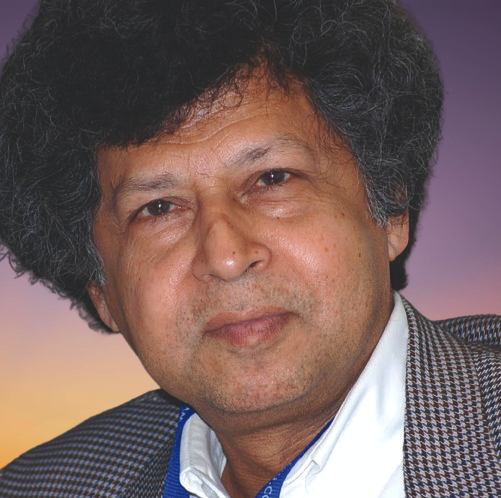
Hasan Ferdous is an author and journalist based in New York
A Independent Newsweekly
© Copyright 2026 | Designed by ARK Reepon & Developed by Cosmos Group Software Team





Leave a Comment
Recent Posts
Dhaka, Tokyo relationship to c ...
Deputy Chief of Mission of the Embassy of Japan in Bangladesh Yoshida ...
Democracy puts a premium on et ...
And just like that, the deed was done. With a volley of 'Ayes!’( ...
Dhaka still eyeing ‘conducive’ setting for PM’s Delh ..
Gallery Cosmos Artist Residency, 2026
Summit seeks reinstatement of FSRU deal
Hatful of medals for Bangladeshi whiz kids at WMI 20 ..