



Column
The US and Bangladesh trade agreement: Opportunity with strategic caveats


An Independent Newsweekly






Column

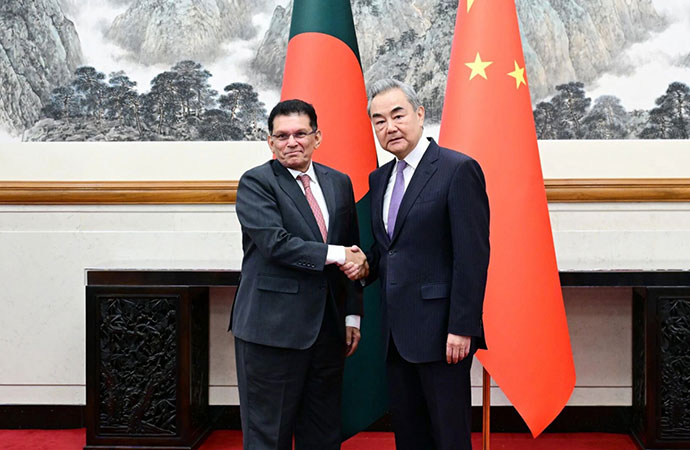
The recently concluded US Bangladesh Agreement on Reciprocal Trade (USTA) is an important milestone in bilateral relations.
It signals Bangladesh's rising economic relevance and the United States' intent to engage more deeply with South Asia's emerging economies. Yet, as with all modern trade agreements, its true impact lies not only in tariffs, but in the strategic choices it shapes.
The best of the USTA is clear. Improved access to the US market enhances predictability for Bangladeshi exporters at a time when global supply chains are being reconfigured. The agreement also reflects strategic recognition: Bangladesh is no longer seen merely as a low cost manufacturing base, but as a consequential economy in a multipolar world. Such recognition strengthens investor confidence and diplomatic leverage.
The agreement also expands short term energy options. Facilitating imports of US LNG adds supply diversity and bargaining power, particularly during periods of global energy stress. Optionality itself has value.
However, the risks deserve equal attention.
First, the USTA embeds a range of non trade commitments on governance, labour, compliance, and regulatory practices. While many reforms are desirable, reform must be locally designed and sequenced.
Externally driven, rigid conditionalities risk narrowing policy space and creating uncertainty, especially for a developing economy navigating political transitions. Reform should strengthen sovereignty, not dilute it.
Second, energy cooperation under the USTA is heavily weighted toward imports, not energy independence. True energy security is not achieved at the import terminal alone.
Bangladesh's long-term resilience depends on diversified sourcing, renewables, regional power trade, and critically, the right and ability to explore its own offshore gas resources in the Bay of Bengal.
The agreement is silent on upstream exploration, technology transfer, or risk sharing. A partnership that sells fuel without supporting production risks creating long term dependence.
Third, there is limited clarity on taxation.
The USTA does not automatically make US imports tax exempt. Even where customs duties are reduced or eliminated, domestic import stage taxes often continue to apply unless explicitly waived under national law.
This ambiguity is particularly relevant for strategic imports such as LNG, where fiscal uncertainty complicates long term pricing, contracts, and energy affordability.
The USTA should therefore be viewed as a framework, not a final destination. It works best when it expands Bangladesh's choices and worst when it narrows them.
Trade liberalisation must be complemented by strong domestic policy: clear tax regimes, assertive offshore exploration, and diversified energy strategy.
Bangladesh's future lies in engagement without dependence, reform without surrender, and trade without compromising strategic autonomy.
If implemented wisely, the USTA can support that future. If not, the risk is simple: short-term access gained at the cost of long term resilience.
Muhammed Aziz Khan is the chairman of Summit Group.
A Independent Newsweekly
© Copyright 2026 | Designed by ARK Reepon & Developed by Cosmos Group Software Team






Leave a Comment
Recent Posts
Energy Security At Stake
For the last ten days, Bangladesh has been grappling with a severe gas ...
The strange disappearance of M ...
The Bangladeshi authorities should immediately comply with a July 12, ...
It’s important to address some irritations in Dhaka- ..
The government is set to import Liquefied Natural Ga ..
The US military struck dozens of targets in Iran
When Politicians Ignore Economic Expertise