



Column
School Numbers Rise, Student Enrolment Falls: Bangladesh’s Education Paradox

An Independent Newsweekly





Column
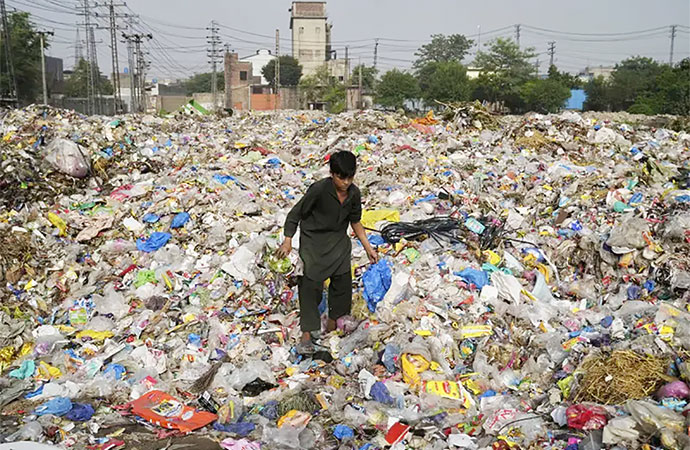
AI Generated Image
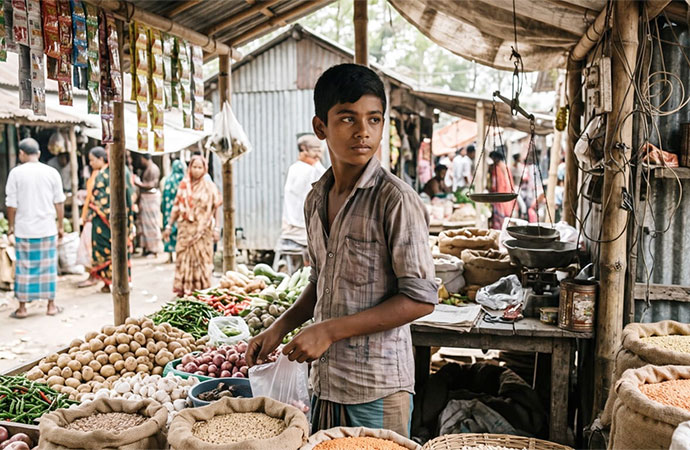
Although there are more secondary schools in Bangladesh, the enrolment for secondary school is lesser. The contradiction poses an interesting question about the measurement of educational progress. The value of a building is dependent on the presence of children in the building, their understanding of what is happening in their lessons and the opportunities they are given. According to figures from Bangladesh Bureau of Educational Information and Statistics (BANBEIS), the number of general secondary schools has jumped from 16,186 in 2018 to 16,737 in 2025. Enrolment in classes VI-X has decreased by 20.1 percent from 88.57 lakh to 70.74 lakh, meanwhile. Not all students who are not in school were lost. Changes in transfers, migration, population and reporting need to be looked at. Improved records should help to separate students who have transferred to other schools, students who have discontinued their studies and students whose situation has not been determined. The question is where are the schools needed and why is enrolment decreasing and what will continue to educate children?
Expansion must follow need
There are still some communities that require another school. A small institution in a remote char or coastal settlement can provide key access for an institution at a higher cost per student. Otherwise, enhancing an existing school might be more beneficial for children than building a new school down the street. Approval should consider population, travel distances, classroom capacity and teacher availability. The influence of politics cannot be allowed to overpower educational wisdom. Politically motivated expansion cannot be proved by the national figures. There needs to be an independent review of school locations and approvals to consider if schools are genuinely required in their area. All schools have ongoing expenses such as bills, running costs, and salary/catering. Body expansion may be necessary but can be drawn from funds that could otherwise be used for teaching and support of the students. Authorities should determine the children to be served by the school, circumscribe any available alternatives and determine the cost of running the school and how it will be financed before approving a school.
Understand the student's decision
Education is a challenging decision for failing families. Schooling takes time and money but doesn't guarantee income, work provides immediate income. When a teenager has just a little bit of reading and arithmetic skill, he might ask if he should sacrifice that. This is a potential, not a certainty, that needs to be explored. Schools are required to hear students' and parents' views before they make decisions about what to do. There are also pupils who become disengaged as lessons are not relevant to life. Others are unable to follow the teaching and lose faith slowly. Joining Secondary Education does not mean that children are ready for it. Catch up lessons and practical examples can be of assistance. I had an experience of education opening doors while growing up in a remote village. That was reinforced by my subsequent experience in administration and teaching at the university level. Students should be encouraged; teachers must be able and have guidance to provide. Judgement, confidence and citizenship are developed through education. It should also enable young people to understand avenues for further learning, useful skills and livelihoods.
Learn from experience abroad
In Vietnam, students who took the Programme for International Student Assessment (PISA) 2022 mathematics test scored close to the average of countries belonging to the Organisation for Economic Co-operation and Development (OECD). The lesson is simple: we should measure what students learn, as well as how many schools we build. In Cambodia, a World Bank-supported project improved classrooms, trained teachers and involved parents. It shows that good schools need both suitable facilities and people who can help children learn. Brazil's Ceará state linked some funding to education results and helped local authorities improve their schools. Bangladesh could do the same: expect better results and provide the support to achieve them, especially in poorer communities.
Responsibility must begin locally
A funded pilot should connect action at each level, with evaluation before wider expansion.
Schools - respond early. Headteachers should assign teachers manageable student groups and time for follow-up. Five consecutive unexplained absences could trigger family contact, with earlier intervention where necessary. Weekly catch-up lessons within school hours and basic career guidance should support continued learning.
Union councils - address practical barriers. Councils should help eligible families obtain available assistance. Where travel prevents attendance, supervised walking groups or safe shared transport could be tested. Each arrangement needs a safety assessment, a responsible person and operating funds.
Upazilas - account for departing students. Education officers should conduct a six-month review of schools with declining enrolment, distinguishing transfers, confirmed dropouts and unresolved cases. Upazila Nirbahi Officers should coordinate quarterly departmental reviews. Success should mean sustained attendance and learning after support.
Districts - plan before expanding. Education offices should map student numbers, classroom capacity, teacher shortages and travel barriers before recommending institutions. Nearby schools could share specialist teachers and laboratories. Any consolidation must preserve safe, reasonable access.
The ministry - test coordinated support. The education ministry should fund a one-year trial in selected disadvantaged upazilas, combining attendance follow-up, catch-up teaching and targeted household assistance. BANBEIS should improve transfer records across education streams. Independent evaluation should guide expansion.
National government - make spending accountable. Publicly supported school proposals should disclose educational need, alternatives and future costs. An annual report to Parliament should explain enrolment trends, expenditure and corrective action. Funding must recognise disadvantage and genuine improvement without encouraging schools to exclude struggling students.
Bangladesh needs schools where access is inadequate and stronger teaching where institutions already exist. Educational progress must be judged by what children gain from that investment. A school succeeds when its students attend, learn and move forward with confidence.
Md. Nazrul Islam, PhD, is a retired Major General from Bangladesh Army. He was the Executive Chairman of BEPZA and also served in BEZA. He is a regular columnist and writes on technology, workforce transformation and industrial competitiveness. He is the author of Zi-DoNa Trilogy, a book on self-development.
A Independent Newsweekly
© Copyright 2026 | Designed by ARK Reepon & Developed by Cosmos Group Software Team









Leave a Comment
Recent Posts
Resting in Peace in Pirojpur
I never had the privilege of meeting freedom fighter Manik Pashari, wh ...
An impending disaster in the h ...
There has been a fresh spike in both dengue and measles cases, hospita ...
‘Stories bring us together’: Laetitia Troussel-Luber ..
A high-speed train slammed into another that had sto ..
Bangladesh and Malaysia concluded the first round of ..
CPC's international department head Liu Haixing to v ..