



Column
No policeman!

An Independent Newsweekly
Column

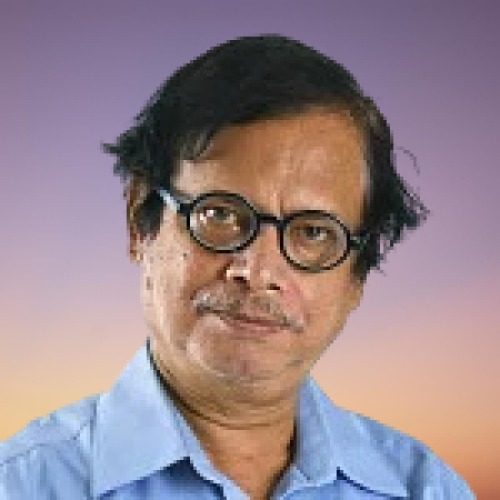
Dr. Iftekhar Ahmed Chowdhury. Photo: Collected
Dr. Iftekhar Ahmed Chowdhury, the scholar-diplomat who served as the Foreign Advisor (Minister) to the Bangladesh Caretaker Government and is now President of the Cosmos Foundation, wrote in these pages recently: "For over seven decades, the US has acted as the primary guarantor of global public goods. It has sought to ensure the security of sea lanes, the stability of the international financial system, and the enforcement of a rules-based order. As the US retreats, a critical question emerges: Who will police these global goods?"
His answer: "It seems that the current US administration's approach is not to appoint a successor but to abdicate the role entirely. The US is encouraging allies and regional partners to 'shoulder the burden'. They may also be deciding to do so themselves, building their own balances and alliances. Also, the US wants the allies to pay for their own defence. The US is not aiming to transfer authority to a new policeman, but to a fragmentation of responsibility. The result is a world where no single actor is willing, or able, to maintain the global commons, leading to a more chaotic and competitive environment."
These words are worth noting. They encapsulate the reality of a rudderless world.
But that world had to come about. No hegemon lasts forever for the simple reason that the circumstances that contributed to its rise and longevity fall away in the adversarial course of time. The Second World War that ruined Europe and much of the rest of the world saw a transition of power from the British Empire to the American one. The transition was peaceful because it occurred between two Anglo-Saxon powers guided by essentially the same domestic ideologies - capitalism, liberal democracy and the rule of law - and the same strategic value systems: the formal sovereignty of nations and a balance of power among nations.
All these principles exist even now and all are accepted theoretically by nations big and small but they are no longer sufficient to sustain American hegemony. Instead, that hegemony has become a global albatross around America's neck, giving rise to the Trumpean withdrawal syndrome that signals the coming end of America's imperial overstretch.
America has not appointed a successor because its values lie in conflict with those of its obvious successor: China. China subscribes to the values of the Westphalian order that created British and American supremacy. However, it situates its opposition to Western supremacy within the Wetphalian system by rejecting the legacy of imperialism and colonialism that resulted in China's century of humiliation that began with the Opium Wars. China has every right to do so. India, too, takes a similar view of its colonial subjection to two centuries of colonial British rule (which were preceded by five centuries of invasive Muslim/Mughal rule). Asian countries have every right to reject pasts moulded by invasion, imperialism and colonialism.
This sense of the right to reject imposed pasts informs contemporary aspects of the Chinese objection to Western international supremacy. For example, Beijing does not subscribe to the legitimising agency of the Liberal International Order because the "Liberal" in that name reflects the imprint of the West's association of an international rules-based order (the necessity of which China accepts warmly) with China's practice of economic and political liberalism at home. China's statist economy and its Leninist polity do not align themselves with the fundamental principles of Western political economy. Concepts such as "democracy" and "human rights" mean very different things in Washington and Beijing. Blaming either side for bad faith will not help. All concepts of the true, the good and the beautiful are situated to a large extent in lived experience or in history, which is inherited existence.
The impasse continues. The United States is abrogating its international responsibilities on its own terms; China is yet to pick them up because its own terms are yet to gain universal acceptance. Should America's strategic retrenchment continue, China's real foray into global power will begin. Imperial overreach will retreat in the face of a new global vanguard: the future with Chinese characteristics.
Would that be good or bad? The answer would depend on which version of international existence reflects the truth of the human condition more accurately. Are people happier in an avowedly free system that lies beyond the control of a single agency (the state) and spirals into the chaotic contention of contending minds, or are they better off in a state where human behaviour is regulated rigorously to produce avowedly better social outcomes for all?
Do write to me if you have found your answer. My email address lies below.
The writer is Principal Research Fellow of the Cosmos Foundation. He may be reached at epaaropaar@gmail.com
A Independent Newsweekly
© Copyright 2026 | Designed by ARK Reepon & Developed by Cosmos Group Software Team






Leave a Comment
Recent Posts
A commendable intervention by ...
A struggle for local dominance in the Chittagong Hill Tracts, specific ...
How close is the Amazon to a ‘ ...
While Brazil’s presidential candidates have not made policy of t ...
Another shipment of highly radioactive uranium fuel
Harmony: Diplomatic community joins Durga Puja celeb ..
What to know about the Ebola outbreak that has sprea ..
Brazil election: Trump’s ‘Donroe Doctrine’ faces its ..