



Column
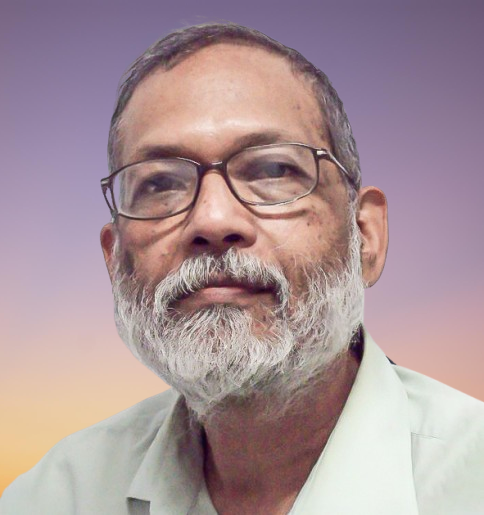
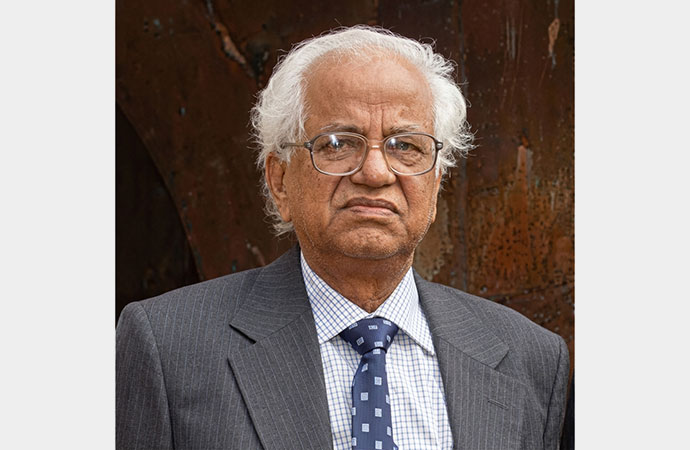
My guru Prof. Sirajul Islam, Nawabi diaries and the Dariyai-Noor

An Independent Newsweekly



Column
AI Generated Image
When I appeared for the admission test at Dhaka University in 1972, the teachers at the selection viva table were reluctant to take me. "You will not study History, you will move on to another department, most probably to English." they said.
It's only when I told them that I had applied to only one department -History- that they took me seriously and I was allowed in. And that's how I met Prof. Sirajul Islam - to us Siraj Sir - who has remained the closest I have to a role model in studying, researching and informing others on the many matters of History.
As I look back and reflect on my journey as a historian of sorts, I feel we have not paid the kind of respect and held in reverence he deserves. The man who has done more than most others in popularising the subject and contents of history among all who can read is hardly celebrated in Bangladesh.
Siraj Sir is the true beacon in a world where we identify great minds through political lenses and not intellectual achievements. Social media has also made that easy so people like him are buried under the heap of collective ignorance.
The young student and the Guru
It was 1972 and I was a very enthusiastic young student who loved all things historical. Siraj Sir was already well known for his path breaking work on the Permanent Settlement of 1793, the most significant socio-economic act of colonialism. It was basically the core of the structure through which they wished to continue ruling. However, Siraj Sir was already moving ahead beyond the borders and was very keen on learning about the past of Dhaka. And I became one of his sidekicks.
The trip to collect
We went by rickshaw to the old city and the residences of the Nawab family officials. It was near what was then called the Mansur Castle. Does it still exist?
How Siraj Sir had made contact I don't know but a person took us to the apartment of an ex official of Nawab Salimullah. It was a large building of many such ramshackle flats and we gingerly made our way to the room. The gentleman probably lived alone as we saw none and when he came to greet us, we realised he was more than half blind.
He offered us hospitality by offering a large Dano tin of cookies. Sir took a look inside and then asked me to take some loudly. And then he winked at me but he wasn't smiling. I realised why when I peered into the tin. It was empty. Both of us praised old Dhaka "Biskuts" and the man smiled happily. The mood of the room became very cheerful.
And then came the hoard of materials he was about to hand over to us. Several large loosely packed bags tied with a simple thin rope were brought in. I picked them up on my shoulder and shared the load with another person. After thanking him profusely for the gift and hospitality Siraj Sir and I took a rickshaw back to the Dhaka university quarters.
The treasure trove
What was collected was incredible. They were diaries of the Nawab family officials including his secretary and were full of so many details of their everyday life that as history sources are priceless. They were later deposited to the Dhaka University library.
Several drafts, reports and catalogues were also there including a beautifully illustrated catalogue of jewelry owned by the Dhaka Nawab family. The jewels were stunning and I still remember one vividly. It was a red rose with a green stem and flowers with dew drops on the leaves. What made it so special?
Well, the red leaves were made of rubies, the green leaves made of emerald and the dew drops of diamond. Just think. But the crown jewel of them all was the Diraiya-e-Nur or river of light, the ultimate star of the show.
For most of us this was the first glance of the jewel which even now is still not found though many say it is in the locker of Sonali Bank. The Nawab estate had become the government's and they deposited the jewels with the official banker to the then authorities in the mid - 50s.
History for all
Prof. Sirajul Islam was not a library-based historian but a field cum library based one. He worked in the musty archives and record rooms of many government offices and knew all there was to know about the land tenure and management system.
But as this trip to collect shows, he went beyond that. For him the past mattered and his focus was not just for the academics but the general people. And that is why he was able to work for the Asiatic Society to develop the Banglapedia, the digital cum -book based historical encyclopedia of Bengal, the most well authentic and used historical content in Bangladesh.
He didn't think history was an issue for academics but felt it belonged to all and that is why his work continues albeit silently. He in some ways liberated the knowledge of history from the class room and library and introduced it to everyone who was interested in the past.
Congratulations Sir, you made it possible for everyone to learn history.
A Independent Newsweekly
© Copyright 2026 | Designed by ARK Reepon & Developed by Cosmos Group Software Team







Leave a Comment
Recent Posts
A political earthquake in Amer ...
The American midterm elections have delivered a resounding political r ...
‘A beautifully American story’ ...
Campaigning relentlessly across Michigan, Abdul El-Sayed didn’t ...
Consumers fear paying Tk 2500 for 12-kg LPG cylinder ..
UNB Chief Editor mourns death of Bogura corresponden ..
Enayetullah Khan attends FICAC 2026 North America Re ..
Democrats won control of both chambers of Congress i ..