



Column
Expatriate lives and deaths

An Independent Newsweekly
Column
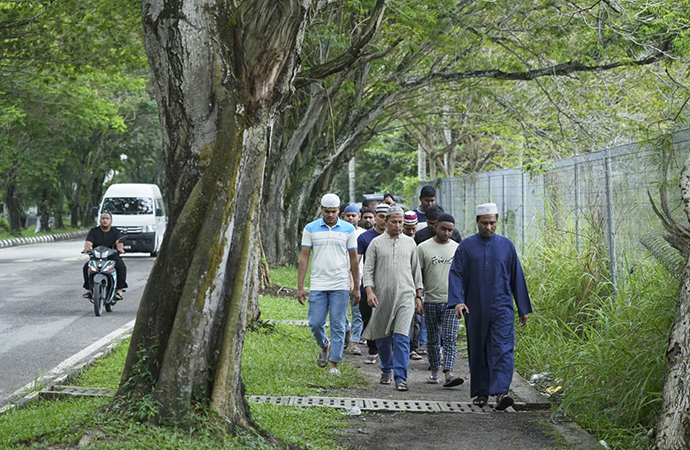
Photo: AP/UNB
Expatriate Bangladeshi workers are called remittance warriors. Much as soldiers ensure the sanctity of national borders, Bangladeshis working abroad contribute to the country's economic sovereignty. In one account, Bangladeshi expatriate remittances reached a record high of more than US$30 billion in the fiscal year 2024-2025, helped by government incentives for using formal banking channels and a narrowing gap between official and informal exchange rates.
This is good news, of course. What the government spends on defence, among the array of its many financial commitments, owes a debt of gratitude to the foreign inflows that shore up its exchange rates and sustain the domestic economy. It is therefore natural that families should treat their expatriate sons as economic warriors whose contribution to the life of the nation is incomparable, much as the parents of soldiers see their sons and daughters as guardians of the nation called Bangladesh whose frontiers contour the daily lives of citizens from among whom the expatriates are drawn.
The more that Bangladesh can do for its remittance warriors, the more it will do for itself in a globalised world where the movement of labour impinges on the workings of international capital. Bangladesh cannot lose this game given its abundant human resources, which are a counterpart of its natural resources. The economics of it all is clear.
But what about the human meaning of all this? Who does not know of how families celebrate their young who are departing for unknown shores in search of fortune if not fame? Amma packs enough food in the tiffin carrier to last her son over many journeys. Apu adds a few more items, bending them sideways into the almost full containers of the tiffin carrier. I have watched a video where Apu clings to her brother, imploring him to not go: "Jash ne, bhai amar." Abba looks on and goes to the next room to wipe his unmanly tears unseen. Choto Bhai, who never once listened to his elder brother, stands near him, wondering whether to give him a kick to send him on his way or a hug to keep him close after all. Choto Bon runs crying to her departing Bhaiyya: He is her second father after all. Chacha and Chachi next door leave the expatriate-to-be their familiar dua. The neighbourhood dog starts barking into the night for reasons known only to it. The sky remains itself, an impassive sky.
The expatriate returns home after two years. His luggage is full of gifts for his family. I have seen many Bangladeshi brothers buy them at Singapore's Mustafa. Soft and fluffy blankets, softer talcum powder, juicy Arabian dates, beautiful shiny wristwatches - all these and more are trophies of foreign success. It must be the same in Dubai or Riyadh or London or Birmingham or New York or anywhere else where Bangladeshi workers are a part of globalised economic success.
It is for them that the waiting area outside the arrival hall of Dhaka's Hazrat Shahjalal International Airport smells of flowers. There are children carrying bouquets, their eyes trained on the arrival door, waiting for that special person: the arriving remittance warrior. If he is married, the wife is hidden shyly among the gathered crowd. But their child is with the family elders, all of them looking on eagerly at the door. The girl has not seen her father in two years, but two years are nothing in the relationship between daughter and father. Or son and father. Life irons out the creases in longings and belongings among those who are family.
Death
Death is different. It is indifferent to relationships. But relationships do not respect death.
Let me give just one example. In 2014, a Bangladeshi construction worker named Lablu, 34 years old, died after he was crushed by falling bricks from a crane at a site in Malaysia. His Bangladeshi co-worker, Bablu (37), was injured seriously.
I did not know Lablu or Bablu personally. But etched into their names is the expatriate history of Bangladesh gone wrong. I can only imagine how Lablu's family would have reacted on receiving his body. There are videos on Youtube of such extreme distress. The whole village is gathered. The body arrives in a casket. The mother and the wife and the sister and the aunt scream as they rush forward. One of them faints. The men do not just cry: Some howl as others wail. An elderly man, perhaps the unfortunate father of the fallen warrior, holds the little son of the deceased in his quivering arms. The boy does not know what to make of a dead father whom he never knew when Abba was alive. The child looks away and sinks his face into his grandfather's shoulders. Someone revives the fainted woman with water. She clutches at the coffin as if to hold back a son or a husband although he is gone forever. She is restrained ever so gently by other women. In one video, it is not clear whether the body returning in a nailed plywood coffin is that of an expatriate worker or a local worker or someone else who died. But two words in that video, uttered aghast by a boy of nine or 10, ring in my ageing ears: "ও আব্বা." O Abba, dead father of mine.
I am reminded of Tennyson's poem, "Home they brought her warrior dead", which speaks of the widow. "Home they brought her warrior dead:/ She nor swoon'd nor utter'd cry:/ All her maidens, watching, said,/ 'She must weep or she will die.'/ Then they praised him, soft and low,/ Call'd him worthy to be loved,/ Truest friend and noblest foe;/ Yet she neither spoke nor moved./ Stole a maiden from her place,/ Lightly to the warrior stepped,/ Took the face-cloth from the face;/ Yet she neither moved nor wept./ Rose a nurse of ninety years,/ Set his child upon her knee -/ Like summer tempest came her tears -/ 'Sweet my child, I live for thee.'"
So it is for the dead Bangladeshi remittance warrior. No blankets or watches or sweets from foreign lands. No salaams nor pronaams nor embraces. No smiles to be given or received. No marriage, if there was one. No more children to be born, if any were born at all.
But if there is at least one child, a girl or a boy, the mother's eyes will dry. Because every child is a new Bangladesh, one where men will no longer have to venture abroad for fame and fortune - or death.
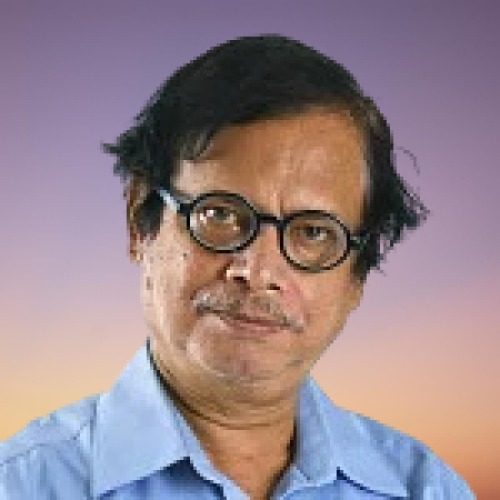
The writer is Principal Research Fellow of the Cosmos Foundation. He may be reached at epaaropaar@gmail.com
A Independent Newsweekly
© Copyright 2026 | Designed by ARK Reepon & Developed by Cosmos Group Software Team






Leave a Comment
Recent Posts
Is the international community ...
A spate of downgraded economic projections, from Bretton Woods to Mani ...
A Childhood Lesson in Arithmet ...
As children, we learned a simple mathematical rule: if we know the pri ...
Indian authorities launched a major security crackdo ..
Police dispersed garment workers from the Azampur ro ..
Why Saudi Arabia has struggled to defend itself agai ..
Iran-backed Houthis strike Saudi oil company Aramco’ ..