



Column
Bangladesh’s Pathways to Greatness: From “I Have a Plan” to National Transformation

An Independent Newsweekly
Column

Great nations are not built in a few years, nor by one leader, government or megaproject. They emerge over generations through human capability, strong institutions, productive economies, technology, social trust and continuity of national purpose. Governments may change, but a nation cannot afford to reinvent its fundamental priorities after every political transition. A P J Abdul Kalam's Pathways to Greatness inspired me to reflect on this challenge for Bangladesh. When Tarique Rahman returned home on 25 December 2025, he declared, "I have a plan." As Prime Minister, that plan must now become measurable national transformation. Yet lasting progress requires priorities such as education, healthcare, rule of law, investment, technology and employment to rise above partisan ownership. Political competition should determine how these goals are achieved, not repeatedly change what the nation seeks to achieve. Bangladesh needs not only a plan for today, but continuity of national purpose for tomorrow.
A Land of Great Potential - And Great Stress
The urgency becomes clearer when we consider Bangladesh's scale. With around 175 million people, over 60 per cent of working age and a population density exceeding 1,300 per square kilometre, the country carries enormous opportunity and pressure. Its economy has grown to around half a trillion US dollars, with per capita income approaching US$3,000 - a remarkable advance since 1971. Yet private investment remains around one-quarter of GDP, FDI is low, job creation is struggling to meet rising aspirations and more than 80 per cent of merchandise exports still come from readymade garments. Bangladesh must therefore look beyond how fast the economy is growing and ask harder questions: Are our people becoming more capable, our institutions stronger and our economy more competitive and diversified? Above all, can these priorities endure regardless of who governs? That is where the pathway to greatness begins.
The Education Paradox
Education illustrates both Bangladesh's progress and its unfinished journey. The country has around 9.1 million secondary and 4.9 million college students, yet access has not always translated into skills or employment. This matters because Bangladesh's demographic dividend is time-bound. About 62 per cent of the population is of working age, but the advantage will gradually narrow as the population ages. Meanwhile, 41 per cent of young people were not in education, employment or training in 2022 and nearly 46 per cent of National University-affiliated college graduates remained unemployed three years after graduation.
Bangladesh therefore risks producing certificates faster than employable skills and suitable jobs. South Korea and Singapore demonstrate that sustained investment in education, skills, science and research can transform people into productive and innovative human capital. For Bangladesh, that transformation is essential to turning its demographic advantage into lasting national strength.
From Garments to a More Complex Economy
Bangladesh's readymade garment industry is a remarkable success, contributing over 80 per cent of merchandise exports and employing around four million workers. But garments cannot remain the ceiling of our economic ambition. South Korea progressed from labour-intensive manufacturing to advanced industries, while Vietnam integrated itself into global electronics and manufacturing supply chains. Bangladesh must similarly diversify into pharmaceuticals, agro-processing, light engineering, electronics, ICT, logistics and shipbuilding, while developing emerging sectors such as semiconductors and medical devices. With a large workforce and growing pool of graduates, the country must gradually shift from low-cost labour to skills, technology, productivity and higher-value production. The question is no longer what Bangladesh can produce cheaply, but what it can produce better, smarter and with greater value.
The Institutional Challenge
Economic transformation requires institutional transformation. Bangladesh rarely lacks policies or plans; the challenge is turning them into results. Overlapping responsibilities, weak coordination and delays in approvals, utilities, taxation and regulation continue to constrain investment. The 2025 Corruption Perceptions Index reflects this institutional gap: Bangladesh scored 24 out of 100 and ranked 150th, compared with Singapore at 3rd and South Korea at 31st. The lesson is clear: development requires institutions that are efficient, predictable and accountable. Bangladesh must build institutions stronger than personalities, strengthen merit-based recruitment and promotion, use digitalisation to reduce discretion and delay and increasingly judge public agencies by results rather than activities.
The Government's Political and Development Agenda
The present government has begun translating its "I have a plan" commitment into 180-day, annual and five-year programmes covering governance, employment, education, healthcare, investment and institutional reform. The FY2026-27 budget of Tk 9.38 trillion places greater emphasis on human development, with education and health together receiving nearly 20 per cent of the budget. Social protection is also expanding through initiatives such as the Family Card and Farmer Card.
These are encouraging beginnings, but the real test is not the size of allocations or number of programmes announced. Success must ultimately be measured by improvements citizens experience in education, healthcare, employment, income and public services.
From Plans to Delivery
This may be Bangladesh's central development challenge: we broadly know what needs to be done; the difficulty is delivery. Education should be measured by learning, healthcare by affordable and effective treatment, investment by capital deployed and jobs created and logistics by reduced time and cost. Government performance must therefore shift from measuring inputs and announcements to measuring outcomes citizens and businesses actually experience. Plans express intentions; delivery creates transformation.
What Successful Nations Teach Us
South Korea, Singapore, Malaysia and Vietnam show what sustained national direction can achieve. Through decades of investment in education, infrastructure, technology, institutions and competitive industries, they transformed themselves from relatively poor or resource-constrained economies into major manufacturing, trade and services centres. Their models differ and Bangladesh cannot simply copy them. But the lesson is clear: national transformation requires sustained investment in people, institutions, technology and global competitiveness - backed by continuity of purpose across generations.
Five Pathways to Greatness
Bangladesh's pathway to greatness can be built around five national priorities.
First, turn population into human capital. Education must shift from enrolment and certificates to learning, skills and employability. Schools should strengthen literacy, mathematics, critical thinking and digital skills, while technical education and universities must connect more closely with industry, research and employment. Healthcare, too, must be treated as an investment in productive people.
Second, build institutions that deliver. Government should expand one-stop digital services, time-bound approvals and transparent performance indicators. Recruitment and promotion should reward competence and integrity, while digitalisation reduces unnecessary discretion. Institutions must become stronger than personalities and more focused on outcomes than procedures.
Third, move from cheap labour to higher value. Garments will remain important, but Bangladesh must diversify into pharmaceuticals, agro-processing, engineering, electronics, ICT, shipbuilding, logistics and emerging technologies. The ambition should be to move from "Made in Bangladesh" to "Designed, Engineered and Made in Bangladesh."
Fourth, make innovation a national mission. Bangladesh needs stronger partnerships among universities, industries, entrepreneurs and government, supported by research funding, technology centres, start-up financing and private-sector R and D. Research must increasingly move from academic papers to products, businesses and practical solutions.
Fifth, create continuity of national purpose. Governments will change, but core priorities such as education, healthcare, rule of law, institutional effectiveness, export diversification, technology, energy security and infrastructure should endure. Successive governments may choose different routes, but the national destination should remain broadly constant.
These five pathways reinforce one another: capable people need capable institutions; productive businesses need technology and innovation; and all require continuity to mature. Bangladesh's transformation cannot be the project of one leader, government or political party. Greatness requires a national effort, sustained across generations.
A National Transformation Compact
The five pathways require something Bangladesh has often struggled to maintain - continuity beyond political cycles. A 20-25-year National Transformation Compact could establish a small set of national goals that successive governments broadly agree to pursue, even if their methods differ. These should include measurable targets for learning, skilled employment, investment, export diversification, R and D, logistics, energy, healthcare and governance, reviewed annually through a public scorecard. Malaysia's Vision 2020 and Vietnam's sustained Đổi Mới reforms show the value of long-term national direction. Bangladesh need not copy these models, but can embrace the principle: governments and policies may change, but the country's long-term destination should not.
From "I Have a Plan" to "We Have a Purpose"
The Prime Minister's phrase, "I have a plan", moved the conversation from aspiration to action. But no plan can make a nation great unless institutions deliver it, citizens believe in it and generations sustain it. The next transition must therefore be from "I have a plan" to "we have a national purpose."
No leader or government can transform Bangladesh alone. Government must provide direction, business must invest and innovate, universities must create knowledge, institutions must deliver and citizens must uphold law, merit, integrity and responsibility. Great nations are built not only by governments, but by what their people collectively choose to become. Bangladesh has already travelled an extraordinary distance since 1971. The next journey must be from development to capability, capability to competitiveness and competitiveness to greatness. That requires quality in education, institutions, technology, governance, leadership and citizenship - foundations that take generations to build. Bangladesh has the people, entrepreneurial energy and development experience. What it now needs is the discipline to turn potential into capability, plans into results and individual aspirations into a shared national purpose. When a government's plan becomes a nation's purpose, institutions make it deliverable and citizens make it their own, Bangladesh will have found its pathway to greatness.
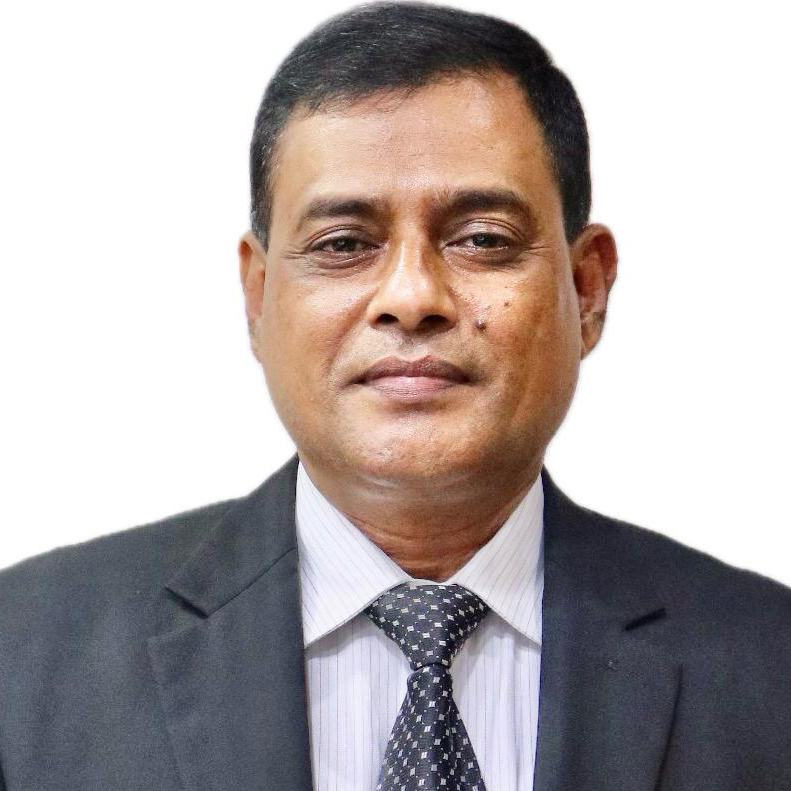
Major General (Retd.) Md. Nazrul Islam is the former Executive Chairman of BEPZA and Executive Member (Planning and Development) of BEZA. He is a PhD researcher focusing on technology, workforce transformation, and industrial competitiveness, and the writer of the Zi-DoNa Trilogy.
A Independent Newsweekly
© Copyright 2026 | Designed by ARK Reepon & Developed by Cosmos Group Software Team





Leave a Comment
Recent Posts
An unaccountable process leave ...
The latest price hike of all four major petroleum products by Tk 20 pe ...
The French Connection in South ...
France Ambassador to Bangladesh Jean-Marc Séré-Charlet h ...
Ties with China enter new phase
Happy 61st birthday, Singapore!
In defiant speech, Pezeshkian calls out Trump and sa ..
The banality of evil