



Featured 1
The Scramble for Energy


An Independent Newsweekly



Featured 1

The severe turmoil in global energy markets promises not to spare anyone, as the conflict in West Asia looks set to flout early expectations of a fairly quick end to hostilities. At least, that is what the initiators of this latest conflagration had promised. US President Donald Trump is in fact still promising it - one of the cornerstones of his MAGA base of core supporters, is complete disdain for the so-called 'forever wars' that his predecessors from both parties had got the US embroiled in.
If that is what Israeli prime minister Binyamin Netanyahu has gotten the US into in Iran, Trump may not have a third term to worry about, but his legacy will be absolutely destroyed.
That is why at least twice this week we heard him bluster about the war nearing its end, even as the evidence from independent news outlets and long-time Iran watchers contradicted him. Although by the end of the week, even the US president seemed reconciled to a new reality.
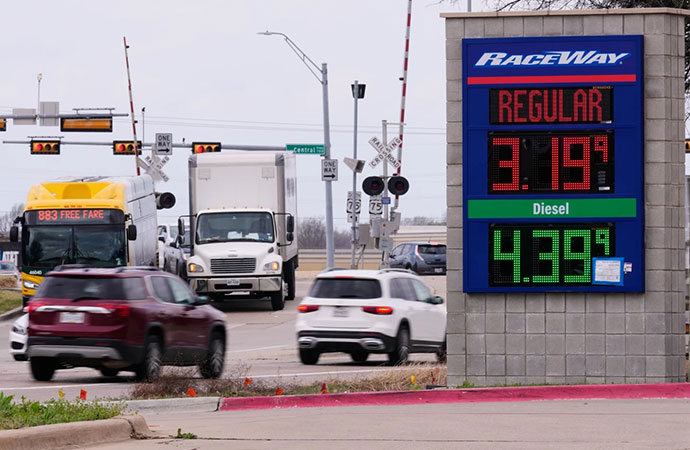
Trump's ultimate promise to American consumers and businesses was that it would be a quick and painless operation on the other side of the world with minimum ripple effects at home. That myth has already been shattered. As soon as it became clear that taking out Iran's Supreme Leader as a first strike did not equate to the Islamic Republic's disintegration, the price of oil started spiking. As I write this, Brent crude, the international benchmark, has just topped $100 a barrel for the second time since the start of the conflict - which was just 12 days ago. From a starting point in the low-70s.
The International Energy Agency (IEA) has now said its 32 member countries voted unanimously in favour of the 'largest ever' release of 400m barrels of oil from their strategic reserves, to offset the supply lost through the "effective closure" of the Strait of Hormuz. That is more than twice the 182 million barrels IEA countries released following Russia's invasion of Ukraine in 2022.
In times like this, the concept of 'energy security' may sound like just a quaint theory fit for textbooks or tall speeches, especially for countries like Bangladesh, which are increasingly dependent on the international market. We are pleased to note however, that under the new prime minister, the government has certainly seemed alert to the urgency of the situation. Domestically, it has called for a coordinated national effort to reduce electricity and energy consumption across the country. It includes measures such as offices being asked to maximise their use of natural daylight to shelving the traditional decorative lighting on government buildings for Eid and Independence Day, to even closing schools and colleges early for the holidays.
The government has also moved swiftly to secure alternative supplies - for example, the way it seized upon this moment to ramp up the supply of diesel from India through the Friendship Pipeline. It is also a sign of the government's deft diplomacy that the Iranian government officially declared the Strait of Hormuz open for vessels carrying fuel for Bangladesh.
Officials now say the country has enough fuel to cover one month of demand, with arrangements under way for another month. Beyond that, coupled with the price at that point, things start to get very murky.
A Independent Newsweekly
© Copyright 2026 | Designed by ARK Reepon & Developed by Cosmos Group Software Team




Leave a Comment
Recent Posts
The Scramble for Energy
The severe turmoil in global energy markets promises not to spare anyo ...
Enhancing the Capacity of Elec ...
The Bangladesh Academy for Rural Development (BARD), Cumilla, in partn ...
Saleh Shibly quietly performing as PM’s press secret ..
PTA negotiations feature in Dhaka-Jakarta discussion ..
Dhaka decides to strengthen cultural diplomacy, boos ..
Chinese Vice Foreign Minister Sun Weidong to visit B ..