



Culture
Art Dhaka's maiden edition

An Independent Newsweekly


Culture
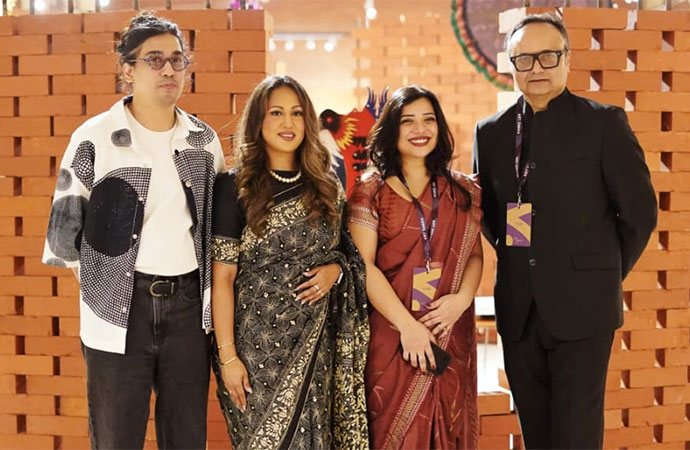
Photos: Shamsul Alam Hady/ UNB
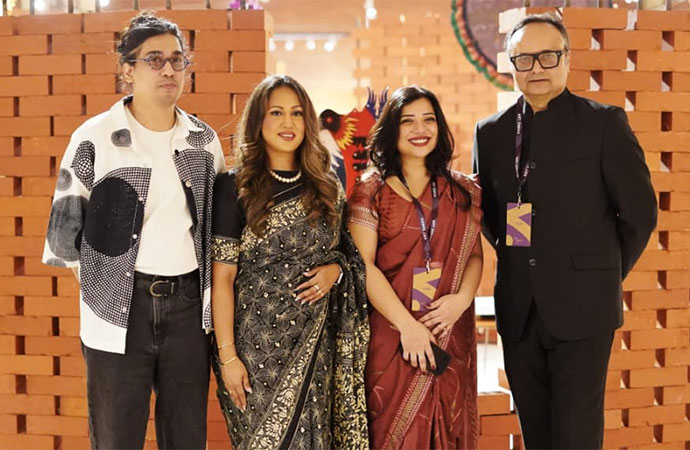
Founders, curators and the vision behind the fair
Dhaka has long hosted art exhibitions at various venues, making them an integral part of the city's cultural landscape. The inaugural Art Dhaka, however, has brought a new dimension to the city's art scene. Art lovers not only bought tickets to enter the event but also purchased artworks, an emerging trend that has drawn attention.
Dhaka Courier took a closer look at the initiative through the perspectives of its four co-founders, four curators and the architect behind the fair.
Held at Aloki from November 6 to 10, Art Dhaka, an Art Fair and Cultural Platform, brought together more than 135 artists through curated exhibitions, installations, printmaking and interactive spaces. Its organisers envision it as a platform where art can be experienced, discussed and collected.
For Durjoy Rahman, Founder of Durjoy Bangladesh Foundation (DBF) and a Co-Founder of Art Dhaka, the significance of the fair lies in developing a stronger ecosystem for visual arts in Bangladesh. He said the initiative was not intended to compete with existing art organisations or platforms but to complement their efforts and create more opportunities for artists, collectors and audiences.
"We are not comparing ourselves with anyone," Durjoy told DC. "Everyone who has contributed to the promotion and growth of visual arts in Bangladesh deserves due respect. This is not a market where we need to see others as competitors. Rather, we are working towards developing the ecosystem," he said.
Co-Founder Nahar Khan, Executive Editor of UNB and Founder of Solis, said the long-term ambition was to build an inclusive cultural infrastructure around such initiatives.
"Developing inclusive cultural infrastructure requires more than creating spaces for art. It requires cultivating an entire ecosystem around it," she said, pointing to the importance of patronage, education, community engagement and audience development.
For Nahar Khan, accessibility is central to that ambition. The idea is to create an environment in which people can engage with art in different ways, whether by viewing exhibitions, learning about artistic practices or becoming collectors. Building such an environment also means creating opportunities for artists to reach audiences beyond the conventional gallery-going community.
Fahd Sattar, Founder and CEO of Aloki and another co-founder, highlighted the venue's role in shaping the fair's experience. Its exhibition areas, Pavilion, Glasshouse and Print Pavilion brought different forms of art and audience engagement under one roof.
"An art fair is not only a place for buying and selling. People also come here for an experience," Fahd said, referring to the immersive installations, discussions, performances and other activities.
The fourth Co-Founder, Aumia Khundkar, Managing Editor of ICE Today and ICE Business Times and associated with Dhaka Makers, focused on the fair's reach among audiences. She said it brought together artists at different stages of their careers, including practitioners whose work had received limited exposure among local audiences.
"We have seen many people viewing, buying and enjoying the artworks. Those who are not buying original works are collecting merchandise or print editions, while others are simply coming to see and appreciate the works. That was also part of our intention," she said.
The fair's curatorial sections reflected a range of artistic approaches and perspectives. Mustafa Zaman, curator of 'Leaping Across Time' at the Glasshouse, also contributed to Art Dhaka's initial planning before stepping back to allow the appointed curators to work independently. He said creating new buyers for art was an important consideration in developing a market-oriented art fair.
"One of the important objectives was to create new buyers for art," he told DC. While acknowledging that the first edition had its limitations, he viewed the initiative as a positive development for the city's art scene.
Zihan Karim, curator of 'Narration. Thought. Chronicles.', brought together 42 artworks, including four sculptures and installations displayed outside the exhibition floor. His selection sought to reflect the diversity of materials and practices explored by Bangladeshi artists.
"I wanted to bring together the diversity of materials and practices that Bangladeshi artists have been exploring over the years," he said.
For 'The Still Point', curator Najmun Nahar Keya selected artists who have sustained their practices despite personal and economic challenges. The section featured paintings, drawings and works incorporating unconventional or reused materials. Inspired by a poem by T S Eliot, its title refers to the concentration and stillness artists find in their studios.
"I wanted to select artists who have continued their studio practices despite economic and personal challenges," she said.
The Print Pavilion, curated by Fareha Zeba, drew considerable attention from fairgoers. Drawing on nearly 14 years of experience with printmaking initiatives, she highlighted printmaking as both an artistic practice and a more accessible way of collecting art.
The section presented 170 works by 100 artists, selected from more than 300 submissions. With prices starting at Tk 5,000, it also featured demonstrations using two presses to familiarise visitors with the printmaking process.
"One of our main objectives was to make artworks available at affordable prices to the general public, art collectors and art lovers," she told DC.
Gallery Cosmos also participated in the Print Pavilion, presenting works by different artists produced at its studio. The institution took part in the live printmaking sessions using the two machines installed at the pavilion in the warehouse. The demonstrations drew considerable interest from visitors, offering an opportunity to see the process behind printmaking.
Its participation extended to the Glasshouse, where Gallery Cosmos presented two artworks by Kamrul Hassan and Kalidas Karmakar as part of 'Leaping Across Time'. Art Dhaka also featured notable works from institutional and foundation collections, including those of Durjoy Bangladesh Foundation and Bengal Foundation, alongside artworks by participating artists and galleries.
The fair's architectural language drew on local references. Architect Rashed Chowdhury said the Pavilion was designed to move beyond the conventional white-cube approach and establish a brick-based setting rooted in Bangladesh's cultural and architectural heritage. Its references included Paharpur, traditional clay stoves and Jamdani patterns. The structure was also designed to be dismantled and reused after the event.
"If we want to tell our own story, the architecture of the exhibition must also provide a context for that story," Rashed Chowdhury told DC.
Beyond the exhibitions, the Glasshouse hosted discussions and performances, while installations and other interactive spaces offered visitors different ways to engage with art.
As its inaugural edition came to a close, Art Dhaka raised a broader question about the future of the country's art scene: how to make art more accessible, encourage a stronger culture of collecting and create sustainable opportunities for artists. Its lasting significance will depend on whether the connections it has fostered among artists, galleries, institutions, collectors and audiences can continue beyond the fair.
A Independent Newsweekly
© Copyright 2026 | Designed by ARK Reepon & Developed by Cosmos Group Software Team




Leave a Comment
Recent Posts
BNP on high alert to thwart AL ...
What the month of December holds has been a major topic of discussion ...
Towards a new compact between ...
The continued unrest in the garments sector, even as negotiations for ...
Doa mahfil held for UNB’s Bogura correspondent
Hasina’s extradition: India says travel documents re ..
India desires positive relationship with Bangladesh, ..
US Ambassador meets Indian High Commissioner Trivedi