



Featured 1
Too late to turn back on a bicameral parliament now

An Independent Newsweekly



Featured 1
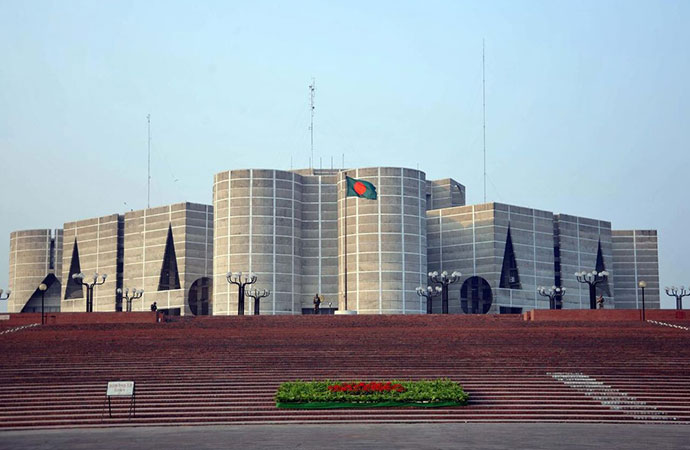
It was surprising to see one of the country's leading think-tanks, the Centre for Policy Dialogue, come out and voice its opposition to the introduction of an upper house in parliament, as part of the reforms being sought to improve governance in Bangladesh in the light of last year's Uprising. It has recommended that the National Consensus Commission drop its proposal to form a bicameral parliament, saying Bangladesh's historical and structural realities do not support a second chamber at this stage.
Introduction of an Upper House in parliament was initially raised by the Constitution Reform Commission, later adopted by the National Consensus Commission, and finally taken in stride by the political parties in the course of the Commission's deliberations with them. Although there was consensus among the parties on forming a bicameral parliament, there are differences of opinion regarding the election or formation of the upper house. Currently, Jamaat-e-Islami and allies demand proportional representation (PR) in both houses, while the National Citizen Party (NCP) wants it only in the upper house.
The BNP is against the idea of an elected upper house altogether. They have stuck to a proposal originally articulated in the 31-point charter for reform they had presented in 2023, well before the Uprising. The fifth point in that charter said: "In addition to the existing parliamentary system, an 'Upper House Legislature' will be introduced in the Parliament comprising eminent citizens of the country, distinguished academics, professionals, political scientists, sociologists and people with administrative experience, with the aim of managing the state with expert knowledge."
It is easy to see that this upper house would be one modelled on the House of Lords in the British parliament. The party's acting chairperson, during his years of exile in the UK, has spoken admiringly of the system prevailing in Westminster. However, it would be very surprising to see an unelected chamber introduced in this day and age. Even in the UK, the House of Lords has been increasingly under attack for its unelected nature, and may well see reform in the foreseeable future.
CPD's objection was part of a study it presented on the day it was announced that the July Charter was ready to be signed by the various political parties, at a national dialogue titled "Proposed Upper House in the National Parliament: Can it Ensure Accountability of the Majority Party?" The think tank claimed its study was based on primary and secondary data on parliamentary systems, detailed literature reviews, and interviews with political scientists, academicians, and party leaders, but except for a newspaper article summarising its findings, and the presentation by two senior researchers on the day, no peer-reviewed version of the full study has been published yet.
At this stage, the consensus exists for an upper house in Bangladesh, that if designed properly, can provide requisite checks on an elected government's use of its powers. At the study's unveiling, Dhaka University's Prof Asif M Shahan criticised CPD's study, saying it had "limited methodology" and ignored political theory. He said an upper house could "prevent power concentration in a dominant-party system". As we have indicated in these pages before, we tend to agree.
A Independent Newsweekly
© Copyright 2026 | Designed by ARK Reepon & Developed by Cosmos Group Software Team




Leave a Comment
Recent Posts
An unaccountable process leave ...
The latest price hike of all four major petroleum products by Tk 20 pe ...
The French Connection in South ...
France Ambassador to Bangladesh Jean-Marc Séré-Charlet h ...
Ties with China enter new phase
Happy 61st birthday, Singapore!
In defiant speech, Pezeshkian calls out Trump and sa ..
The banality of evil