



Essays
Dick Cheney: A man of many shades

An Independent Newsweekly
Essays
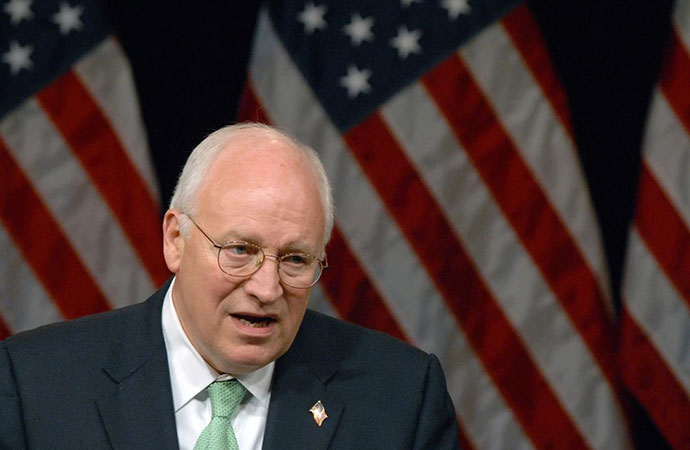
Dick Cheney. Photo: AP/UNB
The news that Dick Cheney, probably the most powerful yet polarizing vice president in U.S. history and a leading advocate for the invasion of Iraq, has died at 84, has drawn mixed reactions from around the globe.
Cheney, who was initially tasked with choosing a vice presidential running mate for George W. Bush, died last Monday (Nov. 3) from complications of pneumonia and cardiac and vascular disease, his family said.
In Cheney's hands, the vice presidency became a nexus of influence and manipulation - no longer the timid office whose occupants had tended their boss's ambitions.
When he bunkered in secure undisclosed locations after the Sept. 11, 2001, attacks, that was less an inconvenience for Cheney than a metaphor for a life of power that he exercised to maximum effect from the shadows.
He was the small man operating big levers as if from Oz. Machiavelli with a sardonic grin. "The Darth Vader of the administration," as Bush once described the public's view.
"History will remember him as among the finest public servants of his generation - a patriot who brought integrity, high intelligence, and seriousness of purpose to every position he held," Bush said Tuesday.
A survivor of five heart attacks, Cheney long thought he was living on borrowed time and declared in 2013 that he awoke each morning "with a smile on my face, thankful for the gift of another day," an odd image for a figure who always seemed to be manning the ramparts.
Cheney was, in effect, the chief operating officer of the younger Bush's presidency. He had a hand, often a commanding one, in implementing decisions most important to the president and some of surpassing interest to himself - all while living with decades of heart disease and, post-administration, a heart transplant.
Years after leaving office, Cheney became a target of President Donald Trump, especially after his daughter Liz Cheney became the leading Republican critic and examiner of Trump's desperate attempts to stay in power after his 2020 election defeat and his actions in the Jan. 6, 2021, riot at the Capitol.
While out of office during the Clinton administration, he was the chairman and CEO of Halliburton from 1995 to 2000, and it was in this capacity that I got to know him, as the company opened an office in Bangladesh. Despite all the controversy that came to surround him, I always found him to be a perfect gentleman, who was a great advocate of the American view on freedom, and it translated through to an admiration for entrepreneurship.
Enayetullah Khan is Editor-in-Chief,United News of Bangladesh (UNB) and Dhaka Courier.
A Independent Newsweekly
© Copyright 2026 | Designed by ARK Reepon & Developed by Cosmos Group Software Team




Leave a Comment
Recent Posts
The right time for an apology
The publication of the posthumous memoirs of lawyer Abdur Razzaq, who ...
Human rights experts commissio ...
Human rights experts commissioned by the UN’s top human rights b ...
Teesta erosion leaves several hundred families homel ..
Housing Without Houses: The Hidden Cost of Banglades ..
The Election Commission will review the timeframe
The story behind the Arafat brothers' ‘Kolpona’