



Culture
Art, Love and Resistance: A Community Centered Exhibition in Washington, DC


An Independent Newsweekly



Culture
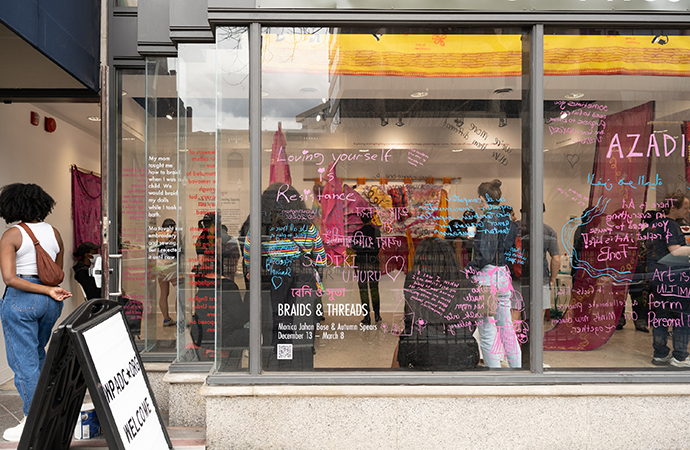
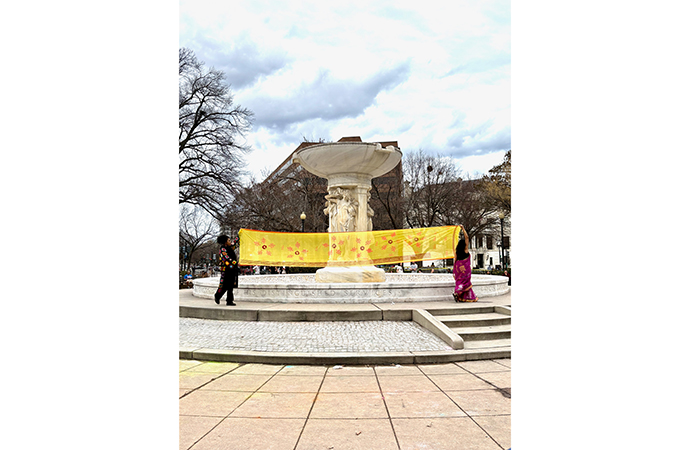
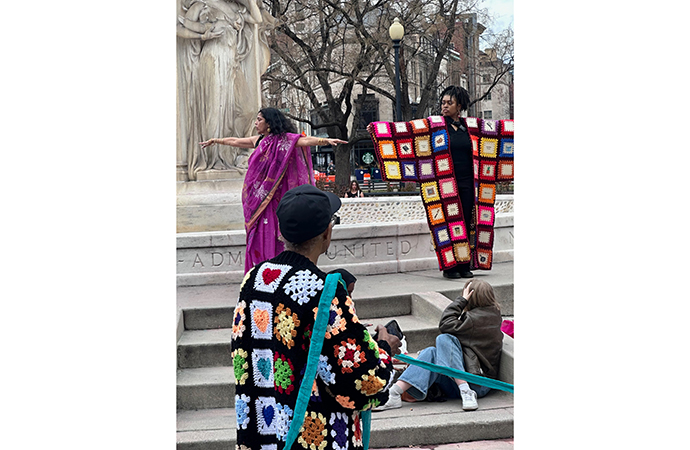
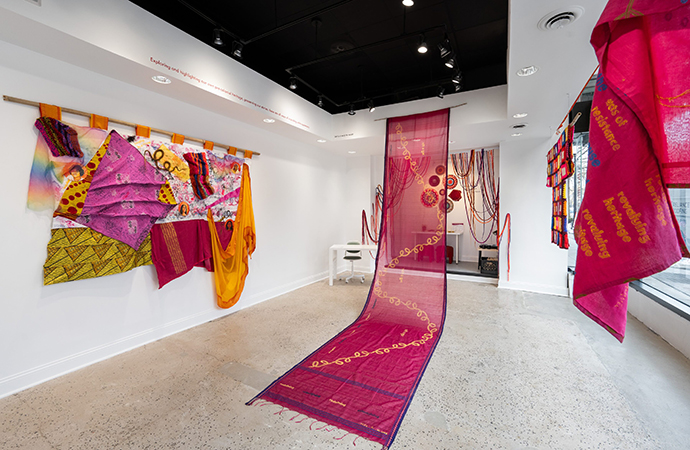
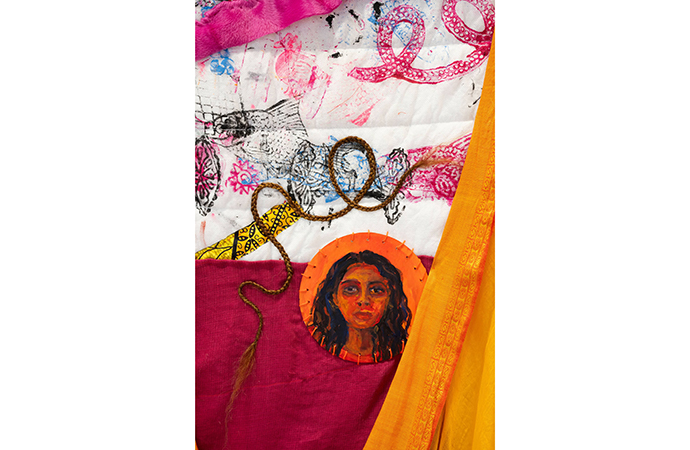
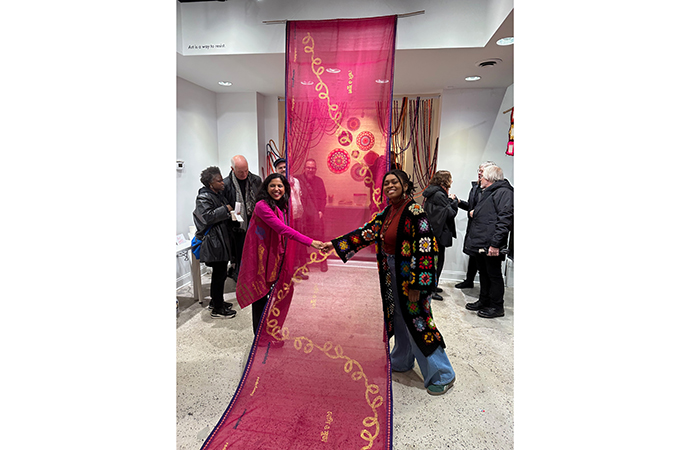
The exhibition Braids and Threads: Connecting Legacies by artists Monica Jahan Bose and Autumn Spears sits at the intersection of community and collaboration, highlighting their respective cultural identities and the overarching impact of colonialism and white supremacy. The artists explore their connection with their heritage, mothers, and ancestors. Bose is Bangladeshi-American, and Spears is African-American. Both artists are based in Washington, DC, and each draws on her heritage and ancestral techniques-from sewing and embroidery to braiding and crochet. The exhibition engaged the public for three months and inaugurated the new space of Washington Project for the Arts in Dupont Circle, Washington DC.
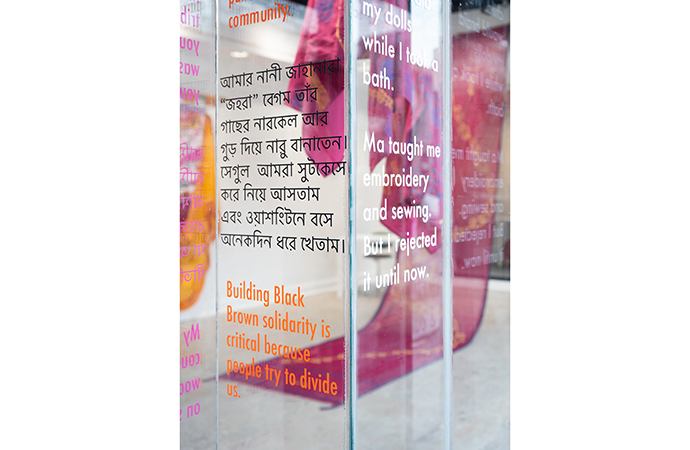
Together they print African braids on Bangladeshi saris, and create a large tapestry with braids, embroidered kanthas, saris, crochet, African cloth, and woodblock printing. Further, the artists use text as a method of deepening and reinforcing the themes of love and resistance throughout the space. As part of the Braids and Threads art project, the artists had several conversations that they recorded and published as podcasts. They transformed some of their conversations into vinyl text. Both within the fiber art pieces and written across walls and windows (in English and in Bangla) are sentences from their conversations that tell stories from the artists' lived experiences or stories of their ancestors. One text states: "In Africa, different braided styles were meant to communicate different things, maybe it was your age, maybe it was your gender or your sexuality." Another states: "My parents were born during the British colonial era in India, in what is now Bangladesh. First English, then Urdu, were imposed on them." These sentences explain the artists' heritage that informs their art, their identities, their existence. This use of text pulls back the curtain to reveal colonialism's impact on the artists' lives and upbringing.
The artists also invite visitors to contribute to the textual space and write something on the window with their own curated text. Previous visitors had written things like "black and blues," "you belong," and others drew images alongside the text. In going to view the exhibition with classmates, we drew a jointly created image on the window in the spirit of the collaborative nature encouraged by the artists.
With themes of collaboration at its core, Braids and Threads is a story about intersectionality. The term "intersectionality" was coined by Kimberlé Crenshaw, who explained that the intersection of being a woman and a person of color means there is compounded discrimination based on both gender and race. Bose and Spears both identify as women of color and have been impacted by their gender and the inherent oppressive nature of colonialism and white supremacy. Braids and Threads exists as a space for two woman artists of color to honor these intersections of their identities, rather than assimilate to white culture - the goal of modern white supremacy. Through the use of text alongside the artwork, or rather, text as artwork, this exhibit serves as a call to action: embracing and celebrating your heritage is in and of itself an act of resilience and resistance to imperialism, colonialism, and white supremacy.
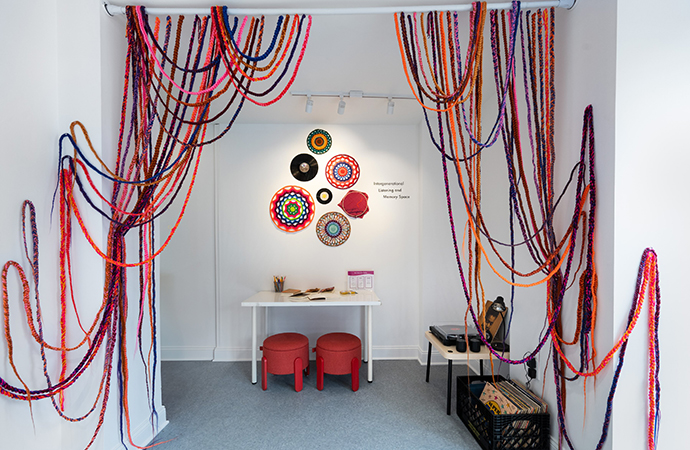
Braids and Threads also holds collaborative opportunities within the gallery space for visitors. At the back of the space, there is a record player where visitors are encouraged to select a record to play while they are in the gallery. The records are from the artists' family collections, spanning from the '60s to the '90s and including music from around the world. Additionally, there are journals made by the artists that exist as an opportunity for visitors to reflect on their heritage, knowledge passed from their elders, or stories from their own lives. The goal of this exhibition is for visitors to feel empowered by their identities and heritage. Future visitors are given the opportunity to look through these pages and identify with people who wrote before them. The artists also host tea time every Friday in the gallery, along with woodblock and crochet workshops, which broadens their reach into the local community. Within this space of sheer celebration of culture and collaboration, visitors find strength in their community. Bose and Spears use their exhibition as a space for collectivism. In being enveloped in the pride they have for their respective cultures, visitors feel empowered to do the same.
This exhibition is powerful because when you enter the space, the love the artists have for their cultures is palpable. The visitor feels wrapped up in the warmth of the tapestry so tenderly draped on the wall, or the sari fabric gently cascading from the ceiling. With an emphasis on heritage and passed knowledge, Braids and Threads acknowledges the way white supremacy and culture can interrupt this generational knowledge and love. Loving their culture is in and of itself an act of resistance. As stated by bell hooks in "Love as the Practice of Freedom," "as long as we refuse to address fully the place of love in struggles for liberation we will not be able to create a culture of conversion where there is a mass turning away from an ethic of domination."
Love, collaboration, collectivism, culture, heritage, and generational knowledge are integral in the fight for social justice. Monica Jahan Bose and Autumn Spears advocate for strengthening our communities through collectively embracing our individual cultures in their exhibition, Braids and Threads: Connecting Legacies, and honor the legacies of both those who came before them, and those who stand with them now.
Julia Canora is an artist and aspiring curator pursuing an MA in Museum Studies at George Washington University.
A Independent Newsweekly
© Copyright 2026 | Designed by ARK Reepon & Developed by Cosmos Group Software Team





Leave a Comment
Recent Posts
Getting off on the right foot
Prime Minister Tarique Rahman’s first official visit abroad sinc ...
After Forty-Seven Years of Hos ...
Only a few days ago, President Donald Trump was calling Iran's lea ...
India announced the resumption of tourist visas for ..
World Cup reaches halfway mark as knockout drama awa ..
DU: In the hotbed of the culture war, is cultural sp ..
At least 164 people have died and 971 were injured a ..