



Column
Who Will Build Bangladesh's Knowledge Economy?

An Independent Newsweekly


Column
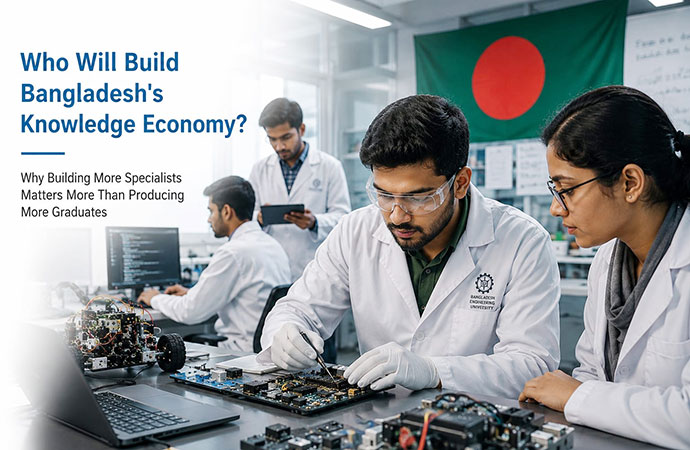
Why Building More Specialists Matters More Than Producing More Graduates
Bangladesh has every reason to take pride in its educational achievements. Over the past five decades, the country has expanded access to education, raised literacy rates, established new universities and enabled millions of young people to pursue higher education. These advances have fuelled economic growth, reduced poverty and expanded social mobility. Yet every stage of development brings new challenges. For Bangladesh, the next challenge is no longer expanding educational access but producing the highly skilled specialists needed to drive innovation, productivity and long-term competitiveness. As the country aspires to become an upper-middle-income nation and ultimately a knowledge-based economy, one fundamental question demands attention: Who will build Bangladesh's knowledge economy?
An Important Signal Beyond the BCS Results
The recently published results of the 47th Bangladesh Civil Service (BCS) examination offer an important insight. Nearly 375,000 candidates competed for one of the country's most prestigious public service examinations, yet many specialised cadre positions remained vacant because suitably qualified candidates, particularly in technical and professional disciplines, could not be found. This is more than a recruitment challenge. It raises a fundamental question about Bangladesh's human capital strategy: Are we producing the specialist talent needed to build the economy of the future?
The Next Stage of Educational Development
For many years, educational success was measured by enrolment, literacy, graduation rates and university expansion. These indicators remain important, but they are no longer sufficient. Today's global economy rewards specialised expertise rather than educational volume. Nations compete by developing scientists, engineers, physicians, researchers, technology professionals and innovators capable of solving complex problems. Bangladesh has successfully expanded educational opportunity. The next challenge is to transform that opportunity into specialised human capital.
Degrees Do Not Always Create Competence
Modern education requires a clear distinction between qualification and competency. A degree certifies successful completion of an academic programme, whereas competency reflects the ability to apply knowledge effectively in practice. Across every profession, from engineering and medicine to software development, practical capability ultimately determines excellence. As technology reshapes the economy, competency is becoming as important as qualification.
Universities Must Produce Problem Solvers
Universities worldwide are redefining their mission. Beyond awarding degrees, they must produce graduates capable of solving national and global challenges. This requires stronger university-industry partnerships, research-oriented teaching, practical training and curricula that keep pace with technological change. While educational statistics remain important, national competitiveness ultimately depends on the quality of talent a country develops.
Are Bangladesh's Brightest Minds Serving Where They Are Needed Most?
Bangladesh faces another challenge that receives far less attention: the deployment of its specialist talent. Each year, the nation invests heavily in educating doctors, engineers, scientists, ICT professionals, teachers and researchers. Yet many of its brightest graduates choose general administrative careers because they offer greater prestige and stronger career prospects. While capable administrators are essential, diverting scarce specialists from hospitals, laboratories, universities and engineering projects carries a significant national cost. The challenge is not to restrict career choice, but to ensure that specialised excellence is recognised, rewarded and valued as highly as administrative leadership.
Rethinking Public Service
Human capital policy and public service reform should evolve together. Specialists need career pathways that reward technical excellence, encourage innovation and provide leadership opportunities within their professions. Recruitment should also recognise research, professional achievement and specialised experience alongside competitive examinations. Public institutions must recognise that excellence is demonstrated in different ways across different professions.
The Race for Knowledge Is Already Underway
The Fourth Industrial Revolution is reshaping the global economy through artificial intelligence, robotics, advanced manufacturing and digital technologies. Countries that develop and retain highly skilled professionals will attract greater investment, boost productivity and create better jobs. Bangladesh has invested heavily in physical infrastructure, but its long-term competitiveness will increasingly depend on intellectual infrastructure. Without sufficient scientists, engineers, researchers, healthcare professionals and technology leaders, physical assets alone cannot sustain prosperity. Infrastructure builds economies. Human capital sustains them.
A National Agenda for Specialised Excellence
Preparing Bangladesh for the next phase of development requires coordinated national action. Universities must modernise curricula, strengthen research and deepen industry collaboration, while employers should invest more in professional development and innovation. Government should expand research funding, specialist career pathways and international academic collaboration in critical disciplines. Education, labour and public service policies must reward specialised expertise and ensure that scarce talent is deployed where it creates the greatest national value. Together, these reforms can transform Bangladesh's demographic strength into a lasting competitive advantage.
Building the Knowledge Economy Begins with Building Specialists
Bangladesh's educational transformation has been one of its greatest national achievements. The next transformation must focus on quality, capability and the strategic deployment of talent. The country's future prosperity will depend not simply on how many graduates leave its universities each year, but on whether those graduates become the scientists, engineers, physicians, researchers, entrepreneurs and innovators capable of shaping Bangladesh's future. Building more specialists is therefore not merely an educational objective. It is an economic imperative, a competitiveness strategy and, ultimately, a nation-building agenda. If Bangladesh is serious about building a knowledge economy, the question is no longer whether we can educate more people. The real question is whether we can develop, retain and deploy the specialists who will build the nation's future.
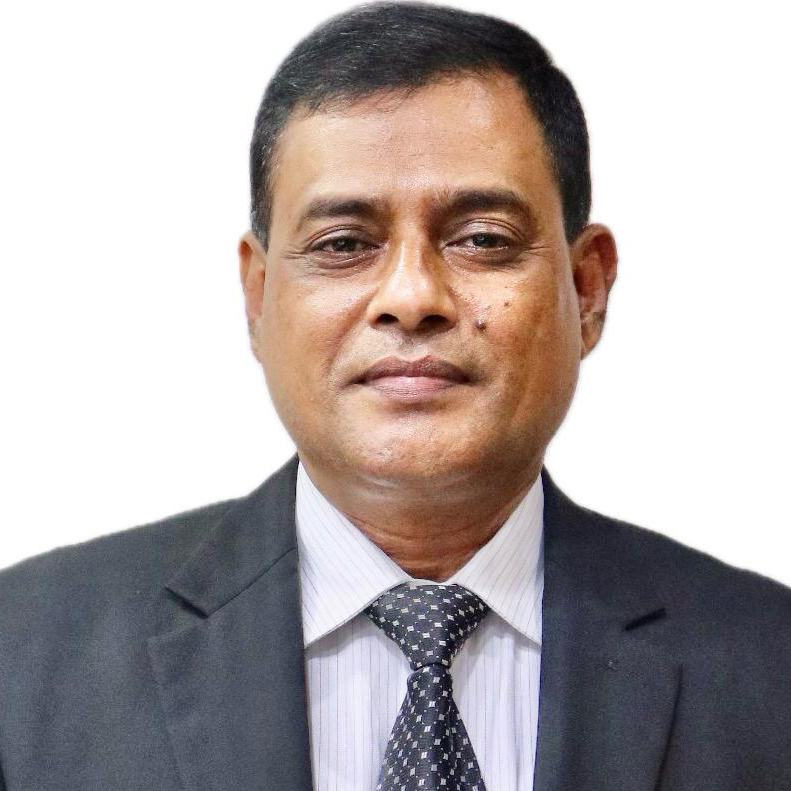
Major General (Retd) Md Nazrul Islam is a former executive chairman of BEPZA, a retired Major General of the Bangladesh Army, and a PhD researcher on technology, workforce transformation, and industrial competitiveness.
A Independent Newsweekly
© Copyright 2026 | Designed by ARK Reepon & Developed by Cosmos Group Software Team






Leave a Comment
Recent Posts
The government passes the test ...
One of the cornerstones of the political earthquake Bangladesh witness ...
The government hiked the price ...
The government hiked the price of a 12kg cylinder of liquefied petrole ...
Police in France stand accused of using excessive fo ..
The India-Pakistan Cold War
A week on from DNCC’s eviction drive, Mirpur-10 rema ..
Equal Service, Unequal Pensions: Time for a Fairer S ..