



Column
Threads Loosening: Divorce and the Changing Fabric of Family in Bangladesh

An Independent Newsweekly
Column

Image: Collected
Divorce in Bangladesh is rising—not yet a crisis, but a signal of deep social transformation. As expectations evolve and traditional supports weaken, the real challenge lies in rebuilding the fabric of family through balanced roles, early intervention, and institutional support.
A Personal Reflection: When the Weave Begins to Thin
Across my years in the military, corporate and public service, I have seen institutions endure pressure because they are held together by discipline, shared purpose, and collective responsibility. Families, however, are increasingly being tested without such reinforcement. I recall a young professional in Dhaka who sought guidance-not for career advancement, but for a failing marriage. What struck me was not the conflict itself, but the absence of support around it. In earlier times, extended families would intervene, absorb shocks, and help mend relationships. Today, that layer of support is fading. Marriages are left to navigate strain in isolation-and when they break, they do so quietly, without resistance.
A Rising Trend: When the Threads Begin to Loosen
Data reflects what experience already suggests. According to figures aligned with the Bangladesh Bureau of Statistics, the crude divorce rate rose from 0.7 per 1,000 population in 2021 to 1.4 in 2022, before moderating slightly to around 1.1 in 2023. Urban trends are sharper. Records from Dhaka's city corporations indicate over 13,000 divorce applications in 2022-roughly one every 40 minutes. Over the past decade, filings in major cities have increased by 30-35%. Yet the most significant shift lies not in numbers, but in agency. Women now initiate approximately 65-70% of divorce cases in urban Bangladesh. This is not merely a statistical change-it signals a deeper transformation in how marriage is understood and sustained.
Bangladesh in Asia: A Fabric Under Transition
Compared to regional peers, Bangladesh remains relatively conservative. India's divorce prevalence remains near 1%, while Pakistan continues to resist change despite rising urban cases. Bangladesh, with rates between 1.1 and 1.4 per 1,000, still reflects traditional norms-but is loosening faster than its neighbours. Further east, countries such as China and South Korea report rates between 2 and 4 per 1,000, indicating a shift toward more fluid marital structures. Bangladesh stands at an inflection point-neither firmly traditional nor fully modern.
Rewriting the Pattern: Women, Men, and the Changing Equation
The increasing role of women in initiating divorce reflects genuine progress. Economic empowerment has enabled women to step away from relationships that lack dignity or balance, while legal awareness-supported by frameworks such as the Muslim Family Laws Ordinance 1961-has strengthened their agency. At the same time, expectations have evolved. Marriage is no longer sustained by obligation alone; it must now rest on respect, partnership, and emotional compatibility. If women are adapting to new expectations, many men are not evolving at the same pace. Traditional notions of authority limited emotional engagement, and unequal sharing of responsibility continue to create friction within modern marriages. A significant part of today's strain lies not in women changing-but in men not changing fast enough. Marriage, in its new form, demands partnership; where adaptation is unequal, imbalance becomes inevitable.
Digital Influence: Expectations Without Anchors
Digital exposure has accelerated this transition. With over 70 million internet users, social media continuously reshapes perceptions of relationships, raising expectations while reducing tolerance for dissatisfaction. The result is a paradox: individuals are more aware of what a "better" relationship looks like, yet less equipped to build or sustain one. Expectations rise, but coping mechanisms do not. The traditional threads that once held marriages together are being replaced by newer-but often more fragile-connections.
Ramifications: When the Fabric Stretches
The consequences of this transition are multi-layered. Socially, the erosion of extended family structures reduces informal mediation, leaving marriages more exposed to rupture. For children, the effects are often quiet but lasting-emotional stress, fragmented upbringing, and weakened guidance structures. For women, empowerment is real, but post-divorce economic and social vulnerabilities remain significant. At a broader level, Bangladesh faces a widening gap: informal systems are weakening, yet formal support systems remain underdeveloped. The fabric is stretching-but not being reinforced.
The Missing Link: An Asymmetrical Transition
Bangladesh is not facing a breakdown of family; it is experiencing a misaligned transition. Women have gained agency and expectations have evolved, but institutions, family systems, and male roles have not adapted at the same pace. This asymmetry is where strain originates. There is no structured preparation for marriage, limited access to counselling, weak mediation systems, and no integrated national approach to family stability.
Policy and Social Directions: Strengthening the Weave
1. At the individual level, marriage must be treated as a skill, not an assumption. Individuals-particularly men-must shift from authority to partnership, engaging actively in communication, emotional support and shared responsibility. Digital discipline is essential to prevent unrealistic expectations shaped by social media.
2. At the family level, the lost support layer must be rebuilt. Families need to act as mediators, not controllers, enabling early-stage conflict resolution through trust and balance. Parenting must evolve to include emotional intelligence and relationship education, rather than focusing solely on academic success.
3. At the government level, institutional reinforcement is essential. This includes structured pre-marital orientation programmes, accessible counselling centres at district and city levels, and professionalised mediation systems. A national family data system can guide targeted policy responses, and workplaces should be encouraged to adopt family-supportive policies.
Holding the Fabric Together
No fabric can hold if its threads are not reinforced. As old structures fade, new systems must take their place-balanced, adaptive and inclusive. The future of family in Bangladesh will not depend on resisting change, but on managing it wisely. If the resilience of tradition can be combined with the responsiveness of modern systems, the fabric will not unravel-it will be rewoven, stronger than before. Otherwise, what is now a quiet loosening may become a visible tear.
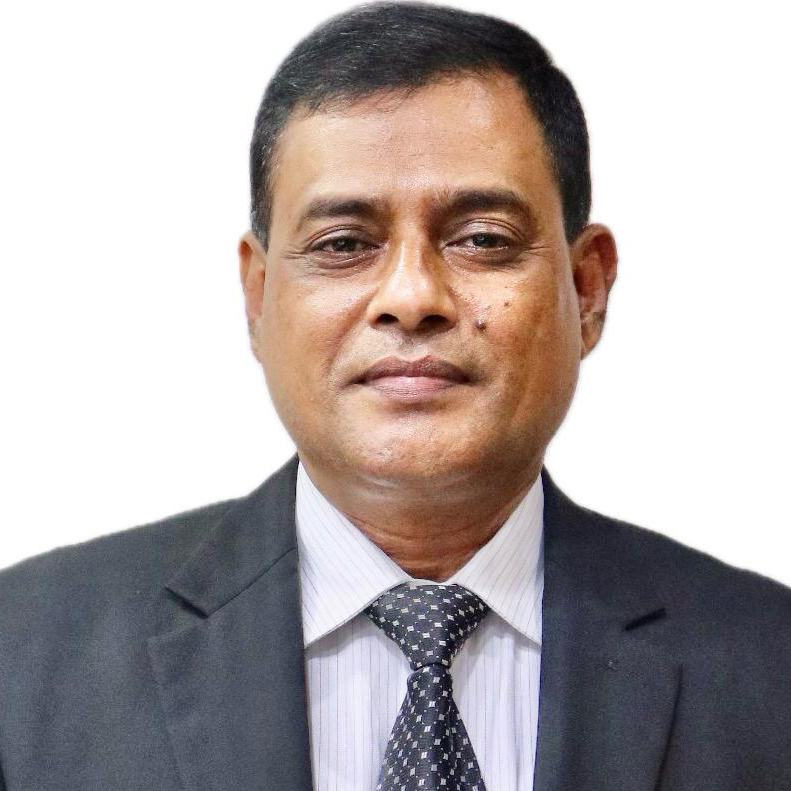
Major General (Retd) Md Nazrul Islam is a former executive chairman of BEPZA, a retired Major General of the Bangladesh Army, and a PhD researcher on technology, workforce transformation, and industrial competitiveness.
A Independent Newsweekly
© Copyright 2026 | Designed by ARK Reepon & Developed by Cosmos Group Software Team





Leave a Comment
Recent Posts
Is the international community ...
A spate of downgraded economic projections, from Bretton Woods to Mani ...
A Childhood Lesson in Arithmet ...
As children, we learned a simple mathematical rule: if we know the pri ...
Indian authorities launched a major security crackdo ..
Police dispersed garment workers from the Azampur ro ..
Why Saudi Arabia has struggled to defend itself agai ..
Iran-backed Houthis strike Saudi oil company Aramco’ ..