



Column
America’s New World


An Independent Newsweekly


Column
Photo: AP/UNB
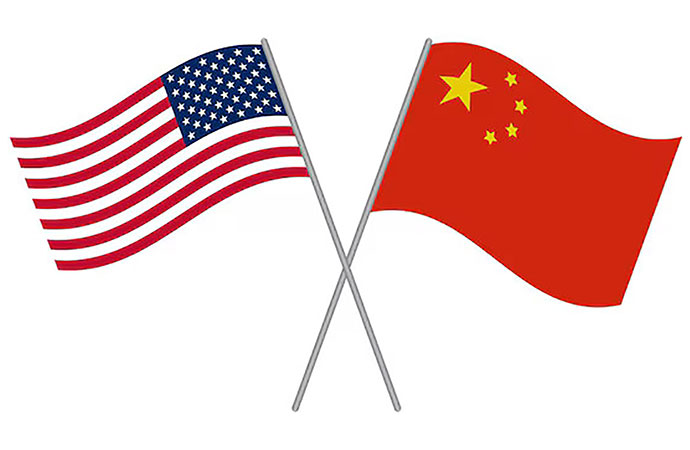
America's just-released National Defence Strategy (NSS) sketches the geographical outlines of the new world order that President Trump envisages in his second term. The strategy recognises zones of influence governed by great powers: America in the Western Hemisphere, China in the Pacific, and Europe. Russia does not make it to the list, which is astonishing.
Nevertheless, NSS 2025 is clear about its goals. America is prepared to assert and enforce a "Trump Corollary" to the Monroe Doctrine. That doctrine, which was declared by US President James Monroe in 1823, stated that the Americas were closed to further European colonisation and intervention, and that such attempts at control would be considered hostile by America, which in turn promised non-interference in European affairs.
Two centuries later, the Trump Corollary to the Monroe Doctrine means this, in the words of the NSS: "After years of neglect, the United States will reassert and enforce the Monroe Doctrine to restore American preeminence in the Western Hemisphere, and to protect our homeland and our access to key geographies throughout the region. We will deny non-Hemispheric competitors the ability to position forces or other threatening capabilities, or to own or control strategically vital assets, in our Hemisphere." Point taken, but whether China will retreat from Latin America remains to be seen.
As for Europe, I leave it to its trans-Atlantic fate. Although the European Union (EU) has France as a nuclear member, it is difficult to discern even the threatened contours of a credible European defence policy save for the North Atlantic Treaty Organization (NATO), which depends ultimately on the pieties of American goodwill. Take away NATO, and "great-power" Europe's chances against great-power Russia would dim considerably. The NSS could have mentioned Russia instead of Europe as overseeing a strategic zone of influence, but that would obscured all too obviously NATO's role in the proxy war with Russia over Ukraine.
Now let us to come to the Pacific. David Sacks of the respected Council on Foreign Relations writes about how, just eight years ago, Trump's first NSS inaugurated an era of great-power competition with China. In that NSS, China was described as a revisionist power which attempts to shape a world that is antithetical to American values and interests and indeed to displace the US in the Indo-Pacific. "With this NSS, that era has come to an end. Trump's new strategy relegates geopolitics to a supporting role" and China "is envisaged primarily as an economic competitor, and thus the need to rebalance bilateral economic ties is prioritized above concerns with Beijing's strategic intentions. China is no longer framed as a systemic challenge with a vision of world order that is incompatible with U.S. interests", Sacks says, and adds: "While China has feared that Trump would seek to decouple the U.S. and Chinese economies, this NSS holds out the prospect of a 'genuinely mutually advantageous economic relationship with Beijing'."
The question is what this Sino-US economic rapprochement would cost other countries. Sacks argues: "Most significantly, the Indo-Pacific portion of the strategy is China-centric. Other countries in the region are valued insofar as they can help the United States win an economic competition with China and deter a conflict with Beijing." Really? Yes. "The Philippines, a U.S. treaty ally, is not even mentioned. Nor are the Pacific Islands or most countries in Southeast Asia."
Gosh!
Expectedly, China has welcomed the NSS, although with caveats. A report in Newsweek quotes Guo Jiakun, a spokesperson for China's Foreign Ministry, as saying: "China stands ready to work with the U.S. to maintain the steady development of the bilateral relationship and at the same time will firmly defend our sovereignty, security, and development interests." The cautionary tone of the second half of Guo's statement refers to Taiwan, which the Trump Administration retains as a major security priority, not least because it is a global semiconductor hub and a major purcser of American weapons. "The Taiwan question is at the core of China's core interests and is the first red line that cannot be crossed in China-U.S. relations," he said. Guo demanded that Washington "stop conniving with and supporting Taiwan independence forces".
That would be fine with most Asian countries, which respect the One-China policy not only in letter but in spirit. (America wavers between letter and spirit.) Much as Europeans should bemoan the way in which NATO's proxy war wth Russia over Ukraine has affected their own interests, Asians should be wary of supporting any American policy on Taiwan that would affect their own interests, particularly with China. NATO could disappear one Trumpean day and leave Europe at the mercy of avenging Europe. American retrenchment from Asia following a failed Taiwan policy that causes armed conflict with China would similarly leave Asians at the triumphant mercy of avenging China. Asians are not fools any more than Europeans are.
However, even without the Taiwan issue muddying already dirty international waters, Asian countries are unsure of how China would behave now that America has apparently granted it informal suzereignty over the Pacific. Are China's de facto territorial gains in the contested South China Sea now to be treated as effectively de jure? How about the East China Sea? Will Japan and India, the two chief countervailing powers to Chinese advances in the Indo-Pacific, acquiesce in the appearace of a tripolar Trumpean world order centred in Washington, Beijing and Brussels? Will not Moscow wish to replace Brussels? Of course. Will Brussels agree? Of course not.
There is no doubt that a Great Game is underway in Asia once again. America needs to understand that it is a part of that game. It is not the game itself.
The writer is Principal Research Fellow of the Cosmos Foundation. He may be reached at epaaropaar@gmail.com
A Independent Newsweekly
© Copyright 2026 | Designed by ARK Reepon & Developed by Cosmos Group Software Team






Leave a Comment
Recent Posts
Populism strikes again
So it is official now - the Bangladesh national team will not be trave ...
Beijing urges Washington to fo ...
China on Thursday reacted to China-related remarks by the US Ambassado ...
The European Union and the Mercosur bloc of South Am ..
New US Ambassador to Bangladesh raises concern over ..
Gold prices in Bangladesh surged past the Tk 250,000 ..
What is Trump's 'Board of Peace' and who will govern ..