



Politics
Trump’s Special Military Operation in Venezuela


An Independent Newsweekly
Politics
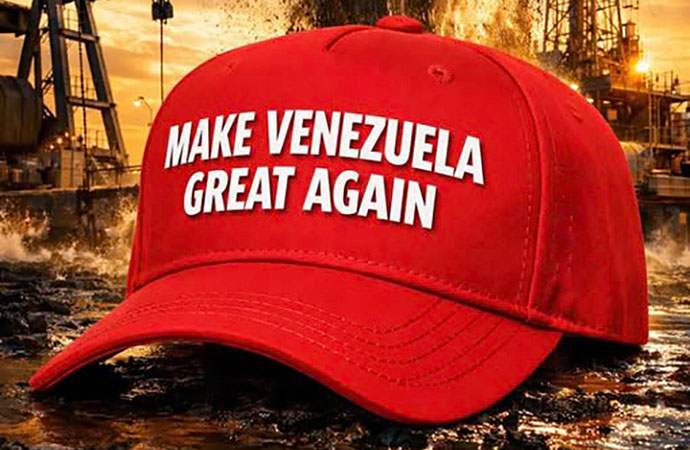
The framers of the US Constitution designed a system to compel the executive to explain its actions, wagering that requiring justifications would discipline power and prevent its arbitrary exercise. President Donald Trump has called that bet – and won.
In the early hours of January 3, US forces bombed Caracas, blacking out the capital, and captured Venezuelan President Nicolás Maduro from his compound at Fort Tiuna. By dawn, Delta Force operators had helicoptered Maduro - blindfolded, handcuffed, dressed in a Nike tracksuit - to the USS Iwo Jima, bound for arraignment in New York on an assortment of federal narcotics-trafficking and terrorism-related charges.
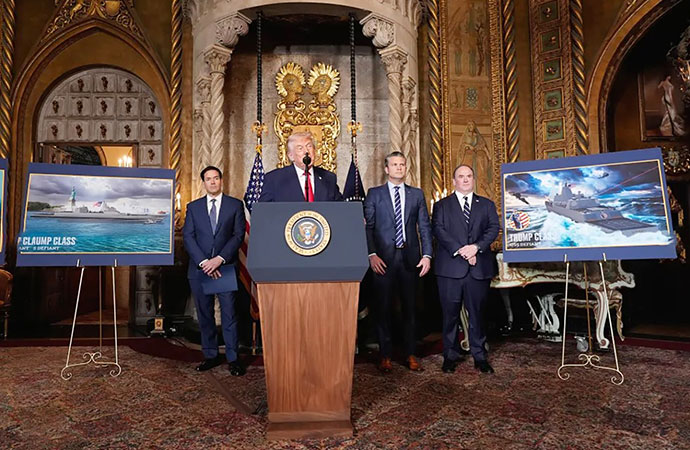
President Donald Trump announced his own version of Russian President Vladimir Putin's "special military operation" in Ukraine on his Truth Social app before most Americans were awake. At a subsequent press conference at Mar-a-Lago, he declared that the United States would "run" Venezuela "until such time as we can do a safe, proper, and judicious transition."
Once again, the Trump administration has undertaken a military operation in support of a political objective that it has failed to explain coherently and convincingly. This dramatic first step, while effectively executed, was obviously taken without preparing any subsequent steps in advance.
It is not as though the administration lacked time to plan ahead. The operation culminated months of escalation: a naval blockade, the seizure of oil tankers on the high seas, over a hundred people killed in strikes on alleged drug boats, and a CIA drone attack on a Venezuelan dockyard. "Operation Absolute Resolve" succeeded brilliantly. But toward what end? What did it actually resolve?
Rival Rationales
The administration cannot decide whether the operation's purpose was law enforcement or regime change. Senator Tom Cotton of Arkansas, defending the absence of congressional notification, argued that "Congress doesn't need to be notified every time the executive branch is making an arrest." The operation, on this account, was simply the US Justice Department taking into custody a drug dealer who happened to be the president of Venezuela. Yet Trump spoke at Mar-a-Lago as if regime change had already occurred. The US would "run" the country, American oil companies would move in to "fix the badly broken infrastructure" and "start making money."
These cannot both be true. Arresting a criminal is not the same as assuming control of his country.
But the administration sees no need to reconcile the contradiction and has offered a familiar grab bag of justifications. The military operation would bring justice and prosperity to Venezuelans; interdict fentanyl (though Venezuela does not produce any); stop illegal immigration into the US; fight "narco-terrorism" (though Maduro does not control the Tren de Aragua gang); gain compensation for oil assets Venezuela supposedly "stole" from US companies; bar Iran and China from the Western hemisphere; throttle Cuba's subsidized oil supplies and threaten its leaders with the Maduro treatment; and win praise and support from Venezuelan exiles in Florida.
To this miscellany of publicly announced reasons can be added Trump's undisguised desire to demonstrate that he has "superseded" all previous US presidents. But the sheer profusion of explanation and excuses mocks the very idea of justification. The administration's rationales function as chaff, designed to overwhelm rather than persuade. The Washington Office on Latin America calls it "theater." Showcasing America's irresistible power was itself an aim, not just collateral spectacle.
The operation's flagrant violation of international law - including, as legal scholars note, Trump's constitutional duty to execute treaty obligations faithfully - is not a problem for this administration. It is a selling point. Flouting the United Nations Charter demonstrates that Trump answers to no one, least of all to a multilateral order that constrains lesser powers. His supporters celebrate the lawlessness. But lawlessness is not a strategy.
The drug rationale is particularly implausible. Last month, Trump pardoned Juan Orlando Hernández, the former president of Honduras, who had been extradited to the US and convicted in 2024 on drug-trafficking charges. The case against Hernández was compelling: he had turned Honduras into a narco-state, encouraged by bribes from the Sinaloa cartel of Mexico.
Hernández was serving a 45-year sentence, but he belonged to a Trump-friendly right-wing party. So, the US captures Maduro for alleged drug trafficking while releasing a convicted drug trafficker whose guilt was proven in court. "Narco-terrorism" is a ruse deployed against enemies and discarded for friends.
Analysts who argue that oil is "the real reason" or that regime change was "always the plan" credit the administration with more coherence than it deserves. As one analyst observes, they mistake "chaos" for "improvisation" and "restraint" for mere "selectivity." The truth is messier: oil is one motive among several, and never reconciled with the others. Trump wants Venezuela's hydrocarbons. He wants to look tough on drugs. He wants to please Florida voters. He wants to humiliate a leftist adversary. And he wants to send a message to Cuba and China.
These objectives pull in different directions, and no one in the administration has done the work of asking how they fit together or how to prioritize. The result is policy as bricolage - rationales stapled to whatever power is available.
What Next?
When US forces took Panama's then-leader, General Manuel Noriega, into custody on January 3, 1990, and flew him to Miami to face drug charges, the country's opposition leader, Guillermo Endara, who had won an election Noriega annulled, was available to assume the presidency. The transition was relatively straightforward, and President George H.W. Bush received bipartisan congressional support.
Similar conditions do not hold in Venezuela today. There is no opposition figure ready to take power. Trump claims that María Corina Machado, recently awarded the Nobel Peace Prize, lacks "support or respect" within Venezuela, and her colleague Edmundo González, who won the 2024 election that Maduro rigged (Machado was banned from running), is in exile. Most importantly, the regime has not collapsed. Maduro's vice president, Delcy Rodríguez, has now been sworn in as president.
Trump claims Rodríguez is "essentially willing to do what we think is necessary," yet she has oscillated between defiance ("Venezuela will not be anyone's colony"), loyalty (insisting Maduro remains president), and conciliation (inviting "cooperation" with the US). So, whether she is willing to do what the US dictates remains entirely unclear.
But even if she were, Rodríguez's capacity to deliver is highly doubtful. Rodríguez is not an omnipotent autocrat who can flip a switch and bend the country to America's will. Defense Minister Vladimir Padrino López has ordered full mobilization and vowed that Venezuela "will not surrender." And if the administration's sense that she is easily manipulated is correct, that weakness cuts against them: far from delivering her country on a platter to Trump, she will find herself under immense pressure from rival armed factions who sense her vulnerability and have no intention of surrendering power to Trump.
Half aware that things might not work out, Trump warned of a possible "second wave" of intervention, "much larger" than the first. So, the plan, if there is one, is to threaten more bombing if the regime doesn't hand over control of the country.
If strategic action means taking account of how your adversaries may react, then Trump has thrown strategy to the wind. If US oil companies are to "move in" and exploit Venezuelan reserves, US forces will need to protect them.
But what happens when those forces are attacked? What happens when colectivos or remnants of the old military launch an insurgency against foreign-controlled oil fields? What happens when the country fragments, the army splits, and no amount of US firepower can impose order? How might a Venezuelan civil war destabilize the region, including by sparking a new wave of emigration?
Trump's answer to these questions is silence, because he has not taken the trouble to ask them. He wanted Maduro gone. He had the power to act. Contemplating consequences would have spoiled the moment.
Congress, no surprise, was not consulted. Not even the Gang of Eight - the bipartisan leadership of the intelligence committees of the US Senate and House of Representatives - received advance notification. When asked why, Trump said: "Congress has a tendency to leak."
Just weeks earlier, Defense Secretary Pete Hegseth and Secretary of State Marco Rubio had assured congressional committees that the administration was not pursuing regime change and lacked the authority to conduct land strikes without authorization. Chuck Schumer, who leads the Democratic minority in the US Senate, noted that "the administration has assured me three separate times that it was not pursuing regime change or taking military action in Venezuela." A Congress that has long since surrendered its war powers to the president need not even be lied to - it can simply be ignored.
Lies Against the Constitution
The framers of the US Constitution designed a system to compel the executive to explain its actions. Alexander Hamilton warned against the president's capacity "to fabricate pretenses of approaching danger." James Madison cautioned against "artificial dangers" designed to mislead the public. John Jay observed that "there are pretended as well as just causes of war."
The solution the framers enacted required that emergency powers be justified - not because justifications are inherently trustworthy, but because requiring them creates a structure for testing claims before Congress and the public. Under the system they created, the executive would act, the legislature would interrogate, and citizens would judge. The system's genius lay not in preventing lies but in making lies costly and detectable.
Trump has hollowed out this system. His cascading emergency declarations, compounded by incoherent and shifting rationales, have overwhelmed the constitutional machinery the framers built to lay bare "artificial dangers" designed to mislead the public. Previous administrations offered bogus justifications - the George W. Bush administration fabricated threats about weapons of mass destruction - but those fabrications were calibrated to the powers being claimed. The lie was designed to be believed - which made it vulnerable to exposure.
There is a difference between a lie meant to persuade and a flood of half-truths designed to overwhelm. The first can be exposed; the second escapes scrutiny through the sheer volume and shifting nature of the grounds alleged.
The Bush-Cheney administration had to sustain a single fabrication long enough to take the country to war, which meant their lie could eventually be caught. Trump's cascading rationales work differently: their muzzle velocity is the point. By the time one justification might be examined - drugs, democracy, oil, the Monroe Doctrine - two more have displaced it. The sheer rate of fire forecloses the possibility of effective rebuttal.
By offering as rationales drugs today, democracy tomorrow, oil compensation next week, and the narcissistically rebranded Monroe Doctrine whenever convenient, the Trump administration does not merely lie within the system; it destroys the system's capacity to self-correct. No single justification can be tested against evidence, because no single justification is ever truly operative.
The collapse of internal review mechanisms has compounded the effects of system failure. The National Security Council staff was gutted during the first months of Trump's second term, which meant that no interagency process ever tested the coherence of the administration's Venezuela policy.
The NSC exists precisely to force administrations to ask hard questions: How do our objectives fit together? What are we actually trying to achieve? If we want the oil, what is the plan for securing it against an insurgency? If we want to stop drugs, how does regime change accomplish that when we just pardoned a convicted drug trafficker? If we want a democratic transition, why did we not coordinate with the opposition?
That machinery for working through problems in advance has been dismantled. The policy was never stress-tested internally. We can only infer its incoherence from the wreckage it leaves in its wake.
True, Project 2025, the comprehensive policy blueprint that the Heritage Foundation designed for Trump's second term, was a coherent plan of action. But its animating idea was to increase the president's unilateral power to act without having to explain his actions or revise his plans in light of criticism or opposition.
The freedom the administration has gained from not having to explain itself comes at a very high cost: a half-baked policy whose unintended consequences are almost certain to spin out of control. The spewing of flimsy, mutually inconsistent, and insincere rationales for the use of force reflects a deeper pattern: the systematic evasion of the sanity checks and self-corrective mechanisms central to America's constitutional order.
Congressional authorization, interagency deliberation, legal review, public justification - these are not bureaucratic obstacles but safeguards against catastrophic misjudgment. Trump treats them as nuisances to be circumvented. He behaves like someone who expects to vanish before the consequences arrive - before American soldiers guarding oil fields start coming home in coffins, before Venezuela fragments into civil war, before the constitutional order he is hollowing out faces a crisis it can no longer successfully meet.
Freedom From Thought
What was striking about Trump's press conference was his confidence that the hard questions about the future have already been answered when they clearly have not. Who governs Venezuela now? "A group." How long will the US be involved? Until there is a "safe transition." What if the regime fights back? A "second wave." What if that fails? Silence. The administration has no answer, because it has not thought ahead. Freedom from justification, in Trump's hands, means renunciation of foresight.
By declaring one sham "emergency" after another, Trump has abandoned any effort to prepare for the real emergencies that are bound to come. He resembles the boy who cried wolf, shredding American credibility and making future allied support less likely. He doesn't care - perhaps because he believes he can always get his way through bullying, extortion, and threats of force.
But such unilateral gambits cannot rally the voluntary support needed in a genuine emergency. And the problem extends beyond lost credibility abroad. More precisely, America's loss of credibility reflects the collapse of critical thinking among its gutted and MAGA-colonized national security establishment. Having demonstrated the impotence of truth in American partisan politics, Trump has gone one step further: he has dissolved the institutions designed to compel the executive to justify its actions with plausible reasons, correct its mistakes in a timely fashion, and calculate the downstream consequences and opportunity costs of deploying lethal force abroad.
The framers wagered that requiring justifications would discipline power and prevent its arbitrary exercise. Trump has called that bet and won. What happens when the machinery built to expose pretexts and avoid preventable disasters has been stripped for parts?
From Project Syndicate
A Independent Newsweekly
© Copyright 2026 | Designed by ARK Reepon & Developed by Cosmos Group Software Team




Leave a Comment
Recent Posts
Mosque in my memory
Recently, I saw a pamphlet published by the Islamic Foundation which s ...
Why the fastest-growing Ebola ...
The Ebola outbreak in eastern Congo is now the fastest-growing one in ...
US reimposes its blockade on Iran after Tehran’s att ..
Oil Shocks Are No Longer So Shocking
Bangladesh urged to build AI capacity, strengthen di ..
Metamorphosis: Bishwajit Goswami on Art, Nature and ..