


Leader: Who cares about The Economist?


Thursday, August 11th, 2011


Image: The Economist Thinking Spaces

Bangladesh has never been the sort of country to earn the plaudits of The Economist. A commitment to Socialism, recently reinstated (this too is relevant here), as one of the four founding principles of the state in its original Constitution will not have gone down well with the influential London-based newspaper, which has actually always been more about views than news. Or rather one view- through the prism of capitalism- that fervently and unabashedly advocates free trade and free markets, and is generally disdainful towards regulation and big government, or “Leviathan” as it likes to call it. Possibly no other publication in the world is as consistent and forthright in its stance, on economic policy anyway, as The Economist.

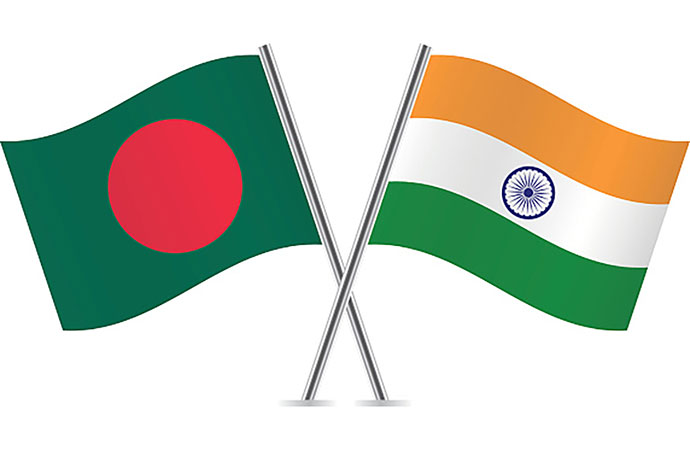
So it should have come as no real surprise to read its withering assault (in an article titled,“Embraceable you”, in their issue dated July 23, 2011) on the recent recalibration of relations between India and Bangladesh. A recalibration that has taken place under the auspices of a stagnating centre-left government in Delhi, and the illiberal-cum-kleptocratic democracy equivalent of the centre-left in Bangladesh. Those who have read The Economist’s reports concerning either (or both) of the two countries over the last two years will not have missed the pinch of salt that has accompanied even those rare occasions when they’ve had to be generous with their praise. Sonia Gandhi’s recent visit, which more than anything else was an occasion for pomp and pageantry from the ruling party, provided the perfect opportunity to give vent to some pent-up opprobrium.


What is beyond question from reading the article is that much of it is based on hearsay, and representative of the views of only a certain constituency. Indeed, it has been reported in the past how The Economist’s reportage on Bangladesh largely consists of their correspondent in New Delhi visiting Dhaka over a weekend, and chatting with a few dozen English-speaking, corporate and NGO-sector workers “over cold beer at the Sonargaon bar”. That was said of James Astill when he was doing the job. He hardly bothered about gleaning the views of too many people beyond what we may call the “1212” set- 1212 being the postcode covering Gulshan, Banani, Baridhara and some other affluent neighbourhoods of capital Dhaka. The article in question though, was not authored by him.


So given all this, it’s questionable how seriously one should take The Economist, influential as it is, when it comes to Bangladesh. And there really should be no reason to begrudge them this lack of weight they attach to Bangladesh either. After all, any publication is beholden to its readership only, and just 496 out of The Economist’s 1.4 million readers worldwide come from Bangladesh. Bangladesh is also one of the few countries in the world where The Economist’s year-on-year circulation growth has been negative (-11%, all data gathered from The Economist’s circulation department) despite 59 consecutive six-monthly increases worldwide. So it hardly makes sense for them to devote too many resources to covering the country well.


And yet, the government chose to react to the article like the proverbial baby throwing its toys out of the pram. First up, it was the foreign minister, who went all the way to bringing the academic records of the prime minister’s children into the whole thing. A rambling, poorly worded rejoinder that missed the point came next. The local media as well, started falling all over itself in a riot of clumsiness aimed at trumping one another only. Meanwhile, the government, in an especially poor show, claimed how its rejoinder had been “published in the latest issue” of the magazine, or newspaper, or whatever you want to call it, despite only sending it off after the issue had gone to press.


A subsequent query from our sister news agency, UNB, found that the prime minister’s list of honorary doctorate degrees had only made it as far as “Banyan”, the blogging space for The Economist’s Asia correspondents. This then prompted a second rejoinder, with the government having “demanded” that it gets published in the print version. Apparently, a spokesperson for The Economist has assured them that it will see the light of day in their next issue, which hits newsstands on August 12. The 496 Bangladeshis who read it can confirm to the 150 million who don’t whether the promise is kept. Dhaka Courier has gone to press.


developed by avocats

Comments


  1. Navo
    August 12, 2011 at 9:19 pm

    It is a bit disingenuous to claim that only 496 Bangladeshis read the Economist. While that may be the number of people registered to receive hard copies of the publication, many Bangladeshi nationals living abroad on a temporary basis like myself read it regularly. I’m also certain that many Bangladeshis, at home and abroad, read The Economist online where quite a few of the articles are available for free. This is evident from the number of comments on the “Embraceable You” article. (This may also explain why readership is seemingly decreasing)

    One such free article is the current Leader of the Economist, “The Poisonous Politics of Bangladesh”: http://www.economist.com/node/21525897


  2. Huzaifa
    August 13, 2011 at 11:34 pm

    its very much clear that the economist has some vested interests. the point which I want to make is that what ever it has claimed a large chunk is true. yes we will say our country is great but the suffering and sheer incompetence of the so-called successful government should be explained by hasina and co.


  3. Sabrina Islam
    August 20, 2011 at 4:39 pm

    Who cares about the Economist? A large chunk of the world’s educated population, for starters. When the Economist publishes, the world notices.

    Instead of shooting the messenger, why don’t we reflect on why the government is creating this impression of subservience to India? I also don’t understand why some commentators are up in arms, as if the Economist insulted the country itself. It did not, it only questioned the record of the ruling party. There is a big difference between the two, one that seems to have been missed by some writers who are falling over each other to find “vested interests” within the Economists’ London offices.


  4. nafees
    August 24, 2011 at 3:14 pm

    the first Q is ‘who reads dhaka courier’. did u ever thought of the online edition and how much popular the economist is? and is economist wrong pointing out to a naked truth. may be not accurate at times but a valid true point.
    as for this author, i think, he lives in the delusion of the ruling power now, with limited ideas to a circle of delusion of the past.


  5. Leader: Who cares about The Economist? «">Leader: Who cares about The Economist? «
    November 8, 2011 at 3:33 pm

    [...] Leader: who cares about The Economist? [...]

Leave a Reply

Media Gallery0


<< 123 >>

ad1
0