

Rock bottom
Saturday, August 4th, 2012
Photo: Ashraful Alom Tito
Banks announce a return to the stock market, but is it too little too late?
“I’ve waited enough. I can’t anymore…I lost almost all my money that I had invested over the last one year. I’m done and it’s time to rethink,” said Limu, a small investor. Limu is not an exceptional case, as hundreds of investors are shying away from the country’s capital market these days. The dull days have been ruling the market since the price debacle began in January 2011.
The benchmark index of the country’s premier bourse – Dhaka Stock Exchange (DSE) came down to 4159 (July 31) showing average daily turnover of only Tk 200 crore over the last few weeks. The benchmark DSE General Index soared to 8,918 points on December 5 2010, more than double compared to a year ago.
Data shows that more than 6 lakh BO (Beneficiary Owner’s) accounts had been closed in the last one year. The total number of accounts came down to 28 lakh on June 3 this year from 34 lakh on June 1 last year, according to statistics available from the Central Depository of Bangladesh Ltd (CDBL).
Our Finance Minister AMA Muhith who talked quite a lot about the market in his latest comment said the stock market is now in control of destroyers and the government will restructure it by December this year. The investors have already been assured of bringing back vibrancy in the market many times. The ultimate outcome of these assurances is apparently zero. The market is going down gradually.
It was on November 23, 2011 that the capital market regulator — the Securities and Exchange Commission (SEC) — finally came up with the much-expected market stabilisation package to compensate the investors. Unfortunately, there has been no sign yet that the market will be back on track any time soon. The retail investors come down on the streets with pauses since they do not see the reflection of the measures taken by the government to make the market vibrant.
However, some small investors who have stronger nerve are still active in the market with a hope that the market will ultimately bounce back within next couple of months. Perhaps, commercial banks’ plan to comeback to the stockmarket with substantial investment helped them dare to stay active in this volatile market.
The private commercial banks that almost went out of the capital market at the end of 2010 have decided to comeback as they found the present market lucrative for investments.
Four such banks have already announced that they would invest Tk 900 crore in next two months. Many banks are in the pipeline to announce their investment plans. It makes investors happy as the institutional investors like banks can help stabilise the down market and bring back investors’ confidence.
Among the banks, Standard Bank will invest Tk 100 crore while Pubali, EXIM and NCC banks have got a green signal of their boards to invest Tk 500 crore, Tk 200 crore and Tk 100 crore respectively. Other banks are also thinking of making a comeback.
As per the central bank’s directive, a bank can invest 10 percent of its deposits in the stock market, but most of the banks now have it within 1-3 percent.
Institutional investors, especially banks, made hefty profits in 2009 and 2010 at the cost of these retail investments. At that time, many banks invested up to 30 percent of their deposits in the stock market violating the law.
Since, most of the investors are waiting for seeing greater role of institutional investments in the market, they (investors) should be cautious in making further investment. If the banks do not invest despite announcements through newspaper advertisements, it will definitely have negative impact on the market.
However, the economists and market analysts say since the market has already been widely devalued, there is certain chance to gain if the investors come up with fresh investment. They think it will be an unrealistic expectation of investors if they think the market would only go up. Ups and downs are very natural for capital market across the globe. They market analysts advise the investors saying they should not wait to see a sharp rise of index rather they should go for investment right now to avail the opportunity of buying shares at low cost.
Many things have happened in country’s capital market over the last one and half year. Street demonstrations to stormy discussions in the parliament- these have all been seen. The share market had even replaced politics as the main topic of conversation in the country for months. Even, the Prime Minister Sheikh Hasina had to hold an emergency meeting with all stakeholders at her official residence to come up with solutions for reviving the market.
Today, it seems no medicine works out to make the market vibrant. Because, when the piece is being written (Aug 1), the premier bourse of the country lost another 40.74 points bringing down the benchmark index to 4118.42. The daily turnover of the DSE also came down to only Tk 199 crore.
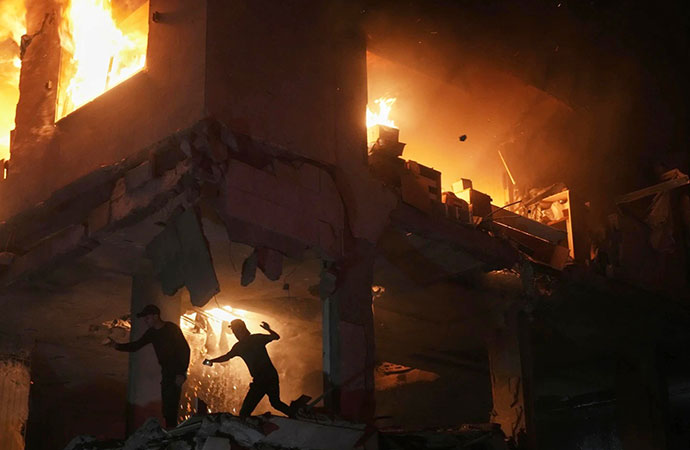
On January 9, 2011 the benchmark index of the Dhaka Stock Exchange (DSE) suffered the steepest single-day fall in the premier bourse’s 55-year history. The DSE General Index (DGEN) plunged by 600 points. Breaking the previous day’s record, on January 10, DGEN shed 660 points or 9.25 percent between 11am and 11:50 am. The capital market was shut; small investors turned vandals; and the business district of Motijheel was transformed into a battlefield between protesters and law-enforcers.
Meanwhile, the Securities and Exchange Commission (SEC) has formed a four-member body to probe the technical glitch in the Central Depository Bangladesh Limited (CDBL) server that suspended share trading at Dhaka and Chittagong Stock Exchanges on Tuesday.
SEC executive director M Ashraful Islam is heading the inquiry committee which has been asked to submit its report within five working days.
Three other members of the committee are SEC director Rajib Ahmed and IT chief or IT expert of Dhaka Stock Exchange (DSE) and Chittagong Stock Exchange (CSE).
The decision to form the inquiry committee was taken at the 441st meeting of the SEC held at its conference room with commission chairman Prof Dr M Khairul Hossain in the chair.
The committee will determine the nature of the problem, reasons behind the technical glitch and negligence, if any, of officials concerned.
Earlier, trading at the two bourses was suspended for Tuesday due to technical problem in the CDBL server. The decision came following an urgent board meeting Tuesday morning.
Due to the software failure at CDBL, the DSE and CSE authorities decided to keep the transaction suspended at both the bourses until Monday’s sale transactions are uploaded to CDBL system. After each day’s stock trade, the transactions are settled with CDBL.
The technical glitches have added to the market’s woes.
developed by avocats