


Bigger budget draws mixed reaction
Friday, June 15th, 2012
Photo: PID
Country’s leading chamber and trade body leaders have expressed their mixed reactions to the national budget proposed for fiscal 2012-13, a bigger budget with bigger deficit.
They welcomed some proposals but expressed frustration over many, and demanded reconsideration of some of the important proposals, including tax at source on all types of export that has been doubled.
I found most of the business leaders worried over the proposed tax at source on exports. They have also started pressing the government to seriously think of it for reconsideration before the budget is passed (likely on June 27) to help grow the key export earning sector – RMG.
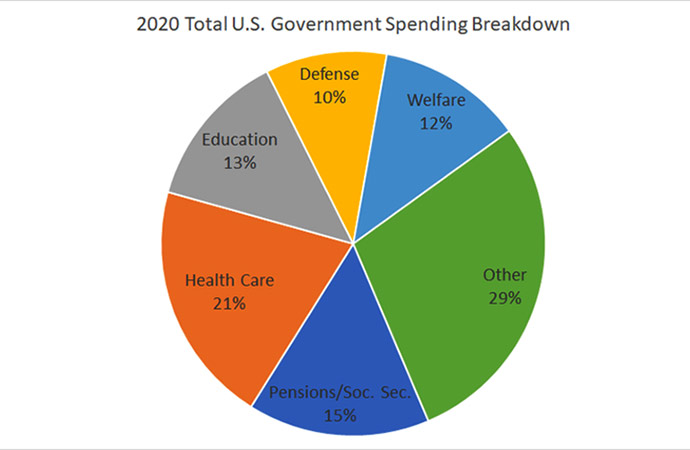
On June 7, Finance Minister AMA Muhith placed in Parliament an ambitious Tk 191,738 crore national budget projecting a 7.2 percent GDP growth. The size of the proposed budget for the fiscal 2012-13 is also Tk 30,525 crore, or 18.93 percent higher than the Tk 161,213 crore revised budget of the outgoing fiscal. The Finance Minister also proposed allocation of Tk 136,738 crore for non-development and other expenditure.
FBCCI:
Disagreeing with a number of proposals, the apex trade body – FBCCI President, AK Azad expressed frustration over the sharp hike of tax at source on all types of exports. “It’s the most frustrating one among the direct-tax related proposals.” The Finance Minister proposed 1.2 percent tax at source on all types of exports which is now 0.60 percent. The FBCCI (Federation of Bangladesh Chambers of Commerce and Industry) also voiced deep concern over a number of budget proposals including government’s bank borrowing.
“We apprehend that too much dependence by the government on bank borrowing will increase liquidity crisis and it’ll have negative impact on required credit flow to the private sector,” Azad said while making official reaction over the proposed budget.
On June 7, Finance Minister AMA Muhith in his budget speech in Parliament mentioned the government’s target of borrowing from the banking sector at Tk 23,000 crore to meet the budget deficit.
On black money issue, the FBCCI chief said the black money whitening provision will discourage businesspeople to pay tax regularly. “It’s discriminatory for the honest taxpayers.”
He said five major reasons-Eurozone crisis, negative trend in export earnings, fall in foreign aid flow, government bank borrowing, and soaring inflation-might hamper the economic growth.
He also expressed dissatisfaction over keeping the tax-free income ceiling unchanged despite demands from various quarters to raise it considering the soaring inflation.
Azad, however, appreciated a good number of proposals made for human resource development, increasing the number of beneficiaries of social safety net programmes, rural development, women development, and duty reduction on import of capital machineries and ETP equipments.
BGMEA:
Apparel exporters also voiced deep concern over the proposed higher tax at source on all types of export in the proposed budget for the 2012-13 fiscal year and urged the government to reconsider it for the sake of maintaining the export growth.
They urged the government to seriously think about the proposed tax hike at source and reconsider the proposal to help continue the desired growth of the readymade garment exports amid global economic downturn.
“Tax at source on exports has been doubled by increasing it from 0.60 percent to 1.2 percent. That means the direct tax saw a 100 percent rise. It’s totally contradictory to the RMG industries,” said Bangladesh Garment Manufacturers and Exporters Association (BGMEA) president M Shafiul Islam Mohiuddin.
Shafiul Islam said BGMEA leaders think that such tax rate fixation in the present situation would disrupt the desired growth of the garment industries. “I hope the Prime Minister and the Finance Minister will reconsider the tax issue before the national budget is passed.”
Referring to the global economic slowdown, he said the demand for Bangladeshi garment in the global market has marked a fall due to financial downturn during the last fiscal year.
“Bangladesh’s garment export to the EU market has declined by some 15.40 percent while to the USA 28.40 percent in the current year,” the BGMEA president said.
The business leaders welcomed some of the government’s steps taken in the new budget to encourage the industrialisation in the country, he said.
Shafiul Islam mentioned that small and medium industries will particularly get benefited as the government proposed complete VAT exemption from rent of places and establishments for the export-oriented RMG factories.
DCCI:
Demanding reconsideration of some budget proposals, Dhaka Chamber of Commerce and Industry (DCCI) President Asif Ibrahim feared that the possible political instability might put budget implementation at risk. “I think, we all should determine the future directives giving top priority to political stability.”
Ibrahim identified three basic challenges that are shortage of energy, infrastructure and availability of credit with affordable interest rate for the smooth investment in the private sector.
He thinks the proposed budget does not have any short-term plan to increase domestic and foreign investment despite having some specific directives or policies to expand business.
Responding to a question on black money whitening, he said, “Investment is very important. It’s better to have some terms and condition regarding investment of undisclosed money.”
“So”, Asif said, “If anybody says he’ll create employment opportunities for at least 500 people only in that case undisclosed money investment can be allowed at 10 percent tax or with penalty.”
Replying to another question, he said tax net will have to be expanded to give a boost to revenue generation. “The number of 30 lakh TIN (tax identification number) holders is too small in a country of about 16 crore people.”
He suggested increasing the tax-free income limit at individual level from the proposed Tk 1.80 to Tk 2.50 lakh considering the price hike of essentials and soaring inflation.
On budget deficit, which is 5 percent of the GDP (gross domestic product), Ibrahim said the production will be hampered if the government borrows money from the banking sector to address the budget deficit like the outgoing fiscal. “It’s a big challenge for the coming budget.”
He said the proposed hike of tax at source (1.2 pc) on all types of export items will be a big challenge and the net impact on the RMG exporters will be 6 percent since the government has formulated new wage structure for the workers.
He demanded specific policy support, infrastructure development, and gas and electricity connection to the industrial units and easy access to required credit for the investment.
The DCCI identified 17 positive sides of the proposed budget against 16 negative proposals and placed 26 recommendations related to policy, income tax, VAT (value added tax) and import for the government’s reconsideration.
The DCCI president said the entrepreneurs expect a commitment from the government regarding investment surety, continuity and consistency of policies.
Replying to a question Ibrahim said, “I would say, it’s not a hundred percent business-friendly budget.”
Asif Ibrahim, however, expressed satisfaction over a number of proposals including tax reduction on ETP equipments. Muhith proposed to introduce zero percent duty instead of existing 1 percent in the coming FY2012-13 in case of importing equipment to install ETP plants for the export oriented industries.
BWCCI:
President of Bangladesh Women Chamber of Commerce and Industry (BWCCI) Sangita Ahmed expressed happiness as the Finance Minister proposed a Tk 100 crore allocation for women entrepreneurs as part of partonising the innovative businesswomen for the country.
“We’ve long been demanding such an allocation. Finally, the Finance Minister proposed it. It’ll help develop women entrepreneurship,” the newly-elected president of the chamber said. On May 24, then President Selima Ahmad put forward a number of demands, including allocation of Tk 100 crore, for ‘Women Entrepreneurship Development Fund.’
The businesses will now have to wait until June 27 to know whether their proposals for reconsideration are accepted or remain unheeded.
developed by avocats