






Chronicles of bravery – tiger conservation in the Sundarbans

Ananya Rubayat
Thursday, December 1st, 2011


VTRT activities

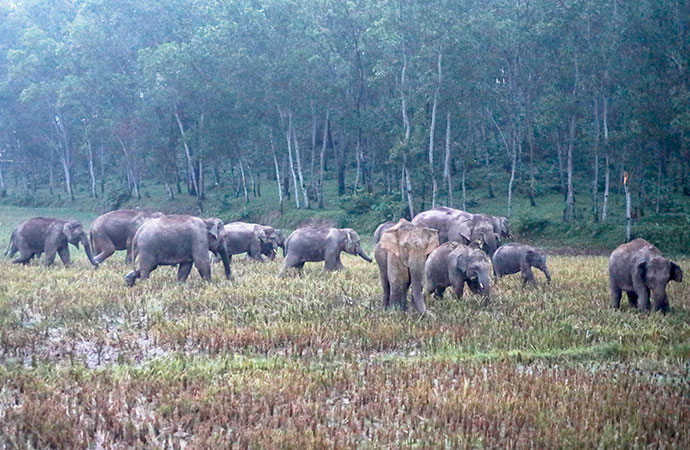
The Sundarbans is home to around 300-500 Royal Bengal tigers, one of the largest single populations of this endangered species in the world. Tiger, the national animal of Bangladesh, is revered as a strong and beautiful animal. With immense pride we compare anyone we consider brave to be “the son of a tiger”. But in the south of Bangladesh, where tigers actually roam in the mysterious swampy mangroves of Sundarbans, the relationship between tiger and humans is much more complex. Out there, almost every villager in the periphery of the Sundarbans lives knowing that a stray tiger might enter their household on any given day. Fishermen, honey collectors, wood cutters enter the forest taking immense risk. Forest department records say, more than 30 people die every year from tiger attacks. What makes tigers in this area so aggressive towards humans is widely debated. Some blame the salty waters, some say scavenging human bodies adrift after cyclones have given them a taste for human flesh- but no matter what the cause is, tiger-human conflict is a reality in the Sundarbans that must be dealt with.


Last year, stray tigers entered inside villages near the Sundarbans on 32 instances. When something like this happens, panic and feelings of vengeance generally grip the villagers. They come out with whatever weapon they can find to try and kill the tiger. This usually results in both human injury and the death of one of the few tigers still left in the world. To address this sensitive issue in a logical manner, village tiger response teams or VTRTs were formed by the Sundarbans tiger project (STP), an organisation working to conserve the tigers of Bangladesh. VTRTs are given specialised training to deal with conflict situations between humans and tigers. Their goal is to send stray tigers back to the forest without hurting the tiger and thereby also protecting humans. So far, 29 such teams consisting of more than 200 members have been formed and they have been working relentlessly to mitigate the situation for more than a year. VTRT members are ordinary villagers and are aware of the danger they voluntarily put themselves in. They receive no financial remunerations from STP, their reward lies in knowing that they are protecting their families and community without causing harm to another creature of mother nature.


Viewing stray tigers as an enemy has been an attitude embedded in the mindset of villagers for hundreds of years. Telling them otherwise is not always easy. That is why, when someone from within their own community attempts to save a tiger, obstacles come from their own peers. To encourage local communities to be more involved with VTRT activities, an innovative idea was launched by STP. The plan was to create an atmosphere of festivity and happiness within which VTRTs and their activities would be given recognition in front of their communities. This would in turn increase local acceptance and support for them.


With this objective the VTRT Road Show 2011 kicked off on October 12 at Tengrakhali. Two teams headed by Abu Saleh Muhammad Rejuan and Md. Rafiqul Islam were put in charge of arranging the events. After 20 successful events covering 18 hub points linking all VTRT villages, the road show ended on November 1st in Shorbotkhali. Almost 100,000 people attended the shows in total. The events faced many obstacles from poor communications facilities and hostile weather conditions; but the ever welcoming communities lent a helping hand and all the events took place as planned. Along with the local villagers, members from the local govt., forest department officials and local media also joined in. Every event began amidst beautifully decorated colourful venues with local children singing the national anthem. VTRTs introduced themselves and speeches were delivered by the team leaders. Games were arranged for the audience and gifts were given to everyone who participated. The main attractions of the events were the cultural programs, where popular local singers like Reena Parvin and Daud Boyati performed. In some events local villagers, students and even some guests also took to the stage and displayed their talents! The audience enjoyed themselves immensely and in some areas even requested that the show to be continued for another day. The atmosphere was one of pure joy, enthusiasm and celebration.


Romain Rolland said, “A hero is a man who does what he can.” It might sound like an easy thing to do, but going against the tide and doing what one feels is right is something not many can do. In the remote villages of the Sundarbans, the VTRTs, with dedication and bravery have been doing precisely that. The VTRT road show 2011 was a small way of appreciating them for their constant vigilance towards saving tigers, as well as humans.


[The writer is a Communication, Education and Public Awareness Officer, Wildlife Trust of Bangladesh]


developed by avocats

Leave a Reply

Media Gallery0


<< 123 >>

ad1
0