
An onus on human rights
Thursday, November 24th, 2011
developed by avocats Leave a comment
European Union-Bangladesh relations date back to 1973 and have evolved over the years, reaching a new level of partnership under the Cooperation Agreement concluded in 2001. This agreement considerably broadened the scope of cooperation, extending to trade and economic development, human rights, good governance and the environment.
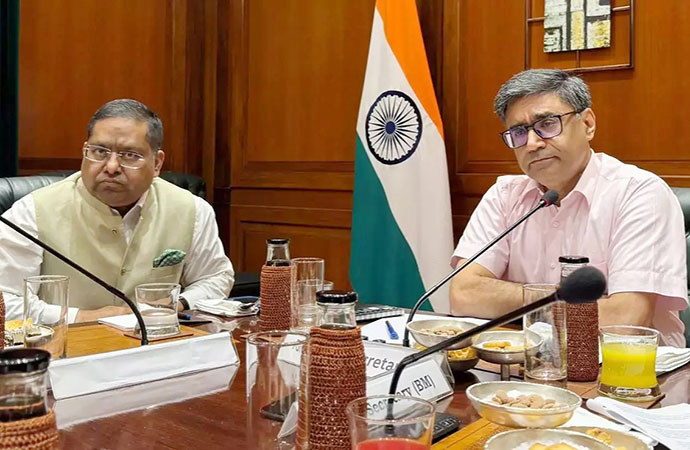
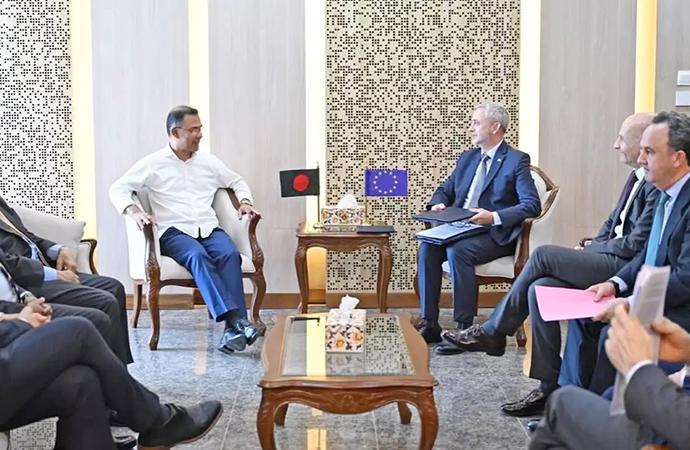
During an interview with Shamim Ahmad at the EU embassy on Monday, new ambassador William Hanna reflected the European Union’s views on various national issues in Bangladesh. He spoke on issues like human rights, next general elections, development aid and the EU’s future strategy in Bangladesh.
On the question of human rights, he said the EU emphasises on strengthening the human rights in Bangladesh, noting that human rights are at the heart of the European Cooperation Agreement with Bangladesh.
“There is some progress in human rights in some areas, but I think there is a lot to be done and there is a long way to go,” he said as the European Union and Bangladesh Civil Society organised a two-day seminar in Dhaka on “Human Rights and Decent Work”.
The ambassador referred to Article 1 of the EU-Bangladesh Cooperation Agreement that says: “Respect for human rights and democratic principles as laid down in the Universal Declaration on Human Rights underpin the domestic and international policies of the Parties, and constitute an essential element of this Agreement.”
He said the Bangladesh constitution also gives specific protection to human rights that provide a solid legal basis for the EU and the Bangladesh government to work together to strengthen the human rights and eradicate human rights abuses.
Hanna said there are many aspects of society in which the human rights perspective in Bangladesh needs to be strengthened.
In reply to a question, he said there are some concerns among European buyers of Bangladeshi garment products whether the workers who produce the items are properly paid, and work in decent conditions.
Hanna said the recommendations to be adopted at the seminar would fit in the EU’s regular dialogue with civil society and the government to strengthen human rights.
Replying to a question, he said that to strengthen human rights, Bangladesh needs to harness the energy and resources of all those who share the same goals.
The ambassador said the work place is an important area for strengthening human rights in a number of important ways including the rights of children and the rights and empowerment of women, the rights of persons with disabilities and of various minority groups, the right of trade unions and the activities of human rights defenders.
There are 100s of projects in Bangladesh related to human rights being assisted by the EU and its member states, he said, adding that the EU will continue its support to anyone who works in this field.
On the current political stalemate over the modus operandi of holding the next general elections in Bangladesh, the ambassador said the European Union will encourage dialogue between political parties to end the standoff.
“We want to encourage dialogue between the parties and we want to encourage participation in parliament, which are the key issues,” he said.
The European Union would also continue to support the Election Commission to see free and fair elections where the people could exercise their democratic right to vote.
Referring to the UN secretary general’s remark that political parties should resolve their differences through dialogue, Hanna said the same thing was conveyed by EU Commissioner for Development Cooperation Andris Piebalgs and German Federal Minister for Economic Cooperation and Development Dirk Niebel to the prime minister and the opposition leader during their visit to Dhaka last June.
“It shows how much the international community cares about Bangladesh and cares about support for democracy,” he said.
The EU ambassador said: “We have seen the Arab Spring of the last year where it was seen how much the people there are attached with their democratic rights to vote and set up their own government.”
Asked if the EU would be willing to mediate if necessary to end the political standoff here, he said: “We are not being asked to mediate.”
Hanna said: “We are trying to talk with all sides and say the same thing: resolve the issues through dialogue. We very much support cooperation instead of confrontation.”
Asked if there is any possibility of cutting development aid in Bangladesh in the wake of current economic downturn in Europe, the EU ambassador dismissed the apprehension, saying that he has not seen any proposal to cut down on development aid.
“It is true that economic crisis continues in Europe and there is stress on public financing. Even though, I’ve not seen any proposal to cut down on development aid in Bangladesh.”
On the contrary, he said the United Kingdom, one of the EU member states, has increased its development assistance for Bangladesh. The EU has pledged around Euro 150 million this year for Bangladesh.
However, Ambassador Hanna pointed out the low rate of spending the development aid pledged for Bangladesh. “We are now focusing on how to make development assistance more effective,” he said, adding “money is there but it is not being spent.”
Asked about the reasons, he attributed this to corruption, lack of efficient procedure for disbursement of fund and lack of sound financial management of development fund.
He said a global forum on improving efficiency and impact of aid is due to take place in Busan, South Korea this month. Delegates of development partners and aid recipient countries will attend the forum, the objective of which is to improve the effectiveness of aid to developing nations.
Asked why the EU is channelling the bulk of its development fund to the Chittagong Hill Tracts (CHT), the ambassador said it is because of cultural diversity of Bangladesh, geographic difficulties of the region and being one of the least-favoured areas in terms of education and health facilities.
The EU also likes to support the implementation of the CHT peace accord, he said, adding that for overall development it needs stability, security and peace.
Over the last decade, the EU invested around $100 million in different projects in the CHT. Ambassador Hanna said that not only the CHT, the EU programs also target the people in other disadvantaged areas of the country.
developed by avocats